Children with severe thalassemia
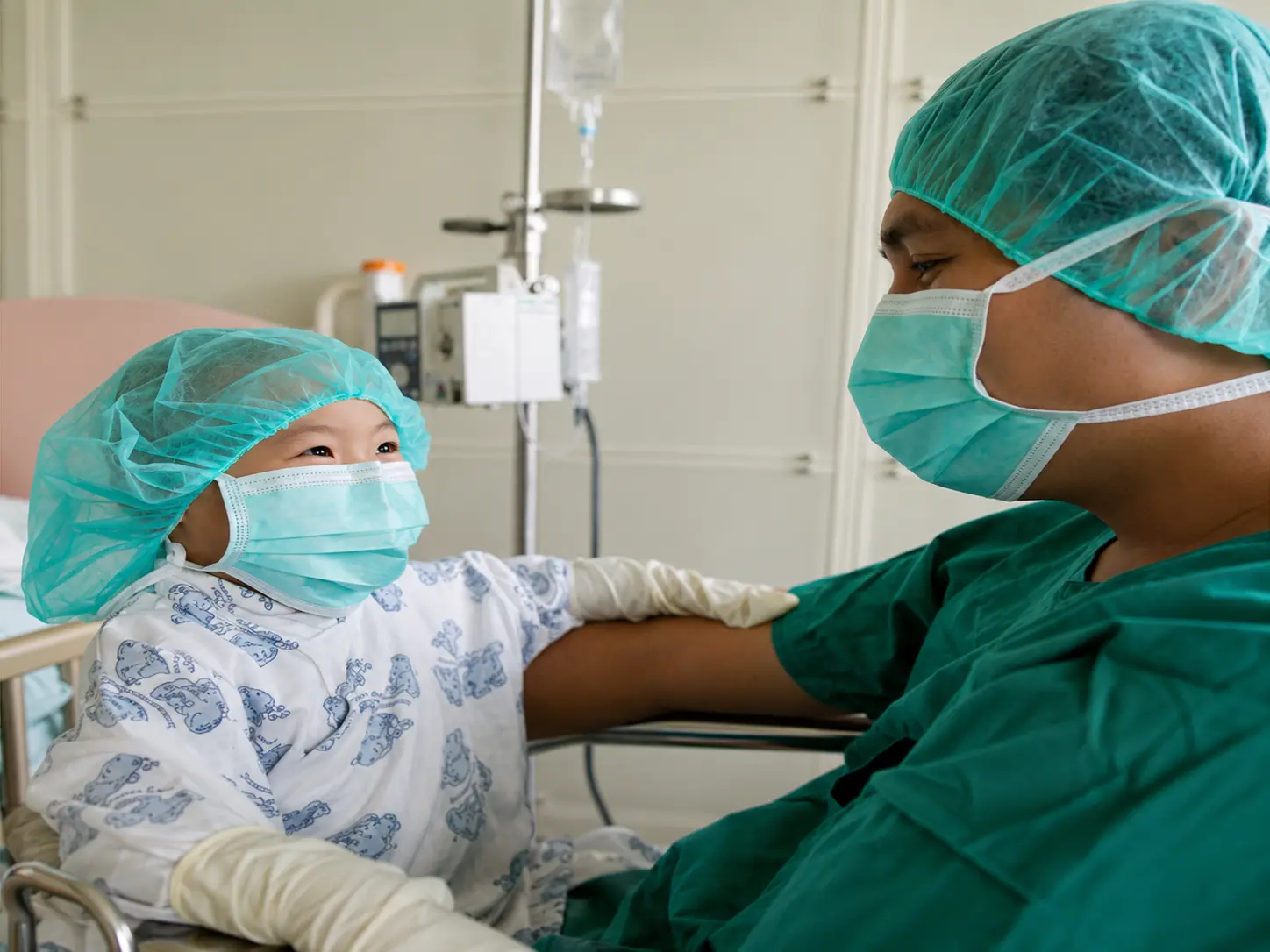
Treatment for severe thalassemia primarily involves blood transfusions; without transfusions, patients often die from anemia before the age of four. The only curative treatment is stem cell transplantation, with umbilical cord blood transplantation being one method. Our hospital established its Umbilical Cord Blood Transplantation Center in 2003, shouldering the responsibility of treating the largest number of severe thalassemia patients nationwide. Of the 132 severe thalassemia patients in the Chang Gung system, 110 are treated at our hospital, including 60 children (23.9% of the national total). Our Umbilical Cord Blood Transplantation Center is the largest non-relative umbilical cord blood transplantation hospital in Taiwan. By 2012, we had successfully performed 46 non-relative umbilical cord blood transplants on children, with a success rate as high as 90%. Umbilical cord blood transplantation may result in rejection and infection, requiring specialized care at home. Our team has developed the I-CARE (I-Care) care model. Based on transplantation care experience, the clinical nursing team provides high-quality, forward-looking care to patients and their primary caregivers. I-CARE refers to Infection Control, All-GVHD Care, Restore, and Emotional Support. Each of these is an important factor affecting the success of transplantation and the smooth return of children to their families and schools.
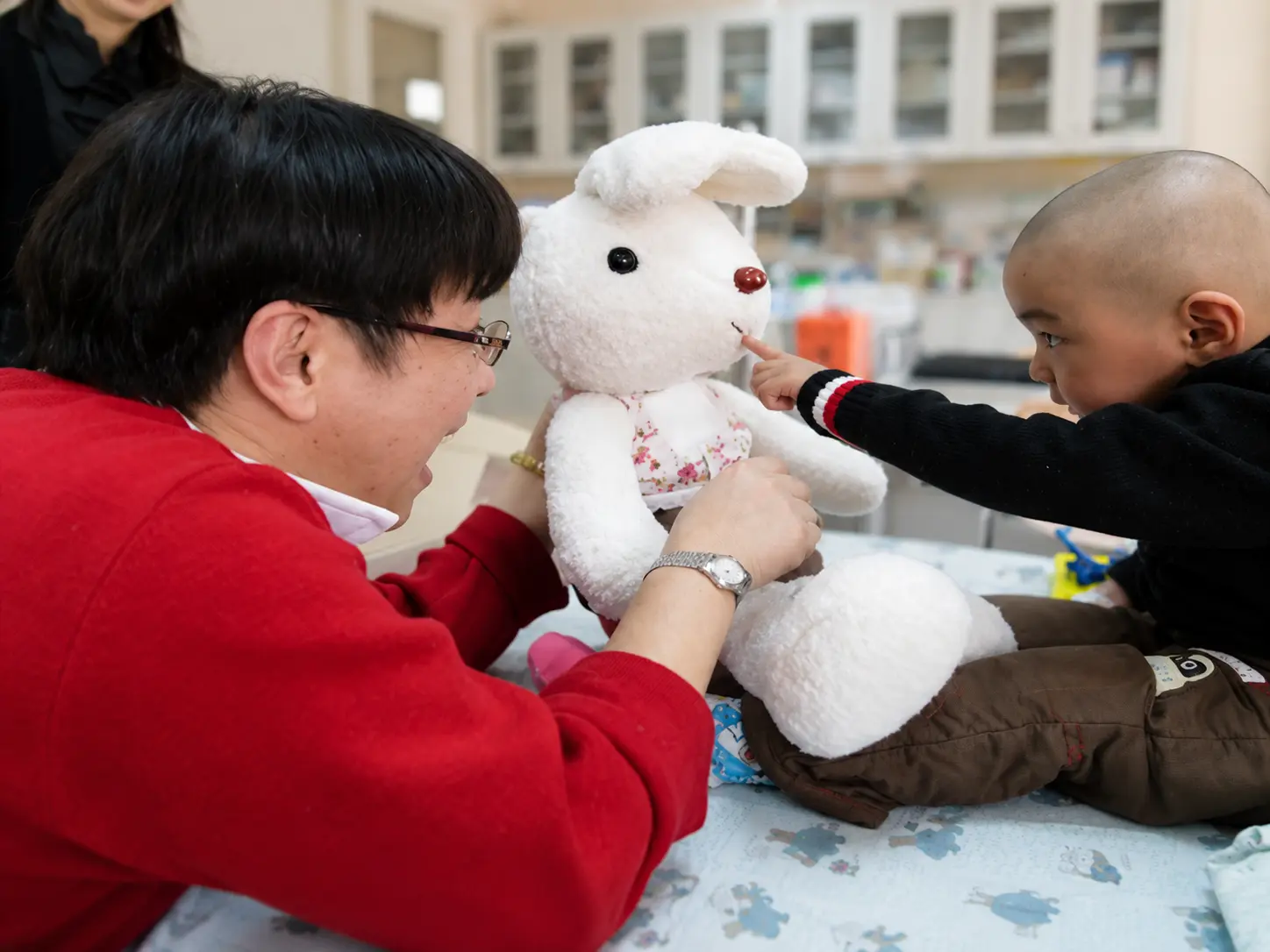
Role-playing health education using Sasemia anthropomorphic dolls
I-CARE Transplant Comprehensive Care Framework: Preparation Phase → Pre-Transplant Phase → Mid-Transplant Phase → Post-Transplant Phase → Home Care Phase
Interactive health education using an app
Using a computer voice communication board to allow children who experience pain when speaking to express their feelings and needs
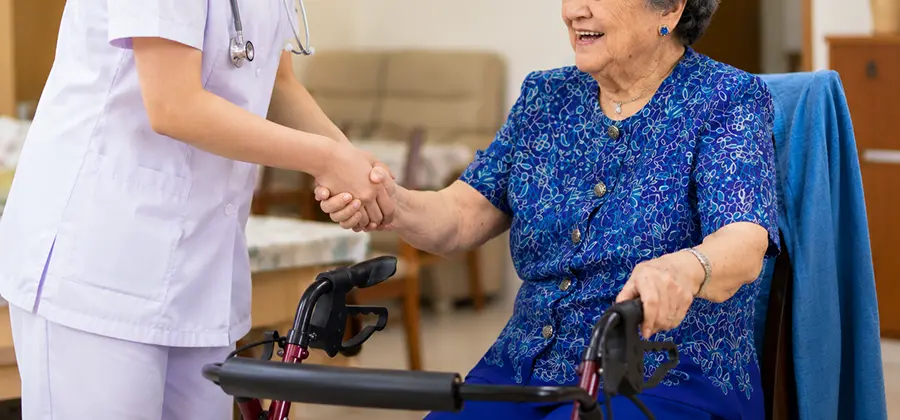
24-hour care service after discharge
Home health management
Expectations for continuous and regular counseling and care from the (Umbilical Cord) Regeneration Care Association
64 transplant cases
Number of transplant cases at our hospital from 2003-2012: 52
101 family seminars held from 2003-2012
Average age: 4.5 years
World's highest number of umbilical cord blood transplant cases in children with severe thalassemia
International medical case services
64 transplant cases
Transplant success rate: 87%
OS (5-year survival rate): 85.1±5.6%
DFS (disease-free survival rate): 71.5±7.0%
Treatment compliance rate (2010-2012): 100%
Treatment compliance rate (2003-2009): 84.1%
Postoperative fasting time decreased by 102 points, a decrease of 59.7%
Hickman catheter slippage rate (2010-2012): 0%
Pain communication increased by 48%, pain score decreased by 11 points
GVHD grade 3-4 distribution decreased year by year (2010-2012)
Publications (2009-2012): 1 oral, 31 poster, 21 written, 6 product innovation, 3 quality control circle publications
Hickman catheter slippage rate: 0% from 2010 to 2012
GVHD: Stage 2-4 from 2010 to 2012, primarily characterized by skin symptoms; the distribution of stages 3-4 decreased year by year.
Average satisfaction rate of symposiums from 2010 to 2012: 98.1%
Average family satisfaction rate from 2010 to 2012: 96.5%
cord blood transplantation
bone marrow transplantation
stem-cell transplant
Unrelated cord blood
hematopoietic stem cell transplantation
hemoglobinopathies
survival rates、success rate、disease-free survival rates
Social welfare service achievements: NT$2.56 million in 2010, NT$2.33 million in 2011, and NT$4.29 million in 2012 (medical support expenses for umbilical cord blood transplant cases in children with severe thalassemia)
Five children with water quality issues had their homes replaced with bottled water; 11 children with cavities received dental treatment.
The number of umbilical cord blood transplant cases in children with severe thalassemia was the highest in Taiwan.