Community residents and medical institutions in the Taiwan CDC contract service region, including Armed Forces, New Taipei, Keelung, and Yilan hospitals/clinics.
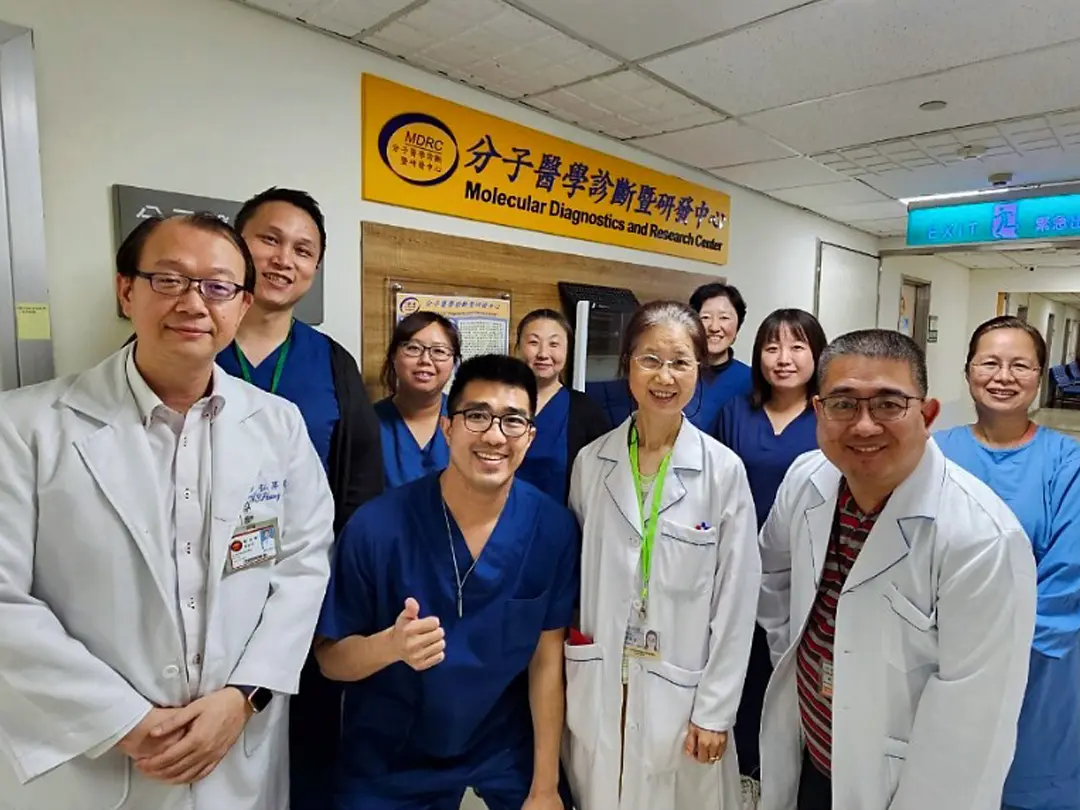
TSGH Department of Clinical Pathology is a national CDC virus laboratory contract laboratory responsible for community surveillance and real-time epidemic monitoring, recruiting designated physicians as first-line epidemic responders, covering Armed Forces, New Taipei, Keelung, and Yilan hospitals/clinics. We developed in-house "Multi-Pathogen Defender" real-time monitoring technology (Multiplex PCR) detecting multiple pathogens (enterovirus, influenza, respiratory pathogens) in a single test with 95% sensitivity, 96% specificity, LOD 10³–10⁴ copies/mL, and results within 2 hours (vs traditional viral culture 10-14 days). Cost at NT$1,500/test (vs international reagents FilmArray/QIAstat at NT$8,000), customizable to local epidemic needs. The tripartite collaboration (community clinics/hospital/CDC) strengthens national public health defense. CDC adopted our outcomes as policy in 2025, expanding usage from 1 to 5 contract laboratories.
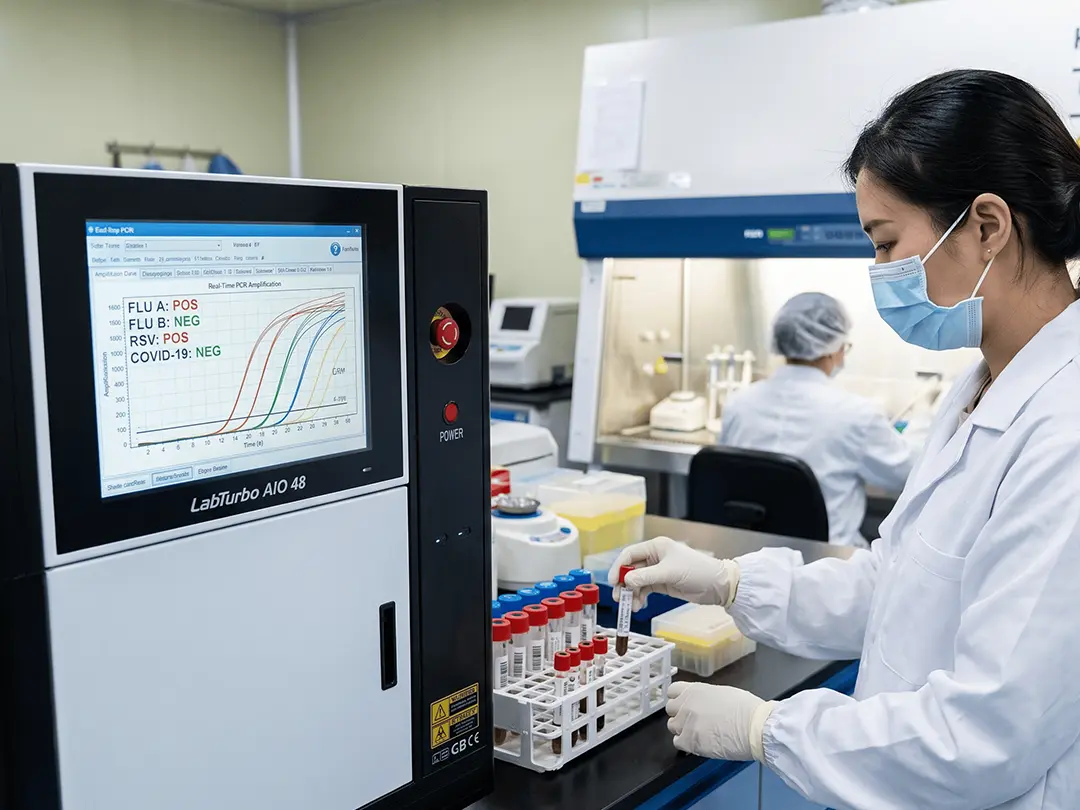
In-house developed multi-pathogen real-time monitoring (Multiplex PCR + Nested PCR + Melting Curve Analysis) with 95% sensitivity, 96% specificity, LOD 10³–10⁴ copies/mL.
Test time under 2 hours, vs traditional viral culture 10-14 days.
Cost advantage: NT$1,500/test (80% savings vs international FilmArray/QIAstat at NT$8,000); no proprietary analyzer required.
Customizable pathogen panels based on local epidemic needs (vs fixed international panels). 5. Tripartite collaboration: community clinics (rapid testing/suspect case monitoring) + hospital (precision diagnosis/severe case management) + CDC (real-time surveillance/policy).
Since 2025, CDC expanded technology to all contract laboratories (1→5 labs); findings highly consistent with UK/US/Australia studies.
Sensitivity 95%, specificity 96%, and limit of detection 10³–10⁴ copies/mL. The platform detects more than 20 pathogens in a single test and completes testing within 2 hours, with an annual service volume of approximately 1,300 cases. Results can be promptly reported to physicians and uploaded to the Taiwan CDC information system.
Compared with traditional viral culture, which requires 10–14 days, this technology completes multiplex pathogen detection within 2 hours. More than 90% of reports are returned to sentinel physicians within 24 hours, supporting rapid clinical management and timely epidemic control measures.
Each testing batch includes positive controls, negative controls, and internal controls. Quality is ensured through abnormal result review, LIS system alerts, Taiwan CDC proficiency testing, and external quality assessments such as CAP. The testing process follows TAF and CAP international accreditation standards.
A satisfaction survey of 25 sentinel physicians conducted from June 2024 to June 2025 using a 5-point Likert scale showed positive feedback. Physicians reported reduced diagnostic pressure, improved diagnostic confidence and accuracy, better physician-patient communication, and high satisfaction with report timeliness, testing quality, and clinical decision support.
The team has obtained both TAF and CAP international accreditations and has published multiple international journal articles on multiplex pathogen detection, COVID-19 variant surveillance, viral load analysis, and AI-assisted surveillance, demonstrating strong clinical research capacity and international alignment.
This project integrates community clinics, the hospital, and Taiwan CDC into a three-level epidemic prevention network, providing both clinical service value and public health surveillance capacity. Compared with commercial platforms such as FilmArray and QIAstat, it offers lower cost, customization flexibility, and no need for dedicated proprietary instruments.