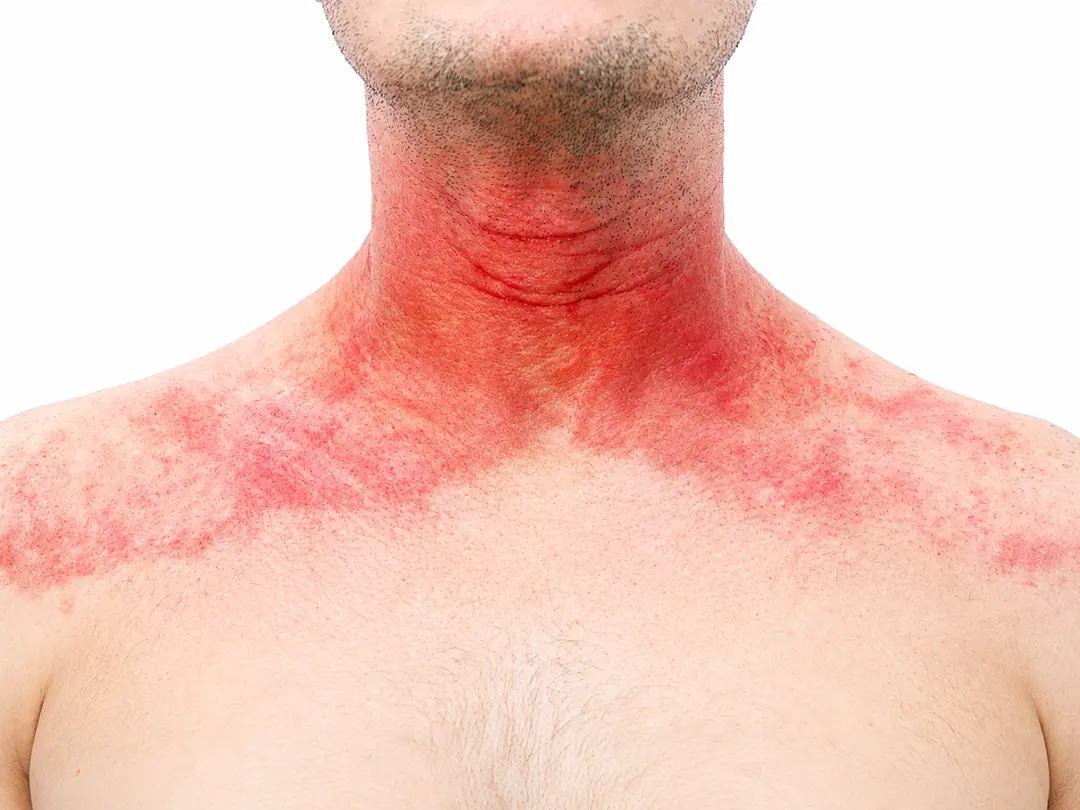
Head and neck cancer patients undergoing radiation therapy.
Radiation dermatitis is the most common side effect in head and neck cancer patients receiving radiation therapy. Its severity varies depending on the dose, location, and area of radiation, and it is classified into grades 0-4. Grade 3 (and above) skin reactions can negatively impact the patient's treatment and quality of life, including severe skin damage leading to bacterial infections, reduced social functioning, and psychological changes due to alterations in physical appearance. In severe cases, this may force the patient to interrupt radiation therapy, significantly reducing the tumor's treatment efficacy and local control rate.
Our hospital implements a multi-faceted approach including "progressive skin care guidance," "image verification for precise radiation therapy," "radiation therapists applying skin protectants and ensuring correct use of medical materials," and "regular outpatient monitoring of individual skin reactions with appropriate medication support." This comprehensive strategy effectively reduces the incidence of severe skin reactions, providing more precise and individualized care for head and neck cancer radiation therapy patients, while helping them maintain a good quality of life during treatment.
Progressive skin care guidance.
Image verification for precise radiation therapy.
Radiation therapist applies skin protectants, ensuring correct use of medical materials.
Regular outpatient monitoring of individual skin reactions and prescribing appropriate medications for support.
Dose Safety: Critical organs in head and neck radiotherapy, including the brainstem, spinal cord, and salivary glands, are identified as organs at risk (OARs). Medical physicists ensure that OAR doses comply with established treatment guidelines. Radiation oncologists review and approve the treatment plan, including dose distribution and treatment parameters, before signing the workflow form.
Skin Monitoring: During treatment, patients attend regular follow-up visits for assessment of radiation-induced skin reactions. Physicians evaluate and document skin conditions in the HIS and prescribe appropriate medications when necessary.
Position Verification: Radiation therapists perform weekly imaging verification to confirm accurate patient positioning. Any setup deviations are recorded in the HIS treatment log.
Medical Documentation: Physicians complete an Initial Note within one week after treatment initiation, including medical history, physical examination, treatment objectives, prescribed dose, expected outcomes, and potential side effects. A Complete Note is completed within two weeks after treatment completion, summarizing diagnosis, stage, treatment field and dose, treatment response, toxicities, and follow-up recommendations.
After implementation of these improvement measures, the incidence of Grade 3 skin reactions in head and neck cancer patients receiving radiotherapy was significantly reduced from 23.5% to 3.7%.
Nationally certified skin protection medical devices were used for all patients, achieving a utilization rate of 100%.
Weekly verification images were obtained during the treatment course to ensure accurate treatment positioning, achieving a verification image compliance rate of 100%.
After completion of treatment, an online questionnaire was used to survey patient satisfaction regarding management of side effects, post-treatment care instructions, physician care during treatment, nursing staff service attitude in outpatient clinics, radiation therapist service attitude during radiotherapy delivery, spatial safety and privacy, and overall satisfaction with the Radiation Oncology Department. The proportions of responses rated “very satisfied” or “satisfied” for all items were above 95%.
Establish a standardized skin care protocol for head and neck cancer radiotherapy.
Reduce the incidence of severe skin reactions during the treatment course.
Improve patients’ quality of life during and after radiotherapy.
Enhance patient compliance with treatment and completion rates.
Develop a quality improvement circle (QCC) model that can be generalized and implemented in other settings.