Acute coronary syndrome patients
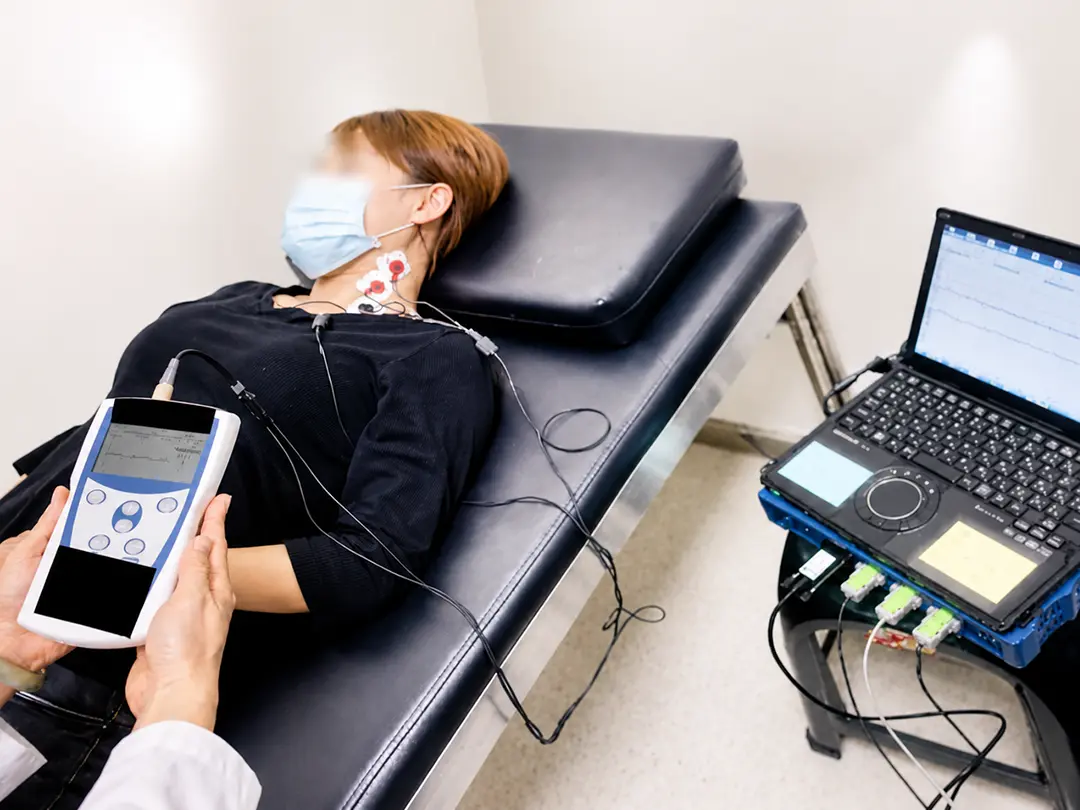
To utilize skin sympathetic nerve activity (SKNA) measurement for the precise risk assessment of arrhythmias and major adverse cardiovascular events (MACE) in patients with acute coronary syndrome (ACS), thereby applying SKNA as a monitoring and predictive tool for high-risk populations.
Skin sympathetic nerve activity (SKNA) represents a featured, non-invasive medical technology at KMUH, demonstrating broad applicability in diseases associated with high sympathetic tone.
The integration of artificial intelligence approaches, including frequency-domain analysis and machine learning, for the prediction of MACE is a globally pioneering and highly innovative breakthrough.
Our Coronary Care Unit (CCU) handles an annual admission volume of over 500 patients and has successfully screened more than 100 individuals. By integrating artificial intelligence models, SKNA demonstrates a predictive accuracy of over 80% for acute coronary syndrome (ACS).
SKNA is elevated in acute coronary syndrome (ACS) and is significantly associated with ventricular tachycardia (VT).
In patients presenting with syncope, SKNA can be utilized to predict the presence of autonomic-related vasovagal syncope (VVS).
For patients with esophageal cancer, SKNA can serve as a predictive tool for post-treatment prognosis.
SKNA acts as a highly promising potential biomarker for overactive bladder (OAB).
To date, there are 36 SKNA-related publications globally searchable on PubMed. Kaohsiung Medical University Hospital (KMUH) has contributed to 5 of these, ranking first domestically and second worldwide—surpassed only by the inventor of SKNA, Professor Peng-Sheng Chen.
Enhanced Safety -- The prediction of arrhythmias and MACE in high-risk populations allows for proactive clinical management, significantly improving patient safety and care outcomes.
Patient Satisfaction -- Mitigating the occurrence of arrhythmias and MACE effectively improves clinical outcomes, thereby elevating the overall patient experience and satisfaction.
HRS 2018 – Abstract Presentation
HRS 2019 – Abstract Presentation
APHRS 2019 – Invited Speaker
KHRS 2020 – Invited Speaker
KHRS 2021 – Invited Speaker
KHRS 2022 – Invited Speaker
Quality of Care -- Reducing the incidence of arrhythmias and MACE effectively improves clinical outcomes, thereby enhancing the overall quality of healthcare services.
By employing SKNA as a non-invasive, streamlined, and innovative approach for the precise evaluation of sympathetic status, and integrating it with big data analytics and machine learning, this system effectively supports clinicians in making more efficient and accurate medical decisions.