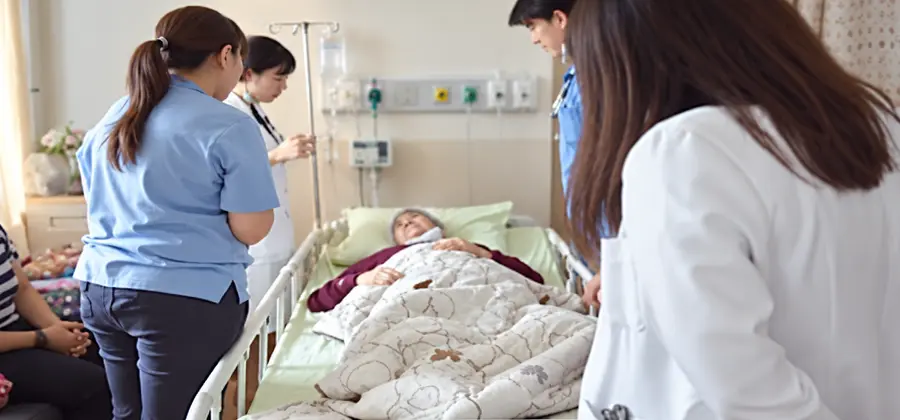
Patients with spinal muscular atrophy (SMA) and scoliosis, and their caregivers.
Our team specializes in scoliosis corrective surgery for patients with spinal muscular atrophy (SMA). By integrating pediatric orthopedics, pediatric neurology, anesthesia, neuromonitoring, critical care, nutrition, rehabilitation, and nursing care, we provide comprehensive perioperative management from preoperative assessment to postoperative recovery. Since 1996, our team has performed spinal corrective surgery for 67 SMA patients, representing one of the largest clinical experiences in Taiwan and among the leading SMA scoliosis care programs in Asia.
Comprehensive care pathway: A standardized perioperative protocol tailored to Taiwanese SMA patients, from shared decision-making to surgery and recovery.
Multidisciplinary collaboration: Pediatric orthopedics, pediatric neurology, rehabilitation, anesthesia, critical care, nutrition, nursing, and social work teams work together in a coordinated care model.
Surgical expertise: Advanced spinal deformity correction performed by an experienced pediatric spine team.
Multimodal blood management: Routine use of tranexamic acid, cell saver, and low-pressure anesthesia to reduce perioperative blood loss.
Cross-disciplinary clinical pathway: Standardized preoperative, intraoperative, and postoperative workflow to improve safety and continuity of care.
Neuromonitoring-assisted safety: Intraoperative neuromonitoring and standardized instrumentation strategies support safer spinal correction.
The KMUH team has performed 67 SMA scoliosis surgeries since 1996.
Our published experience represents one of the largest single-center SMA scoliosis surgical series in Taiwan.
The team ranked first in Taiwan for SMA-related medical reimbursement cases, including high-cost multidisciplinary team care and integrated case management services.
Mean scoliosis correction rate: 63.2%, higher than the 52.9% reported in previous literature.
Use of tranexamic acid reduced intraoperative blood loss by 29%, transfusion volume by 36%, and transfusion requirement by 46%.
Pulmonary function remained stable for more than 10 years after scoliosis correction surgery.
Long-term follow-up was achieved, particularly in type II SMA patients, with an average follow-up of 12.3 years.
Surgery-related neurologic complications: 0 cases.
Surgery-related mortality: 0 cases.
80% reported obvious improved in frequency of respiratory infection
All of the patients showed good sitting tolerance of normal school time
Almost all patients could be tolerable long-time sitting to accomplish the academy
Preserved pulmonary function and reduced the rate of postoperative decline in lung capacity.
Supported nutritional care and overall health through improved posture, sitting balance, and multidisciplinary follow-up.
Corrected spinal deformity, improved sitting stability, and enhanced quality of life for patients and caregivers.
Reduced postoperative spinal curvature to less than 30 degrees in most patients, lowering the risk of recurrent scoliosis and pelvic obliquity progression.
Provided long-term follow-up evidence supporting stable pulmonary function after scoliosis corrective surgery in patients with type II SMA.
Preserved pulmonary function and reduced the rate of postoperative decline in lung capacity.
Supported nutritional care and overall health through improved posture, sitting balance, and multidisciplinary follow-up.
Corrected spinal deformity, improved sitting stability, and enhanced quality of life for patients and caregivers.
Reduced postoperative spinal curvature to less than 30 degrees in most patients, lowering the risk of recurrent scoliosis and pelvic obliquity progression.
Provided long-term follow-up evidence supporting stable pulmonary function after scoliosis corrective surgery in patients with type II SMA.