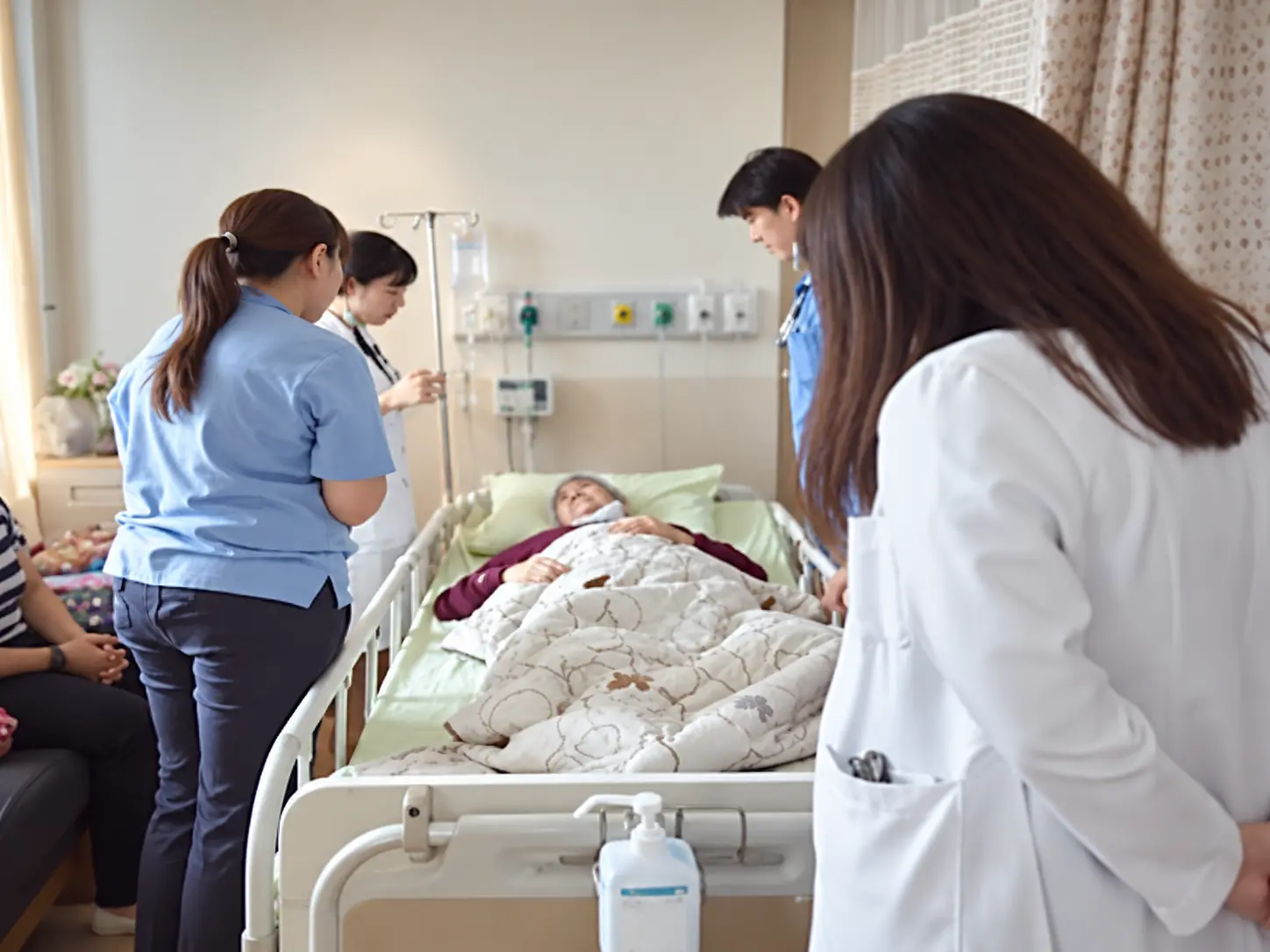
Dedicated to providing at-home palliative care for terminal patients, involving partners such as primary care clinics, home nursing stations, and community pharmacies.
Aims to establish an integrated community palliative care network through collaboration and training with local clinics and nursing institutions. Hospital case managers act as bridges to match terminal patients with the most suitable community teams based on location, financial status, and clinical needs. The hospital serves as a backup for emergency referrals. This model provides patient-centered, family-involved, team-based, and community-integrated "Five-Whole" (holistic) care, enhancing the accessibility and continuity of home palliative care and strengthening the confidence of patients and families in end-of-life care at home.
Establish a palliative and home care network consisting of "Patient Family - Hospital - Home Nursing Station - Community Clinic - Community Pharmacy."
Hospital palliative case managers coordinate the process; joint visits and guidance are provided by both hospital and community palliative teams.
Form social media groups (e.g., LINE) with families and care teams to provide real-time support and consultation.
Establish a coordination mechanism for the retrieval of controlled substances and pharmaceutical assistance.
Since 2018, a total of 816 cases have been referred to community palliative care.
Formation of 6 community-based home palliative care teams.
The community palliative care team successfully enrolled 668 cases, achieving an enrollment penetration rate of 81.7%.
Using the community palliative care model, the rate of terminal patients passing away peacefully at home reached 62.5%.
Implement joint visits to ensure consistency in the care plan.
Provide 24-hour consultation services for medical staff via LINE groups.
Set up coordination processes for the collection and delivery of controlled drugs to ensure medication safety.
Hold regular case discussion meetings for community home palliative care.
Overall patient satisfaction with the community palliative care team: 92%.
Overall satisfaction of the community palliative care team regarding the implementation process: 96%.
Total of 4 academic papers published: 1 non-SCI and 3 SCI.
Project results were adopted by the Kaohsiung City Government as a key policy basis for promoting the "Community Palliative Collaboration Model," showing high alignment between practice and policy.
Invited to multiple regional hospitals and home care institutions to share experiences and promote the model, expanding its influence.
Commissioned by the Kaohsiung Health Bureau to execute the "2020 Medical Regional Guidance and Resource Integration Project" to assist institutions in improving Advance Care Planning (ACP) services.
Improve the accessibility and continuity of palliative care for terminal patients in the community.
Successfully reduce the need for hospitalization and the medical burden on terminal patients.
Strengthen the community's capacity to provide compassionate and dignified end-of-life care.
Establish a cross-professional, inter-hospital, and inter-institutional collaboration model.
Promote a holistic, team-based, and community-embedded "Five-Whole" palliative care model.