.Target Population: High-risk neonates from partner hospitals. 2. Disease Groups: Preterm, VLBW, RDS, congenital anomalies, and critically ill newborns.
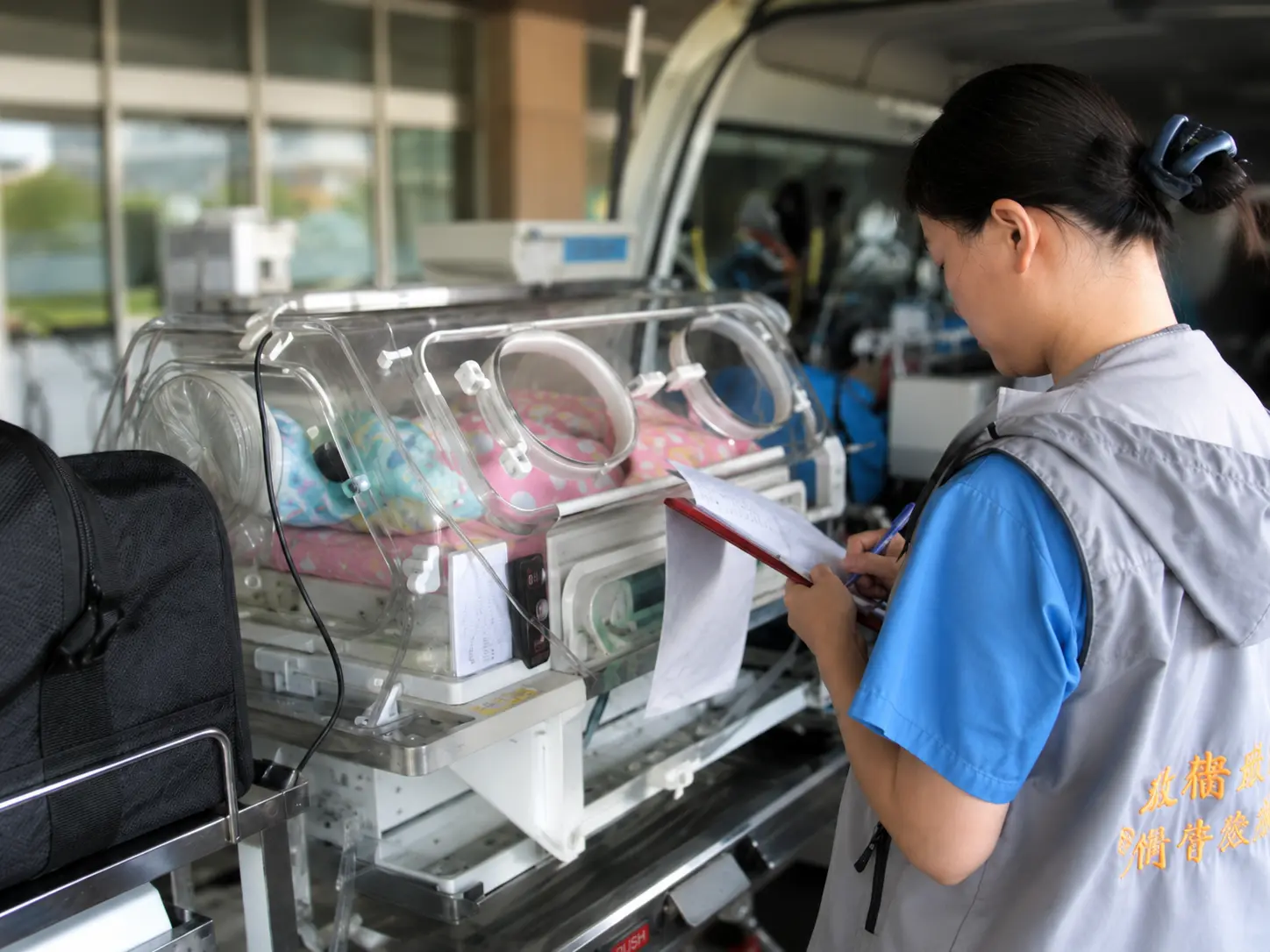
The Neonatal Intensive Care Unit (NICU) of Kaohsiung Chang Gung Memorial Hospital pioneered high-risk neonatal transport services in southern Taiwan in 1999. A specialized transport nursing team and standardized protocols ensure safe transport and continuity of care for critically ill newborns. The transport network expanded from 34 partner hospitals in 2004 to 55 in 2025, covering the Kaohsiung and Pingtung regions. In 2025, 196 high-risk neonates were transported, including premature infants, very-low-birth-weight infants, and newborns with critical medical conditions. The program achieved a survival rate of 99.5%, with the smallest successfully transported infant weighing 680 grams. Through timely transport and advanced neonatal care, the program has become a key regional referral service, improving access to specialized treatment and neonatal outcomes in southern Taiwan.
Pioneer of high-risk neonatal transport services in southern Taiwan. • Standardized transport nursing protocols for various neonatal conditions. • Implementation of developmental care for preterm infants. • Successful transport of a neonate weighing only 680 g.
2025 average transported high-risk neonates: 196 cases • 100% staff completion of neonatal transport training
2025 neonatal transport survival rate: 99.5%
Transport preparation time reduced from 50 to 30 minutes • 100% nursing compliance in transport procedures
Institutional satisfaction with neonatal transport team:
2%
Family satisfaction with neonatal transport team: 88.5%