Elderly with disabilities and children with special needs in rural areas.
The demand for telemedicine skyrocketed during the pandemic, prompting the government to continue promoting telemedicine programs in remote areas to address healthcare disparities. Building on the expanded telemedicine applications, the remote complementary therapy concept emerged. Fu Jen Catholic University Hospital has combined its academic and medical resources along with Chunghwa Telecom Company and Foundation to pioneer an innovative approach to remote music therapy. Music therapy has already demonstrated significant benefits in the field of auxiliary healthcare worldwide. Since launching its remote music therapy initiative in February 2023, the hospital has successfully implemented the program in two institutions serving underserved rural populations. In 2024, the program expanded to include one more service site to meet growing needs. This project breaks geographical barriers, embodying the principle of equitable healthcare by bringing music therapy to vulnerable populations in resource-limited areas. It fulfills the Catholic Church’s mission of compassionate healthcare and aligns with modern sustainability goals by offering innovative remote health services for elderly individuals with disabilities and children requiring early intervention in rural communities.
Fu Jen Catholic University Hospital has leveraged its academic resources and expertise in auxiliary medical care to deliver remote music therapy sessions to the elderly with disabilities and children with special needs in rural areas. This groundbreaking initiative, driven by innovation and compassion, is the first of its kind in Taiwan.
The program combines the strengths of a professional team, advanced telehealth mechanisms, cultural sensitivity, and rigorous evaluation to provide much-needed therapeutic support to underserved populations. It has successfully demonstrated the feasibility of remote music therapy in Taiwan, offering a unique and meaningful way to enhance healthcare for vulnerable communities in remote regions.
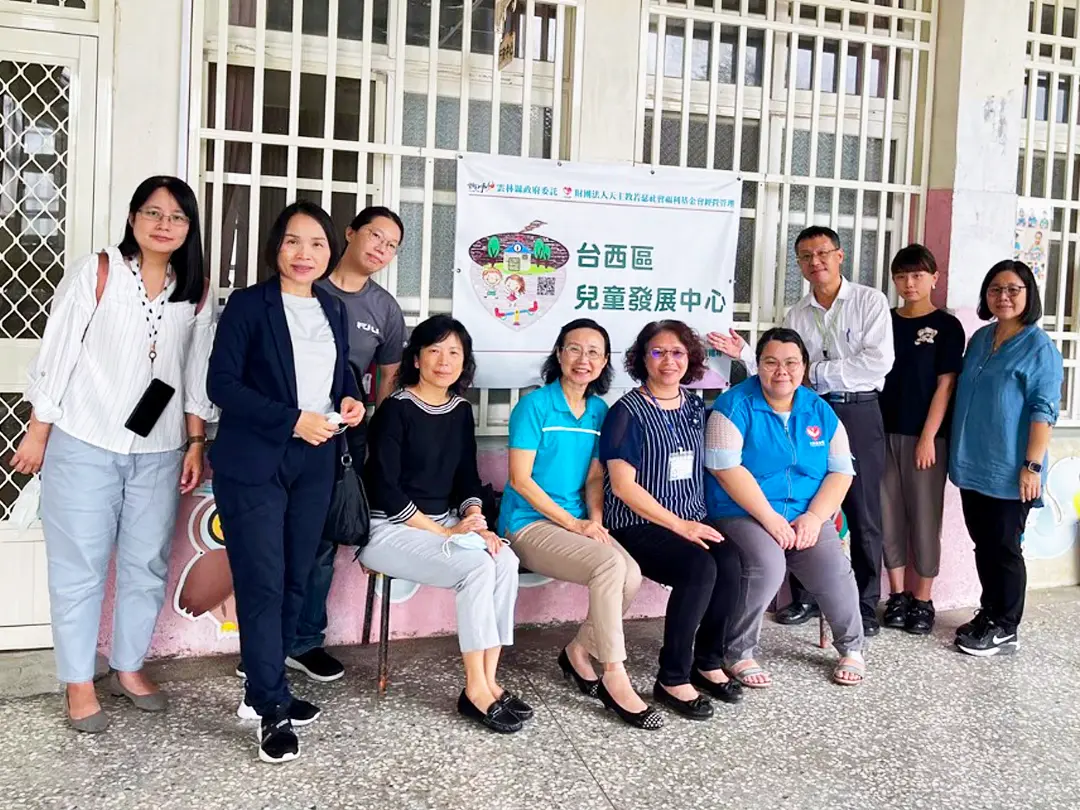
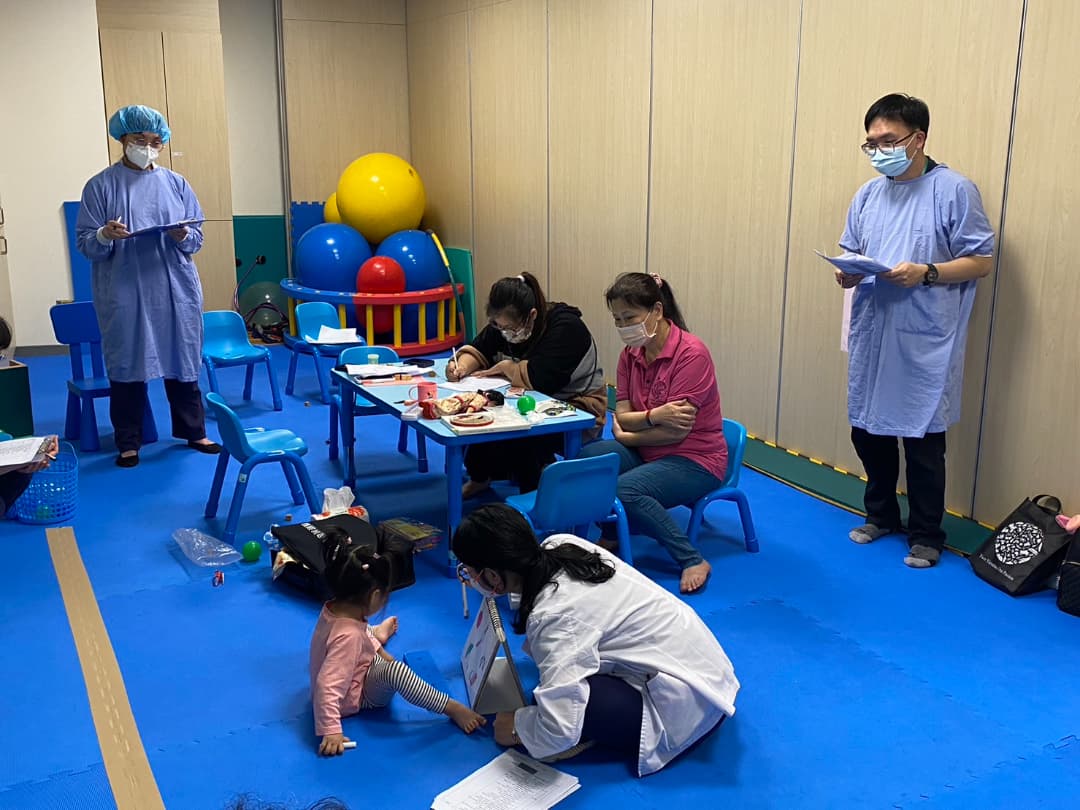
Taisi Children Developmental Center: Over five semesters, 107 group sessions were conducted, serving 792 participants. Interventions were organized into two functional groups, with goals focused on improving language and communication skills, motor function rehabilitation, sensory and cognitive learning, emotional expression, and social interaction.
Sihu Theresa Community Long-term Care Institution: Over five semesters, 113 group sessions were conducted, serving 1,371 participants. Goals included increasing social interaction, stabilizing emotions, promoting cognitive development, and improving physical coordination through instrument playing.
Kouhu Children Developmental Center: Over three semesters, 56 group sessions were conducted, serving 606 participants. Interventions were divided into three functional groups, focusing on goals such as verbal and non-verbal communication, impulse control, sustained attention, behavior imitation, and following instructions. Overall, there was a positive correlation between the number of sessions attended and goal achievement. The later sessions showed slightly higher achievement rates than earlier ones, with steady, incremental progress observed throughout.
Please refer to the following link for the interview: https://www.youtube.com/watch?v=96lYkPr4kSg
Children receiving early intervention demonstrated improvements in social interaction and cognitive functioning.
Older adults with functional impairments showed greater emotional stability and extended attention spans during activities.
Participants experienced enhanced emotional expression, social engagement, and cognitive abilities, while also promoting physical development and delaying functional decline.
The project advanced health equity by providing professional music therapy services to underserved and vulnerable populations in rural and remote communities.
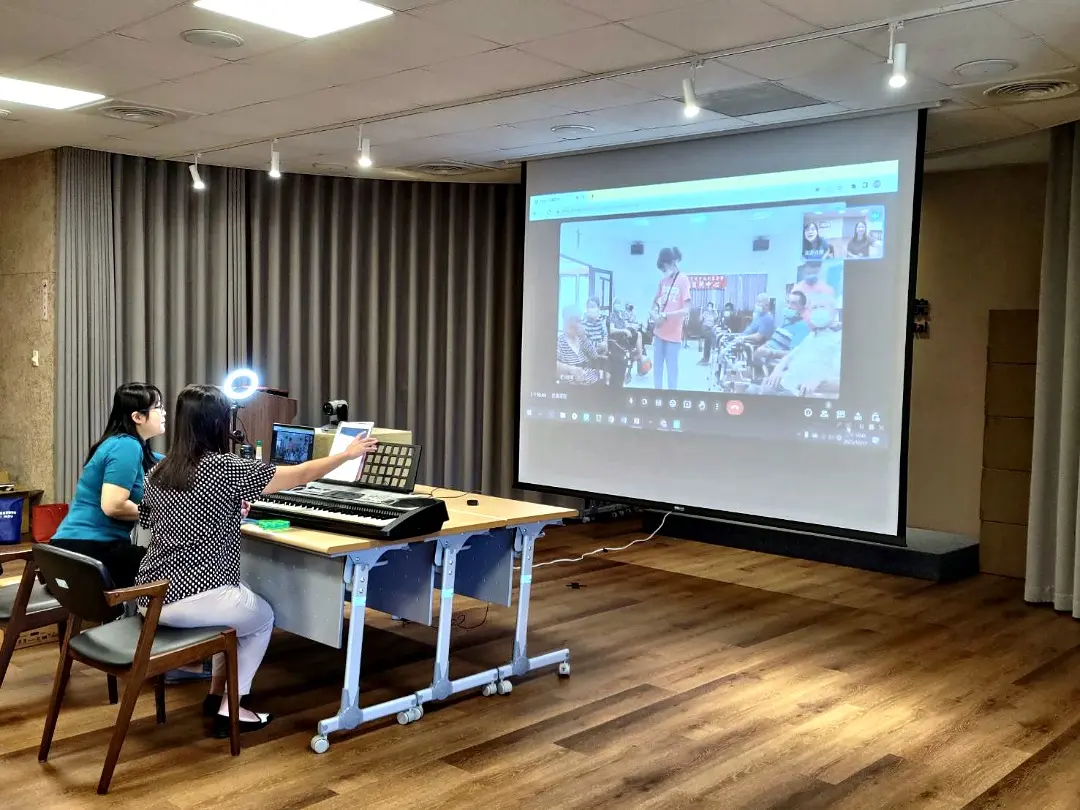
This programme was delivered through a telehealth model. Institutional staff were present on-site throughout each session, while certified music therapists monitored and guided interventions remotely via videoconferencing.
No adverse safety events, including falls, injuries, or excessive sound exposure, were reported during programme implementation.
All musical instruments and activity materials were non-sharp, washable, and safety-approved by participating institutions. Appropriate usage was demonstrated and supervised by music therapists.
Participant feedback was collected through institutional brief surveys and verbal interviews, demonstrating a high level of satisfaction with the programme.
Feedback from participants, caregivers, and institutional staff consistently highlighted positive experiences and perceived benefits of the intervention.
Presented a poster at the Taiwan Healthcare+ Expo in 2023.
Recipient of the Taiwan Healthcare Sustainability Award presented by the Taiwan Institute for Sustainable Energy (TAISE) in 2024.
Improved access to rehabilitation and psychosocial support services for underserved populations, while enhancing emotional well-being, behavioural outcomes, social interaction, and communication skills.
Established a collaborative multi-institutional service network, leveraging the strengths and expertise of participating organizations to maximize service impact.
Demonstrated an innovative application of telehealth technology, overcoming geographical barriers and delivering high-quality music therapy services to vulnerable populations in remote areas.
Based on implementation capacity and resource availability, the programme has the potential to expand progressively to additional service sites in the coming years.