Critically ill patients requiring close monitoring and multiorgan support.
Includes respiratory, sepsis, cardiovascular, gastrointestinal/hepatobiliary, and renal-metabolic critical illness.
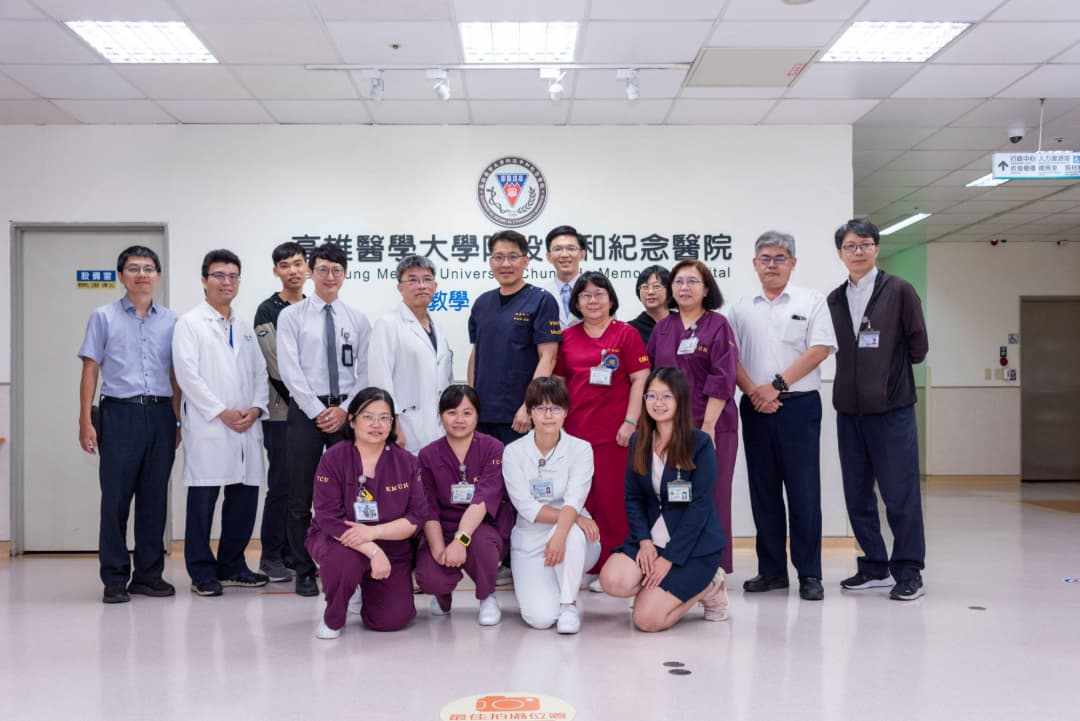
The Medical Intensive Care Unit (MICU) is committed to delivering high-quality, evidence-based care centered on the needs of critically ill patients. The unit manages a wide range of serious internal medical conditions, including respiratory failure, sepsis, multiple organ dysfunction, shock, and cardiovascular diseases. Emphasizing interdisciplinary collaboration and a dedicated attending physician model, the MICU has established standardized care protocols and promotes intensive care education.
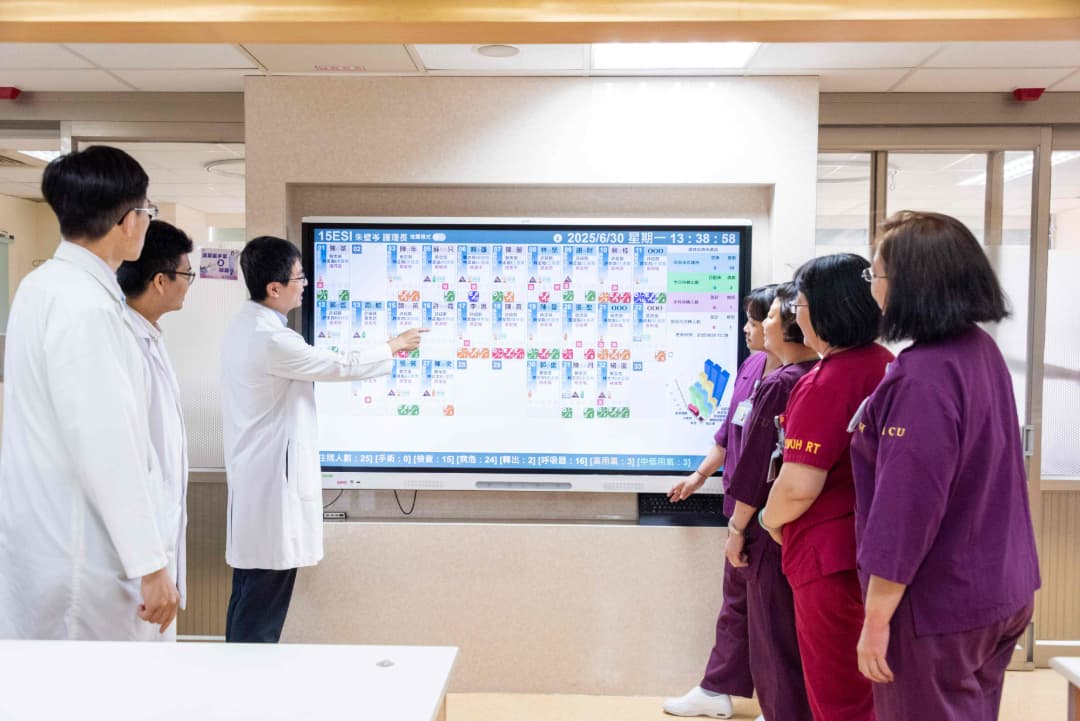
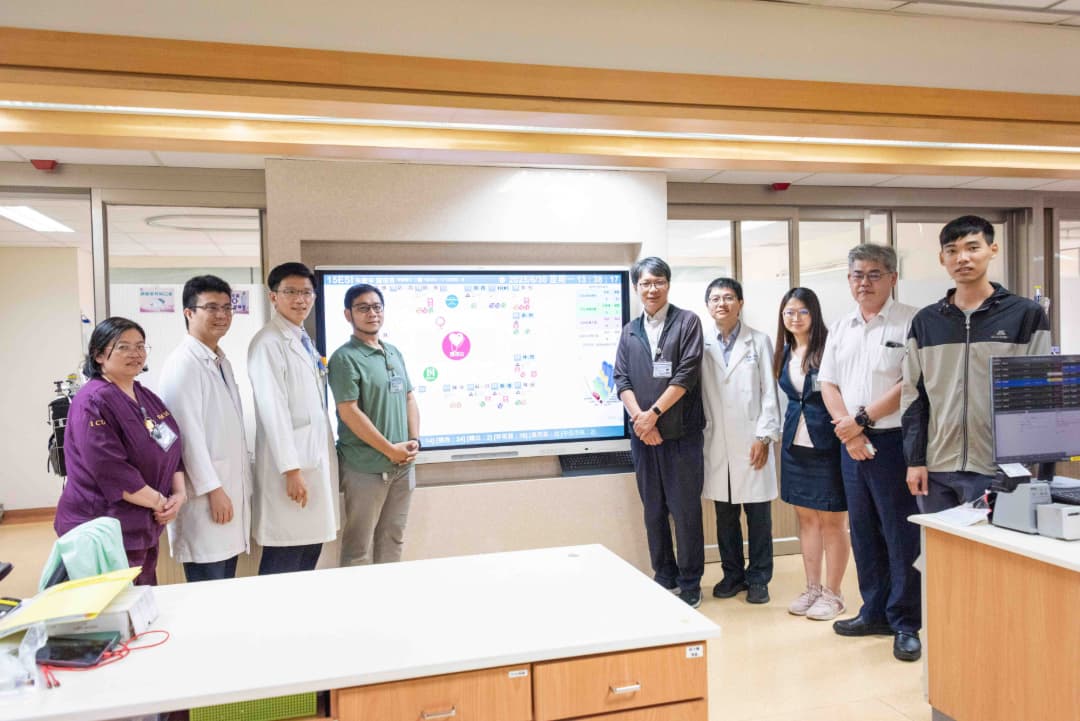
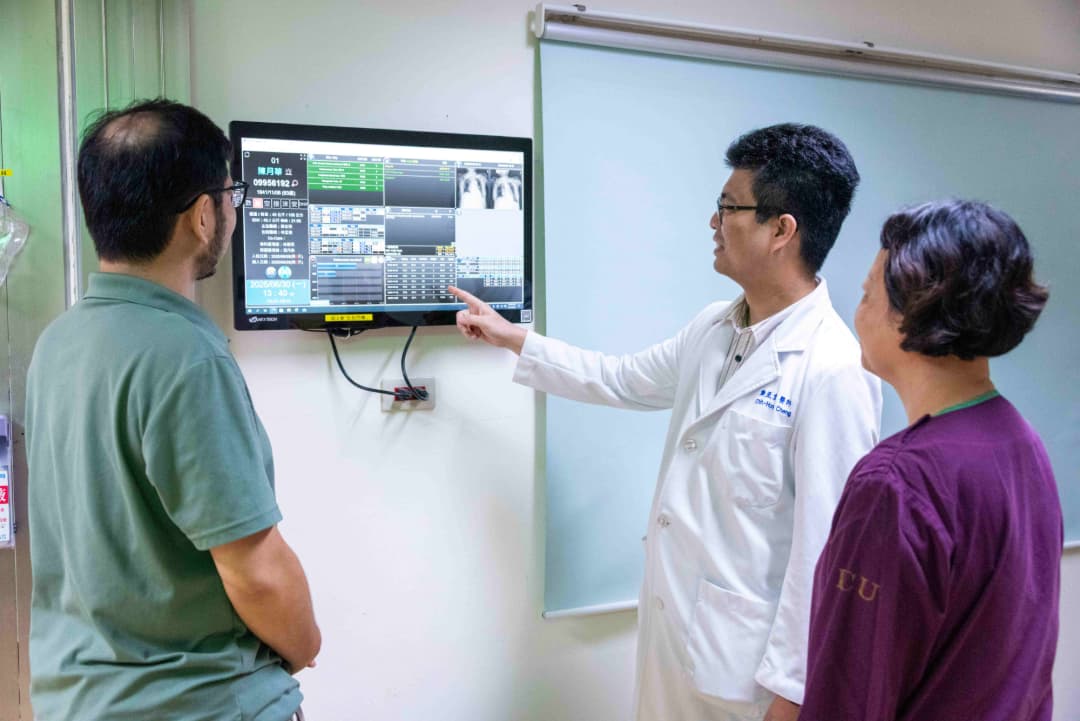
Equipped with advanced monitoring and therapeutic technologies, the unit has also integrated smart healthcare innovations such as intelligent whiteboards and AI-based early warning systems to enhance clinical decision-making and care efficiency. Since its transition to a dedicated unit in 2000, the MICU has continuously implemented key care initiatives: the introduction of blood glucose control systems in 2004; the adoption of CLABSI, CAUTI, and VAP care bundles starting in 2007; prone positioning therapy in 2013; high-flow oxygen therapy in 2015; and smart dashboards in 2023. In addition to providing critical care services, the MICU actively participates in the development of guidelines and clinical research, consistently driving quality improvement initiatives. It serves as a vital center for clinical care, education, and innovation.
Evidence-based standardized care: Since 2000, the Medical Intensive Care Unit has developed evidence-based clinical care, progressively implementing standardized protocols for glycemic control, continuous medication infusion, targeted temperature management, ARDS care, bundle care, PDT, PICC, and innovative pneumonia management to ensure consistency of care and patient safety.
Critical care medical education and training: A comprehensive critical care training system has been established, encompassing residents, fellows, nurses, and respiratory therapists. The program integrates theoretical instruction, hands-on practice, and simulation-based training to strengthen interdisciplinary collaboration and clinical decision-making.
AI-enabled intelligent critical care: In 2023, AI early warning systems and smart dashboards were introduced to integrate real-time patient information and clinical decision support, creating a smart ICU that has been recognized with the National Healthcare Quality Award (NHQA).
The 30-bed ICU treated approximately 1,518–1,684 critically ill patients annually from 2020 to 2024, with a steadily increasing service volume.
The internal medicine ICU has 30 beds. From 2020 to 2024, the average yearly patient-days were 875.5 with an occupancy rate of 97.1%, higher than other medical centers.
The average length of stay was approximately 6.6 days, and the ventilator withdrawal rate for terminal patients reached 12.8% in 2024.
AI-assisted systems were implemented to improve endotracheal tube management, achieving an AI prediction accuracy of >80%.
AI automatic calculation of patient severity indices improved efficiency, reducing average time per patient from 186 seconds to 39.8 seconds, saving about NT$6,288 per month in labor costs.
From 2020 to 2025, device-related infection densities were generally below peer values: bloodstream infections 3.95‰, urinary tract infections 2.76‰, and ventilator-associated pneumonia 0.03‰.
The overall hospital-acquired infection density averaged 5.54‰, slightly lower than the peer value of 6.2‰, indicating effective infection control.
Central line-associated bloodstream infections decreased to 3.67‰ in 2023 after improvements, with effective outcomes from the use of needle-free devices and PICC.
Patient and family satisfaction was high, with an average of 96.48%-97.28% from 2023 to 2024.
Endotracheal tube position anomaly alert device granted invention patent.
AI model predicting ICU patient survival/mortality awarded invention patent.
Received 2023 National Healthcare Quality Award, Silver Award in Smart Healthcare Solutions Category.
Smart ICU development: Introduced AI endotracheal tube position anomaly alert system with a accuracy rate of >90%.
Average length of stay: Reduced to 6.6 days in 2024, improving bed turnover efficiency.
VAP prevention: Implemented VAP bundle care, maintaining a 0‰ infection rate for over five years, exceeding international standards.
Integrated palliative care: Approximately 70% of eligible patients received palliative care, with over 90% completing DNR orders, ensuring dignified end-of-life care.