Hospitalized frail older adults
Hospitalized older patients often experience frailty, and once frail older adults are admitted to the hospital, they face a higher risk of disability. The geriatric medicine ward at Hualien Tzu Chi Hospital adopts an integrated care model based on the Acute Care for Elders (ACE) model. This model encompasses four major aspects: an age-friendly environment, patient-centered care, establishment of elderly medication management, and early linkage to discharge planning services. It also incorporates comprehensive geriatric assessment and multidisciplinary team intervention as its core components. Supported by three major information systems—geriatric case management, elderly medication risk management, and interdisciplinary integrated care—this model focuses on managing acute medical issues for frail older patients during hospitalization, while concurrently developing an integrated care plan and implementing interventions accordingly. Subsequently, it tracks the activities of daily living after discharge. This model represents a unique and patient-centered approach with a specific focus on frailty prevention, making it an age-friendly acute care ward with distinct features in Taiwan. The age-friendly acute care model for hospitalized older patients effectively maintains or improves their activities of daily living upon discharge, thereby preventing subsequent disability.
The geriatric medicine ward implements an integrated care model for older adults, inspired by the Acute Care for Elders (ACE) model from abroad. This model encompasses four major aspects: an age-friendly environment, patient-centered care, the establishment of elderly medication management, and early linkage to discharge planning services. Additionally, it integrates comprehensive geriatric assessments and multidisciplinary team interventions as core components. The ward is supported by three major information systems—geriatric case management, elderly medication risk management, and interdisciplinary integrated care. When addressing acute medical issues for frail older patients during hospitalization, an integrated care plan is developed, and interventions are implemented, followed by monitoring the functional status of daily living activities at discharge. This approach embodies a "patient-centered, frailty prevention-oriented" age-friendly acute ward.
From 2020 to 2022, integrated acute care for frail hospitalized older adults was provided, serving a total of 405 people, with 203 people served in 2023.
From 2020 to 2022, there were a total of 155 interdisciplinary team meetings discussing frail hospitalized older adults, with 60 meetings held in 2023.
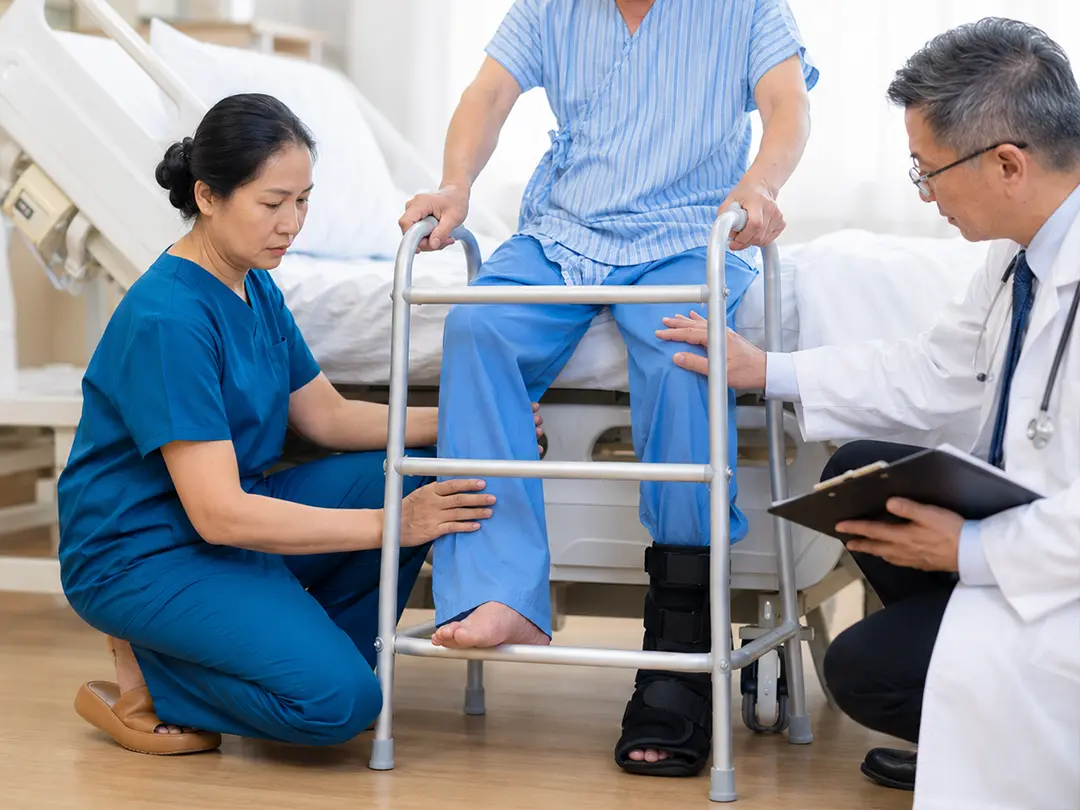
From 2020 to 2022, rehabilitation activities for frail hospitalized older adults served a total of 1,146 people, with 548 people served in 2023.
In 2023, a total of 203 older adults admitted to the Geriatrics Department met the assessment criteria (patients aged 60 and above admitted due to acute medical issues; exclusion criteria: terminal illness or inability to communicate), and all 203 individuals (100%) received a complete assessment.
The average age of the subjects was 76.0 ± 9.9 years, with 124 females (61.1%). The average length of hospital stay was 7.3 ± 4.4 days. A total of 143 individuals (70.4%) had cognitive dysfunction, 145 individuals (71.4%) had abnormal depression assessments, 12 individuals (5.9%) had abnormal delirium assessments, 172 individuals (84.8%) were at nutritional risk, and 73 individuals (55.7%) had mobility issues.
Following integrated care assessments and interdisciplinary team interventions, there was an improvement in activities of daily living (ADL) for 165 individuals (81.3%) at discharge, with 33 individuals (16.3%) remaining unchanged. Among frail hospitalized older adults, significant improvements were observed before and after interventions in daily activity functions and physical activity functions.
Clinical pharmacists utilized the older adult medication risk management information system for medication risk management. Among frail hospitalized older adults, significant improvements were noted before and after interventions in the number of medications and potential inappropriate medications.
Infection rates consistently below hospital average: 0‰ in 2020-2021, and only 0.97‰ in 2022.
Three-year overall satisfaction rate averaged over 92% (2020–2022).
The age-friendly integrated care model based on ACE is currently the most clinically evidenced model that can improve the daily functioning of older individuals within the age-friendly care system. Compared to three representative studies on age-friendly care abroad (where the functional improvement rate between admission and discharge is approximately 23-34%), it is evident that our hospital's age-friendly integrated care model from 2020 to 2022 can effectively enhance the functional improvement rate between admission and discharge (with our hospital's rate being approximately 80%).
In 2023, the functional improvement rate between admission and discharge for the age-friendly integrated care model was 81.3%.
Care Review & Learning Cross-disciplinary meetings are held weekly for frail elderly or mortality cases. Complex cases are discussed monthly. All sessions are recorded.
Staff Training Geriatric ward nurses receive training on CGA, medication safety, delirium prevention, infection control, and care quality. Patient safety events are reviewed in morning meetings.
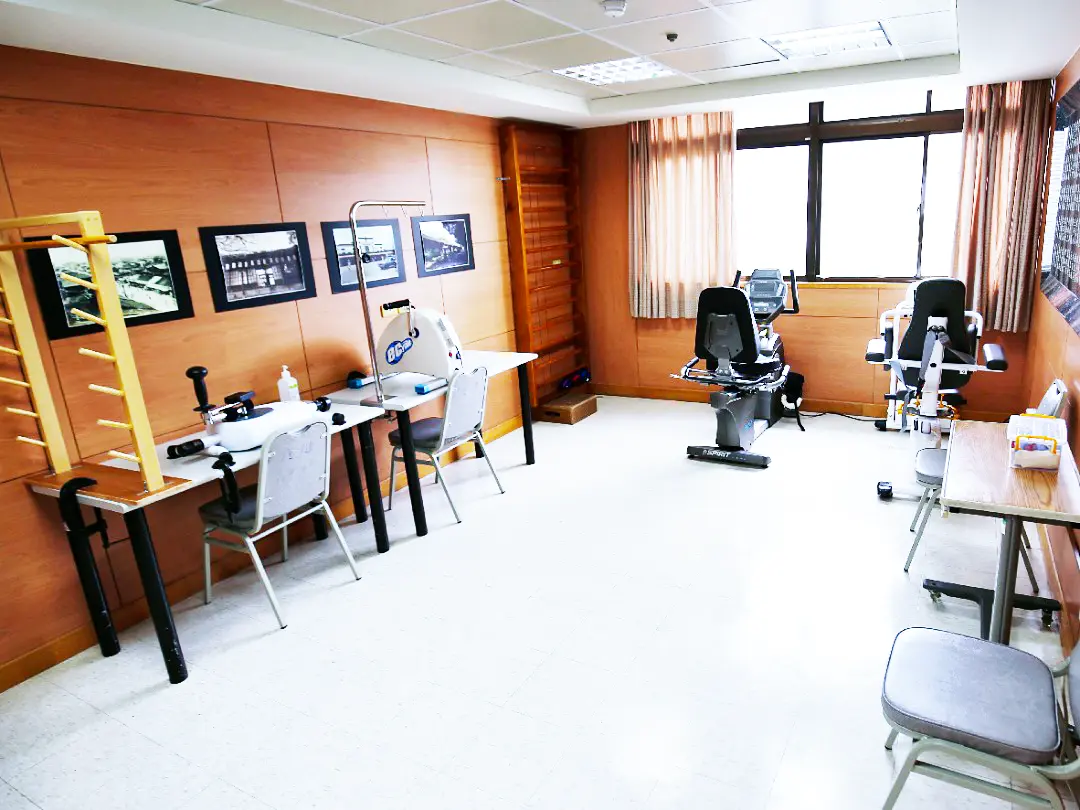
Environmental Safety (1) Age-Friendly Layout: Features double-tier handrails, clear signage, and accessible restrooms to promote independence. (2) Access Control: Rehabilitation classroom uses RFID access control; entry requires staff cards. (3) Emergency Bells: Installed in the rehabilitation classroom to request nursing station support during emergencies.
Process Safety (1) Fall Risk: Risk factors are assessed upon admission/transfer via SOP and included in handovers. High-risk patients receive prevention measures (signs & red wristbands), re-evaluated weekly. (2) Rehab Safety: Therapists assess patient stability. Eligible patients are escorted to the rehab room by family or staff, with continuous monitoring.