Infertile couples
With advancements in medical technology, many reproductive problems that were previously difficult to solve can now be readily resolved. Among these, the progress in micromanipulation techniques has been particularly remarkable.
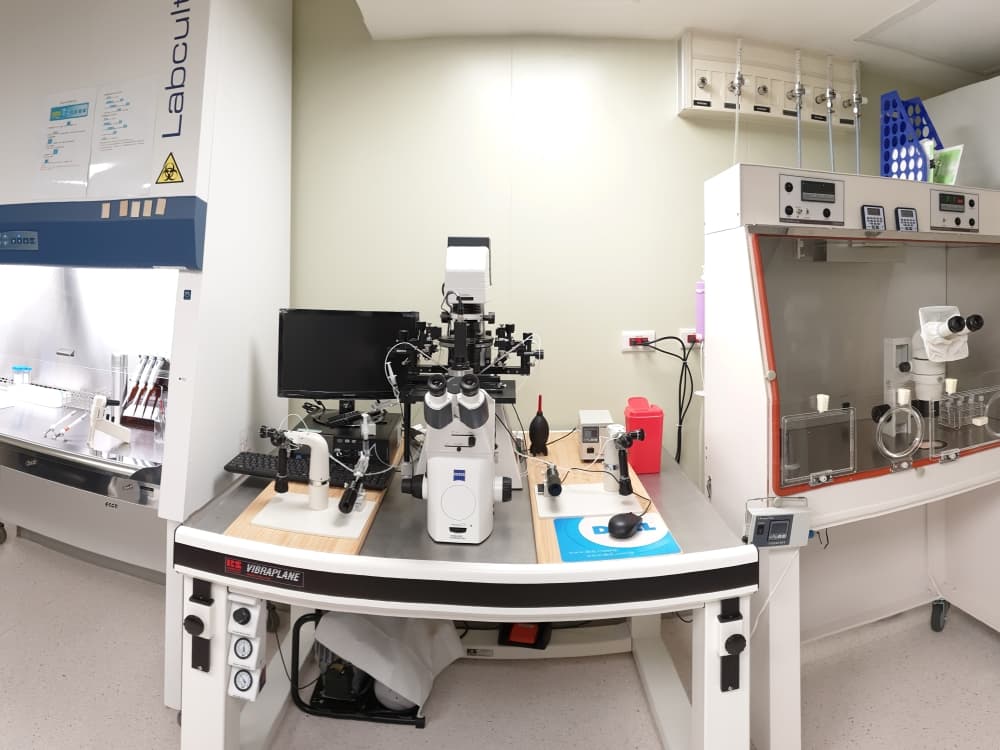
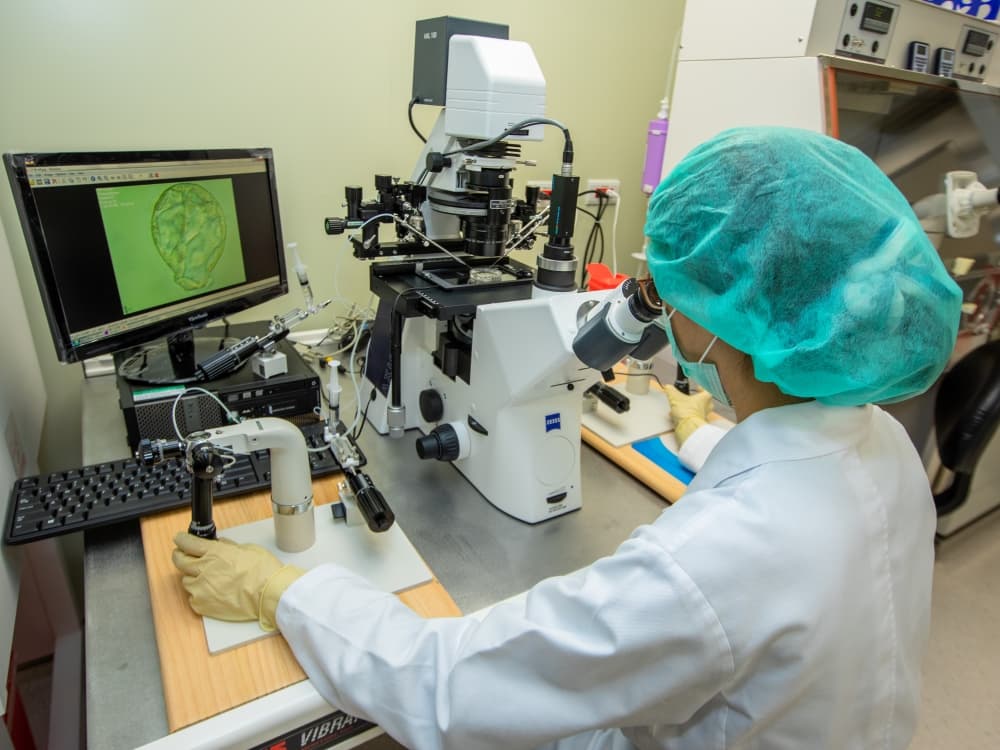
Intracytoplasmic sperm injection (ICSI) has enabled many couples—who previously struggled with fertilization due to poor sperm quality—to conceive successfully. However, in Taiwan, many reproductive centers perform ICSI without first assessing whether the couple genuinely faces fertilization difficulties, opting for the procedure solely to achieve a high fertilization rate. Studies have shown that such an approach does not necessarily improve live birth rates and may, in fact, introduce additional failure factors due to excessive manipulation, leading to unnecessary financial burdens for patients.
To address this issue, our center has implemented the Hyaluronan Binding Assay (HBA) to assess sperm binding capacity. This has effectively reduced the rate of ICSI procedures while increasing the likelihood of natural fertilization, aligning with the physiological principles of reproduction. As a result, we have maintained high fertilization rates while achieving relatively higher live birth rates.
While intracytoplasmic sperm injection (ICSI) can increase the fertilization rate of eggs for patients who are not male infertile, it cannot increase the final live birth rate. After many attempts.
Our center has established ICSI screening criteria to effectively reduce the proportion of ICSI while maintaining a high pregnancy rate. This not only saves patients money but also avoids embryo damage that may be caused by excessive human intervention.
Since 2018, the HBA sperm binding assay has been employed in 1,148 treatment cycles, resulting in the retrieval of 8,492 oocytes and 4,015 naturally fertilized oocytes.
The proportion of ICSI was 81.9% in 2018, 63.3% in 2019, 32.34% in 2020, and has gradually decreased to 23.33% in 2024.
The fertilization rate was 78.6% in 2018, 79.3% in 2019, and 90.49% in 2024, effectively reducing the proportion of ICSI while maintaining a stable fertilization rate.
The cumulative pregnancy rate for treatment cycles is ≥50%.
Fertilization rate (MII-2PN ≥ 85%)
Usable blastocyst rate and embryo survival rate after thawing (≥ 95%)
From 2018 to 2024, the ICSI rate decreased from 81.89% to 23.33%, the fertilization rate increased from 78.58% to 90.49%, and the implantation pregnancy rate for patients under 38 years old rose from 65.38% to 68.12%.
Reduced the financial burden on patients while maintaining a high pregnancy rate.
Patient satisfaction rate: 100%.
International evidence, including studies such as Hum Reprod 2018, the ASRM 2020 guidelines, and the SART-CORS 2023 research, consistently indicates that the routine application of ICSI in cases of non-male factor infertility does not result in an improved live birth rate.
Our hospital's strategy is to "use ICSI under strict indications" to reduce unnecessary usage while maintaining high pregnancy rates in treatment outcomes.
Our center employs a self-developed sperm binding assay standard operating procedure to selectively identify patients who truly require ICSI, thereby minimizing unnecessary ICSI interventions. This approach reduces the potential risk of egg damage, supports normal embryo development, and enhances pregnancy rates.
This strategy also helps to reduce the financial burden of assisted reproductive treatments for patients.