Practicing Endoscopists
Endoscopy Trainees
Patients
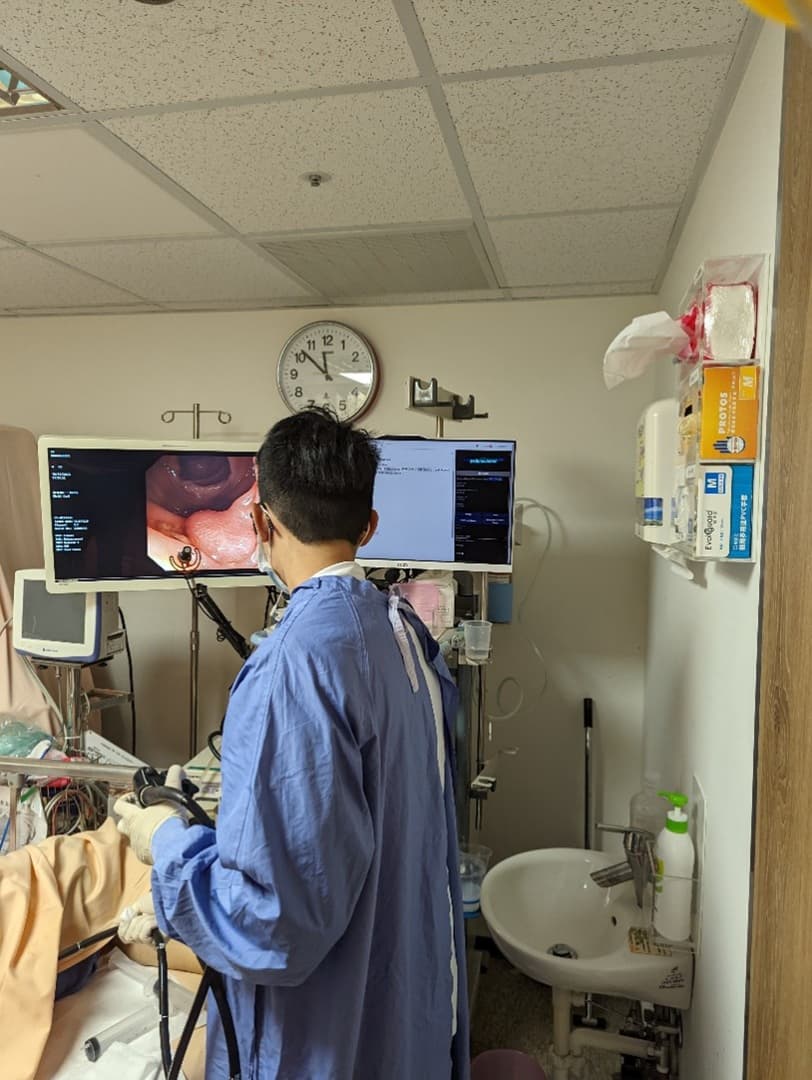
During endoscopic examinations at the Department of Gastroenterology, Cathay General Hospital, physicians must operate instruments with both hands, making real-time documentation impossible. As a result, records rely heavily on post-procedure memory, leading to information omissions and increased workload. To address this clinical challenge, “EndoVoice Smart Record—an AI Voice Assistant System for Endoscopic Documentation” was developed.
By integrating speech recognition and generative AI technologies, physicians only need to verbally state key findings during the examination, and the system automatically converts the input into structured medical records and summarized reports. This approach enhances clinical efficiency, improves data accuracy and quality of care, and shortens the training period for newly recruited physicians.
Key Technology: Integrates speech recognition technology with generative AI models to convert verbally stated keywords into structured medical records and summarized reports in real time.
Key Features: Automatically synchronizes information through DICOM Worklist integration with HIS/PACS and connects with the reporting system, streamlining the medical record generation workflow and improving data accuracy.
14,600 Endoscopy Cases / Year
Physician Adoption Rate 86%
Lesion Documentation 95%
Report Time Reduced 50%
Error Rate Reduced 9%→3%
Training Time Reduced 25%
Speech recognition accuracy 95.14%
WER reduced to 4.86%
SER reduced to 6.70%
Physician satisfaction 80%→90%
Patient satisfaction 91.5
Outperforms Global Speech Recognition
Higher Accuracy & Time Savings vs. Intl
Quality & Safety: Lesion documentation completeness increased to 95%, ensuring data integrity.
Sustainability Impact: Over 40,000 annual labor minutes saved were redirected to service capacity; endoscopy training time for physicians reduced by 25%, alleviating workforce pressure.
Standardization and Scalability: Established standard procedures for AI voice integration and structured templates, facilitating replication of smart healthcare across hospital branches.
Patient Care: Reduced report waiting times, optimized the patient experience, with overall satisfaction reaching 91.5 points.