This service is available to all outpatient, emergency, and inpatient patients who have a Cathay General Hospital medical record number and receive care at either the main hospital or its branches.
This solution addresses issues such as the complexity of medical imaging data exchange processes, heavy manual workload, and high information security risks by creating an AI-powered automated medical imaging exchange platform to comprehensively enhance operational efficiency and security.
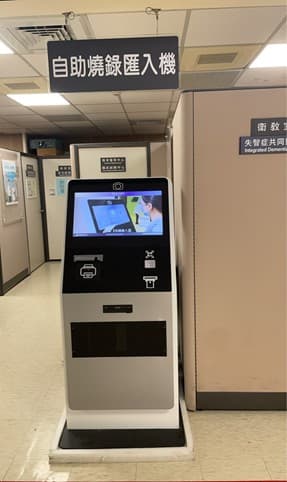
By integrating self-service kiosks with artificial intelligence technology, patients can independently import or burn imaging data. The system automatically completes identity verification, data integration, format conversion, and security control, while seamlessly connecting with the hospital’s medical information systems.
The platform significantly reduces patient waiting times, lowers the risk of human error and data loss, and simultaneously improves service efficiency and patient satisfaction.
Adopting a modular design facilitates promotion and implementation across multiple hospital branches, supports digital transformation and smart hospital development, and realizes high-quality, patient-centered medical services.
The system supports multiple languages and accessible design, enhancing convenience for diverse user groups. All operations are fully logged, and real-time alerts for anomalies are provided to strengthen information security management.
Implementing this solution not only optimizes medical workflows but also effectively reduces labor and material costs, thereby achieving goals of sustainable development and medical innovation.
1.Full Process Automation and Standardization
a. From image generation, standardized processing, data exchange, authorization management to AI-assisted interpretation, all procedures are seamlessly connected through automated workflows, enhancing operational efficiency and consistency.
b. Comprehensive support for international standards such as DICOM, HL7, and FHIR ensures smooth data exchange across hospitals and systems.
2.Self-Service Kiosk Design and Patient Autonomy
a. Patients can independently import or burn imaging data at self-service kiosks, reducing counter waiting times and manual errors.
b. The interface is intuitive, supporting multiple languages and accessibility features, making it convenient for all age groups and special populations.
3.Enhanced Information Security and Privacy
a. Multiple identity verification methods (such as National Health Insurance cards and ID cards) are adopted, with end-to-end encryption for data transmission and burning, ensuring information security.
b. Hierarchical access control, comprehensive operation logs, and real-time anomaly notifications ensure 100% compliance and effectively prevent security risks.
4.High Efficiency and Timeliness
a. The average processing time for imaging data exchange is reduced from 30 minutes to 4 minutes, improving efficiency by more than seven times.
b. The number of daily burning services has increased from 50 to 80 cases, significantly boosting service capacity to meet clinical needs.
5.Innovative Resource Integration and Scalability
a. Modular design allows rapid expansion to multiple hospital campuses and departments, supporting cloud-based and future cross-hospital or international applications.
b. Integration of PACS, RIS, HIS, and AI interpretation systems promotes medical resource sharing and advances smart healthcare development.
6.Patient Satisfaction and Social Evaluation
a. Survey results show that over 91% of patients are satisfied or very satisfied, with patient satisfaction regarding data security rising from 70% to 93%.
b. The platform has received highly positive evaluations from various sectors of society, significantly enhancing the hospital’s brand image and public trust.
The volume of automated image data import and burning operations has increased significantly, with the number of daily burning services rising from 50 to 80 cases, resulting in an overall efficiency improvement of approximately 60%.
The time for patients to obtain imaging data after completing their examinations has been reduced from 30 minutes to 10 minutes, greatly shortening waiting periods.
The diagnosis time for emergency patients has decreased from 2 hours to 1 hour, significantly enhancing the efficiency of critical care.
The average time required for image import has dropped from 12 minutes to 5 minutes, and the average patient waiting time has decreased from 15 minutes to 5 minutes, fully upgrading the quality of service.
Average patient waiting time reduced by 67%
Average time required for image import reduced by 58%
Rate of image data loss decreased by 87%
Automatic anomaly reporting rate increased by 60%
Number of manual assistance incidents for image burning/export reduced by 80%
Patient satisfaction with self-service increased by 14%
Monthly usage of paper consumables reduced by 75%
Audit preparation working hours reduced by 90%
The number of reported cases of personal data breaches has decreased from 15 per year to 1 per year, an improvement of 93%.
The data error rate has dropped from 0.10% to 0.01%, a reduction of 90%.
The number of reported cases of patient data loss has decreased from 20 per year to 3 per year, an improvement of 85%.
Patient satisfaction with data security has increased from 70% to 93%, a rise of 23%.
Compliance rate has reached 100%, with no records of information security deficiencies.
Survey results show that over 91% of respondents are satisfied or very satisfied with the service.
Staff enthusiasm and attitude received the highest score (4.64), while scheduling time to accommodate patients received the lowest score (4.38), though all scores remain above the standard.
Patient satisfaction has significantly increased, especially in areas such as waiting time, information transparency, data integrity, and convenience.
Taiwan invention patent application in progress
Effectively improves medical service efficiency, reduces patient waiting times and duplicate examinations, and promotes optimal utilization of medical resources.
Strengthens patient autonomy, enhances the transparency and security of medical information, and reduces the risks of human error and data breaches.
Reduces labor, consumables, and administrative burdens, driving hospital digital transformation and sustainable development.
Enhances hospital brand image and public trust, complies with international medical regulations and information security standards, and serves as a benchmark in the field of smart healthcare.