Anesthesia Care Team
Anesthesia Patient Care
This project establishes an ESG-Oriented Smart Anesthesia Management Platform, centered on the principles of Environment, Social, and Governance (ESG). By integrating technological process reengineering, generative AI assistance, traditional AI modeling, and a PDCA (Plan–Do–Check–Act) continuous improvement mechanism, the platform enhances system resilience through three major domains:
data governance and research database development,
workload reduction for medical staff, and
patient flow optimization—encompassing 15 concrete improvement initiatives.
After implementation, the platform has markedly improved preoperative anesthesia consultation efficiency, clinical record completeness and accuracy, and operating room turnover rates. Administrative and documentation burdens on healthcare professionals have been substantially reduced, achieving effective workload mitigation and improving overall organizational performance.
The platform complies with international Joint Commission International (JCI) standards for quality and information security, and its high scalability allows broad application across diverse surgical care workflows. It stands as an ESG-driven model of sustainable smart healthcare development.
Patient Flow Optimization and Enhanced Surgical Safety
Workload Reduction Support for Healthcare Professionals
Data Governance and Clinical Database Development
Hospital-wide Anesthesia Scale:
The Department of Anesthesiology performs approximately 2,800 anesthesia cases per month on average.
Service Coverage:
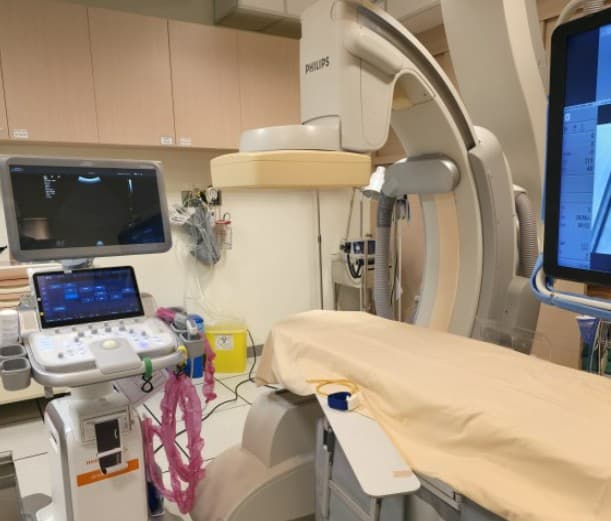
The service scope encompasses 31 general anesthesia operating rooms, 3 cardiac catheterization laboratories, 3 painless endoscopy suites, as well as diverse anesthesia locations including ERCP, DSA, and non-operating-room anesthesia (NORA) sites.
System Development and Data Analytics:
During system development, the predictive module for postoperative acute kidney injury (POAKI) alone involved the cleaning and analysis of 64,978 de-identified data entries from the hospital’s Big Data Center.
1.Preoperative Waiting Time:
Reduced from 53 minutes to 27 minutes after optimization (–49% improvement);
Form completion time improved from 389 seconds to 199 seconds (–49% reduction).
2.Billing Omission Rate:
After the implementation of the Smart Billing Module, the omission rate dropped sharply from 13.5% to 0.6%.
3.Accuracy of Medication Discontinuation Instructions:
Achieved 93.3% accuracy, a substantial improvement compared to 38.3% before optimization.
Postoperative Embolism Events:
Decreased from 1 case to 0 cases following implementation.
Average Blood Loss:
Reduced from 106.8 mL to 70.4 mL, while the major bleeding rate (>500 mL) declined significantly from 6.4% to 2.1% (p = 0.002).
AI-Driven Risk Prediction:
The system provides 30-day postoperative mortality risk prediction (with an AUC of 0.919) and postoperative acute kidney injury (POAKI) risk prediction, offering physicians precise preoperative risk assessment and clinical decision support.
Patient Satisfaction:
Increased from 85% to 96% — an improvement of +11%.
Turnover Rate Improvement:
The turnover rate among anesthesia nurses dropped dramatically from 18.8% in 2024 to 2.4% in 2025.
Reduced Work-Related Stress:
After implementing voice-assisted localization and an integrated dashboard, clinical staff reported significant reductions in perceived workload related to “searching for equipment” and “mental stress,” with Likert 5-point scale scores decreasing from approximately 4.6 to 2.0.
Research Publication:
The integrated Pain Management System has been published in the international journal Medicina (2023).
International Conference Presentation:
The project’s achievements were presented at the 2023 American Society of Anesthesiologists (ASA) Annual Meeting.
Technology Exhibition:
Selected for showcase at the 2024 Taiwan Healthcare+ Expo, highlighting its innovation in smart medical technology.
Management Resilience:
Establishment of a data governance platform and an automated physician scheduling system ensures fair, transparent, and legally compliant workforce allocation in accordance with labor regulations.
Environmental Sustainability (ESG):
Implementation of an automated anesthetic gas management system enables precise tracking of anesthetic drug usage, facilitating monitoring and reduction of greenhouse gas emissions.
Educational Continuity:
Development of a Resident Evaluation Dashboard (RRC) supports anesthesia case tracking and specialist certification assessments, thereby enhancing the quality of medical education.