SNQ and ICHOM are making outcome measurement a tool for changing care. ICHOM president Jennifer Bright on starting from what patients value, finding the gaps, and turning measurement into clinical improvement.
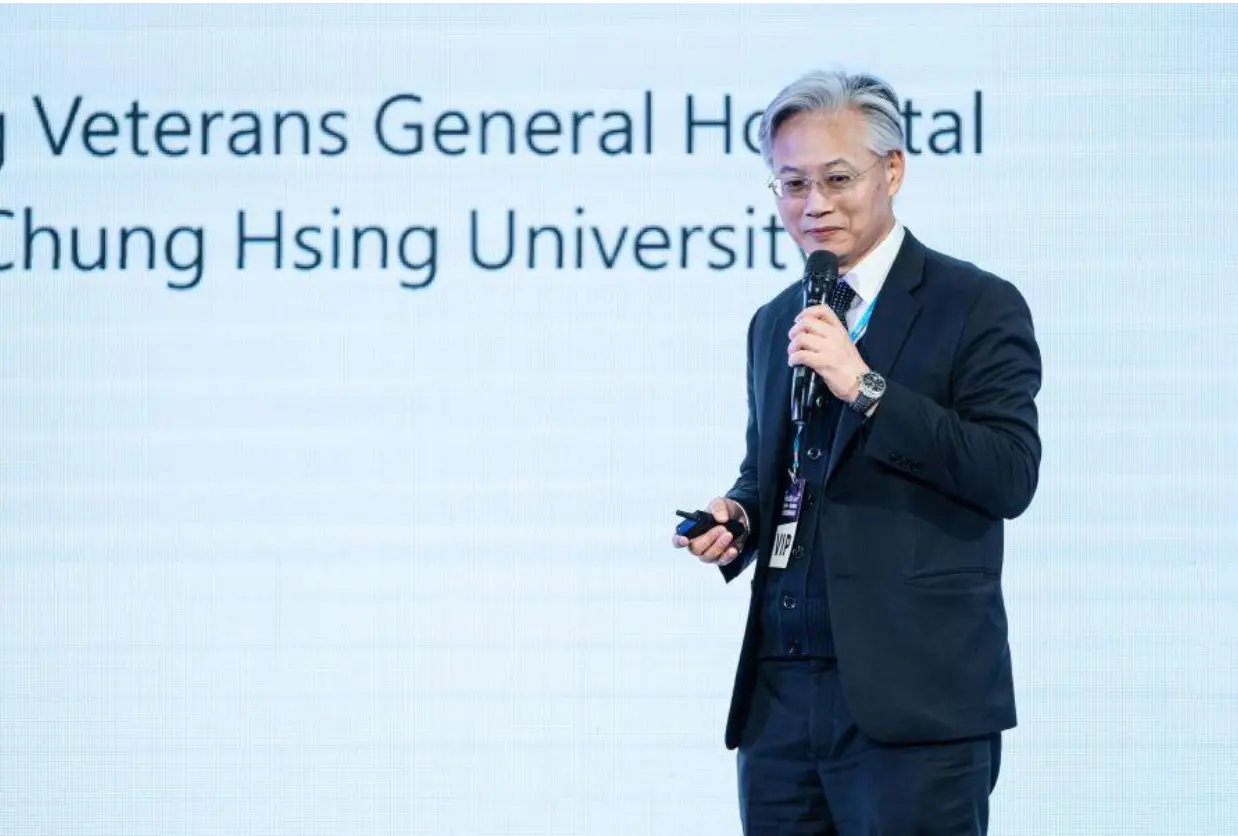
To align Taiwan's healthcare quality outcomes with international standards, SNQ has begun working with the International Consortium for Health Outcomes Measurement (ICHOM). At the quality forum in December 2025, ICHOM president Jennifer Bright shared what healthcare organisations around the world have learned, and addressed a question at the heart of quality management: how do you start from the outcomes patients genuinely care about, find the gaps in care, and turn measurement into clinical improvement?
With an ageing population, more chronic disease, rising costs and workforce shortages, healthcare quality cannot be measured only by how many treatments were completed, how many procedures performed, or whether the patient survived. It has to answer a further question: after treatment, did the patient truly get back the life that matters to them?
Alongside clinical indicators such as survival and disease control, quality of life, mobility, mental health, daily function and the effect of treatment on family and work are all important outcomes. Patient-reported outcome measures (PROMs) let care teams see problems that conventional clinical data may not reveal.
Bright used the concept of value-based care to explain that assessing any healthcare investment means seeing outcomes and resources together:
Value in healthcare = the health outcomes that matter to patients, divided by the cost and resources required to achieve them
Jennifer Bright - president, ICHOM
The outcomes in that equation, she said, should include whether a patient can move about, spend time with family, and keep up daily life during treatment. These count as much as clinical effectiveness if you want a complete judgement of whether resources have become meaningful improvement for the patient.
To build a common basis for measurement, ICHOM convenes international clinical experts and patients to select the outcomes most worth tracking for each condition, and compiles existing, validated instruments. Each set also provides data definitions, measurement time points, risk adjustment variables and implementation guidance, so organisations can track and compare consistently.
But the value of measurement, Bright stressed, ultimately depends on how the data is used. Without using it to understand a patient's care journey and expectations, even a great deal of accumulated data will not deliver genuinely patient-centred care.
She cited Martini-Klinik, a prostate cancer centre in Germany. Treatment used to be judged mainly on five-year survival; when the team began tracking the outcomes patients cared about, the effect of incontinence and erectile dysfunction on life after surgery became a priority for improvement too.
Comparing results across surgeons and surgical approaches, the team found that some techniques performed worse on those functional outcomes, reviewed the clinical pathway, and eventually stopped using the poorer-performing techniques. When what you measure changes, so does what the team pays attention to and improves, Bright said.
She then described diabetes care in Mexico, where a team stratified patients by disease control and self-management capability and adjusted follow-up frequency and intensity of care accordingly - sparing stable patients unnecessary intervention while giving those who needed help more intensive support.
By the case data she presented, the change came with improvements in clinical indicators and in patient anxiety, and cost of care per patient fell by close to eighty per cent. What made it work was that outcome data showed the team how patients' needs differed, so care and resources could be rearranged around them.
In an adult obesity case from GluCare in Dubai, the team extended assessment beyond weight and BMI. The first six months of data Bright shared showed improvement in patients' pain, sleep, mobility, daily activity and self-care, letting the team judge whether treatment had genuinely changed their lives.
A maternity care case from Saudi Arabia showed that PROMs can also improve communication. The team had worried that asking about breastfeeding, incontinence and sexual function would be difficult in the local culture; in practice many women were willing to discuss them and had simply lacked a way to raise them. Patient reports became prompts in the consultation, helping clinicians identify needs requiring further intervention.
To organisations worried about the effort and staffing involved, Bright's advice is to start from what you already have. A full measure set gives you direction, she said, but a hospital need not measure everything at once. Start with a group of patients with high loss to follow-up or poorer outcomes, or with the single outcome most in need of improvement; see what the data reveals, then widen from there.
She noted that healthcare organisations in Ghana and Zimbabwe have made a start under resource constraints, beginning with particular measures in maternity and diabetes care. Once measurement starts helping a team identify problems and adjust practice, the basis for continuous improvement is in place.
On AI, wearables and digital health, Bright sees a chance to reduce the burden of data collection and make it easier for teams to keep track of patients. But you have to establish which data matters most, and how it will affect clinical decisions, before technology can support quality improvement.
In her exchanges with hospitals in Taiwan, Bright has seen AI already in use for diagnosis and risk prediction. The opportunity now, she believes, is to use those same technologies to understand the outcomes patients value most, and bring them into quality measurement and certification.
That is the direction the SNQ and ICHOM collaboration is meant to advance. SNQ's long accumulated experience in quality assessment, she observed, connects well with the patient-centred outcome measurement ICHOM promotes, allowing both to track what innovation actually changes in patients' health and lives.
ICHOM is an international non-profit founded on value-based care; as of this talk it had built outcome measure sets for 47 diseases and health conditions. Beyond setting standards, Bright said, the organisation wants to help institutions find partners already implementing the same measures, so they can exchange implementation methods and improvement experience.
Shared outcome definitions and sustained tracking let care teams see differences, learn from one another, and spread effective practice. What Bright hopes for is that the outcomes patients value become a common direction, so that every measurement has the chance to prompt the next improvement in care.