Inpatients, caregivers, and elderly at the day care center.
The Dietetic and Nutrition Department of Taipei Veterans General Hospital promotes patient-centered, smart healthcare foodservices by integrating the physician order entry system with an online meal-ordering system for inpatients. This system enables patients to select meals independently, make meal or dish substitutions, and request additional items, thereby enhancing flexibility and convenience in the ordering process.
More than 50 diverse menu items have been developed, supported by the implementation of rapid chilling and cold-chain processes. Food safety and quality are ensured through comprehensive monitoring under the Hazard Analysis and Critical Control Point (HACCP) system and critical control points (CCPs).
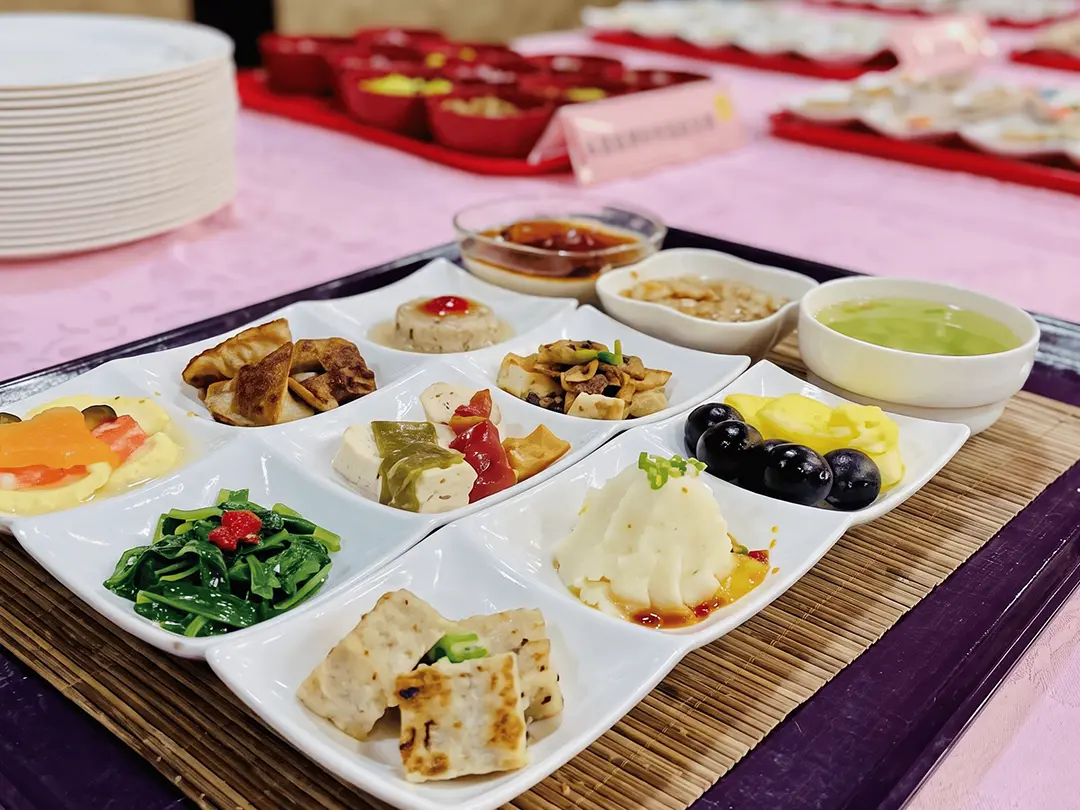
In response to population aging and the growing needs of patients with swallowing difficulties, the department actively promotes texture-modified diets and has developed meals compliant with the International Dysphagia Diet Standardisation Initiative (IDDSI) Level 6 “Soft & Bite-Sized” diet. By integrating advanced culinary techniques, the palatability and overall dining experience are further enhanced. Key strengths include "Ordering Technology Power," "Diverse Selection Power," "Cold Chain Preservation Power," "Elderly Care Power," and "Culinary Professional Power.
Ordering Technology Power: The inpatient online meal-ordering system is fully integrated with physician orders and allergy information, enabling patients to place orders independently, substitute meals or dishes, and request additional items.
Diverse Selection Power: More than 50 diverse menu items—including stewed dishes, noodles, and set meals—have been developed and are continuously updated based on seasonality, cultural preferences, and patients' needs.
Cold Chain Preservation Power: Rapid-chilling processes (Cook-Chill and Cook-Freeze) have been implemented to support batch production during off-peak hours. Meals are stored under refrigerated or frozen conditions and reheated before service.
Elderly Care Power: In response to an estimated 30% demand for texture-modified diets, graded texture-modified meals (e.g., soft and minced textures) and corresponding standard operating procedures (SOPs) have been developed.
Culinary Professional Power: Continuous professional training and chef license renewal are systematically implemented to enhance culinary skills and ensure consistent execution of standardized recipes.
The inpatient online meal-ordering system has been fully implemented hospital-wide across 94 nursing stations, including intensive care units, and is also accessible to patients' caregivers.
More than 50 menu items have been developed, with 100–120 individual meal items meals and 50–60 individual meal items provided daily.
A total of six rapid-chilled stewed soup and noodle meal options have been progressively introduced, with new menu items continuously developed and updated.
Five flavored sauces have been developed for use in minced and finely chopped diets. The supply of texture-modified minced diets averages approximately 120–130 meals per service, accounting for about 11–13.5% of standard plated meals.
Since 2021, annual continuing education programs for chefs have been consistently conducted, achieving a 100% certification compliance rate.
Cook-Chill Diversified Items: Stews and noodle-based meals were shifted from daily to weekly preparation through rapid chilling, resulting in an average labor savings of 1.1 work hours per day.
The ordering rate of diversified menu items increased steadily from 7% in 2017 to 21% in 2024, representing nearly a threefold increase.
Smart Meal Ordering System Adoption
More than 85% of patients reported that they were willing to reuse and support the smart meal-ordering system, indicating high user acceptance and satisfaction.
The Patient Food Service Unit of the Department of Nutrition has obtained HACCP and GHP hygiene certifications, and regular follow-up audits and timely renewals are conducted as required.
Cook-chilled meals undergo microbiological testing based on storage conditions—up to 7 days under refrigerated storage and 30–45 days under frozen storage. All test results comply with the “Microbiological Criteria for Foods” issued by the Ministry of Health and Welfare.
The food production process is fully complies with HACCP requirements, including strict implementation of critical control point (CCP) monitoring, temperature tracking, standard operating procedures (SOPs), and routine microbiological testing.
Ongoing professional training and certification renewal for kitchen staff are systematically implemented, achieving a 100% chef certification compliance rate.
Post-meal satisfaction survey for the gingival soft diet indicated a satisfaction score of 4.74.
According to the 2024 patient satisfaction survey on meal options, the satisfaction score was 4.6 points.
Regarding the meal-ordering system, more than 85% of patients expressed willingness to use the system again.
The implementation of diversified meal options has received positive feedback through the Hospital Director’s mailbox and public commendation on online social media platforms (e.g., Facebook).
Taipei Veterans General Hospital is ranked among the world’s top 250 medical centers. Leveraging a comprehensive, and fully integrated service framework, the Department of Nutrition has implemented Asia’s first autonomous meal-ordering system, enabling patients to place orders independently via their personal mobile devices or touchscreen terminals at nursing stations.
Following the implementation of this system, nutrition departments from other hospitals have visited Taipei Veterans General Hospital for benchmarking and professional exchange, including Taichung Veterans General Hospital, Taipei Veterans General Hospital, Guandu Branch, Koo Foundation Sun Yat-Sen Cancer Center, and Tri-Service General Hospital, among others.
Patient-centered autonomous meal ordering enhances alignment between medical diet orders and meal provision, reduces errors associated with manual information transfer, and improves the quality of inpatient nutrition care.
Diversified meal options and texture-modified diets, including IDDSI-compliant meals, improve the dining experience and satisfaction of older adults and patients with dysphagia.
The cold-chill system increases flexibility, helps distribute workforce demand during peak periods, reduces food waste, and achieves labor-hour savings.
During the COVID-19 pandemic, uninterrupted meal services were maintained, and isolation meal boxes and disinfection standard operating procedures (SOPs) were established to strengthen the hospital’s pandemic preparedness and operational resilience.