Osteosarcoma, Chondrosarcoma, Ewing's sarcoma and other bone cancers
Treat over 60% of primary malignant bone cancer patients in Taiwan
International patients seeking cross-border treatment
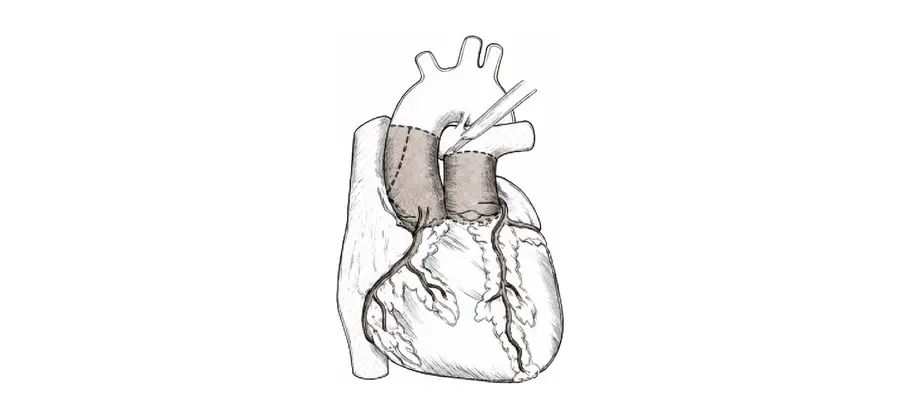
Currently, 60% of Taiwan's musculoskeletal tumor patients are treated at our center. To date, we have treated thousands of malignant bone and soft tissue sarcomas. Our center pioneers global medical technologies, notably in biological reconstruction. With over 600 such procedures performed, we achieved an average 5-year limb-salvage rate of 93% and a graft survival rate of 88%, significantly outperforming traditional endoprostheses. These results are published in renowned international journals. Recently, we invented a biological freezing device, a tissue-preserving anti-freezing agent for cryosurgery, and a Freezing Nitrogen Ethanol Composite (FNEC) for tumors. Maintaining a postoperative complication rate below 2%, our clinical and research excellence fully matches world-renowned institutions.
Additionally, we collaborate closely with the Rehabilitation and Technical Aid Center at Taipei VGH. As Taiwan's oldest government-established rehabilitation institute for physical disabilities, it provides comprehensive rehabilitation training and assistive device manufacturing. To further advance our care, we also established the Taipei VGH 3D Printing Technology Development and Resource Integration Center. This facility develops 3D-printed orthotics, surgical simulations, and surgical guides, effectively improving tumor patients' quality of life and elevating overall healthcare standards.
Biological reconstruction accounts for > 90% of all cases
World's highest volume of autograft reconstructions for limbs with bone cancer
Amputation rate reduced to < 5% (compared to ~10% at world-renowned bone tumor centers)
Comprehensive one-stop treatment team (covering surgery, assistive devices, rehabilitation, and follow-up care)
Pioneering innovative technologies, including Freezing Nitrogen Ethanol Composite (FNEC) cryotherapy, biological freezing devices for reconstruction, and cartilage anti-freezing agents for cryosurgery
3D-printed surgical cutting guides for precise tumor resection
Customized prosthetics and assistive device services
Total surgical volume: 2,574 cases (2012-2016)
High-grade osteosarcoma: 608 cases (1984-2016)
Publications: Published nearly 400 original articles since 1993
5-year survival rate for all high-grade osteosarcoma patients (2004-2011): 77.0% (including patients with pulmonary metastasis)
5-year survival rate for patients without pulmonary metastasis: 90.4%
Amputation rate for osteosarcoma patients: <5%
Local recurrence rate: 6.8%
5-year survival rate for high-grade pelvic osteosarcoma: 42%
5-year overall survival rate for reconstruction methods: 82.8% for extracorporeal irradiation vs. 84.4% for cryotherapy (p=0.694)
Local recurrence rate (with prior traditional massage/Tui Na vs. without): 30.6% vs. 6.3% (p=0.011)
Pulmonary metastasis rate (with prior traditional massage/Tui Na vs. without): 52.8% vs. 18.8% (p=0.004)
5-year survival rate (with prior traditional massage/Tui Na vs. without): 56.2% vs. 92.0% (p=0.004)
Proportion of osteosarcoma patients receiving traditional massage (Tui Na): Decreased from 52.2% (1995-2005) to 19.8% (2010-2016)
FNEC (Freezing Nitrogen Ethanol Composite): Rapidly drops from 37°C to -60°C (reaching -60°C in just 15 seconds) and is completed within 5 minutes; it is safer and easier to control than traditional liquid nitrogen.
Biological freezing device for reconstruction: Ensures that the unfrozen segments of the bone remain completely undamaged.
99% of respondents trust the professional competence of the medical team.
91% of respondents strongly agree that physicians clearly explain their medical conditions and treatment plans.
89% of respondents feel reassured by the care provided by the nursing staff.
81% of respondents are satisfied with the medical team's post-discharge care and follow-up services.
82% of respondents are satisfied with the team's proactive assistance in scheduling medical examinations.
Silver Award at the 2014 National Biotechnology and Medical Care Quality Awards.
Prestigious Conference Roles: Invited to deliver two "Special Lectures" and serve as the Chair of the "Limb Salvage Surgery Symposium" at the world's most prominent bone tumor conference.
Global Recognition in Research: Delivered 7 oral presentations by team members at a single international conference (the highest number from any single hospital worldwide).
Paper Citations: > 200 times.
Invited Engagements: Delivered over 70 invited keynote speeches and surgical demonstrations both domestically and internationally since 2006.
Leadership: Elected as the 2020 President of the Asia-Pacific Musculoskeletal Tumor Society (APMSTS).
International Collaborations: Established partnerships with globally renowned institutions, including Kanazawa University (Japan), Mount Sinai Hospital (Canada), and the Mayo Clinic (USA).
Global Academic Exchange: Hosted clinical fellows and visiting scholars from all five continents.
Cross-Border Medical Care: Attracted international bone tumor patients seeking advanced medical treatment.
European Orthopaedic Society lecture (Madrid, 2010)
Keynote representing Asian surgeons at Mayo Clinic Franklin Sim retirement symposium (2010)
Japan Bone and Soft Tissue Tumor Society Annual Keynote (Tokyo, 2012)
JBJS-Br 2002 cited 121 times; hemicortical resection world-first at ISOLS 2009
Manipulation research: JBJS-Br 2010, PLOS ONE 2014
Preserving the Patient's Future: Preserving patients' natural bone stock is equivalent to preserving their future.
Cost-Efficiency for Healthcare: Reduces National Health Insurance (NHI) waste, with the bone processing procedures provided completely free of charge.
Significant Financial Savings: Eliminates the need for expensive tumor endoprostheses (saving over 180,000 NTD per case).
Public Health Education: Successfully decreased the proportion of osteosarcoma patients receiving traditional massage (Tui Na) from 52.2% to 19.8% through active public awareness campaigns.
Global Technological Impact: Developed the FNEC technology, attracting inquiries from physicians across multiple countries (e.g., Johns Hopkins Hospital, Hôpital Dupuytren) seeking to acquire the formulation methods.
Restoring Mobility: Customized prosthetics effectively enable patients with severe conditions to regain their mobility and independence.