All inpatients (East, West campuses and Children's Medical Center)
Patients in critical care, general wards, and ICUs
Inpatient pharmacists and nurses
Medical staff managing controlled substances
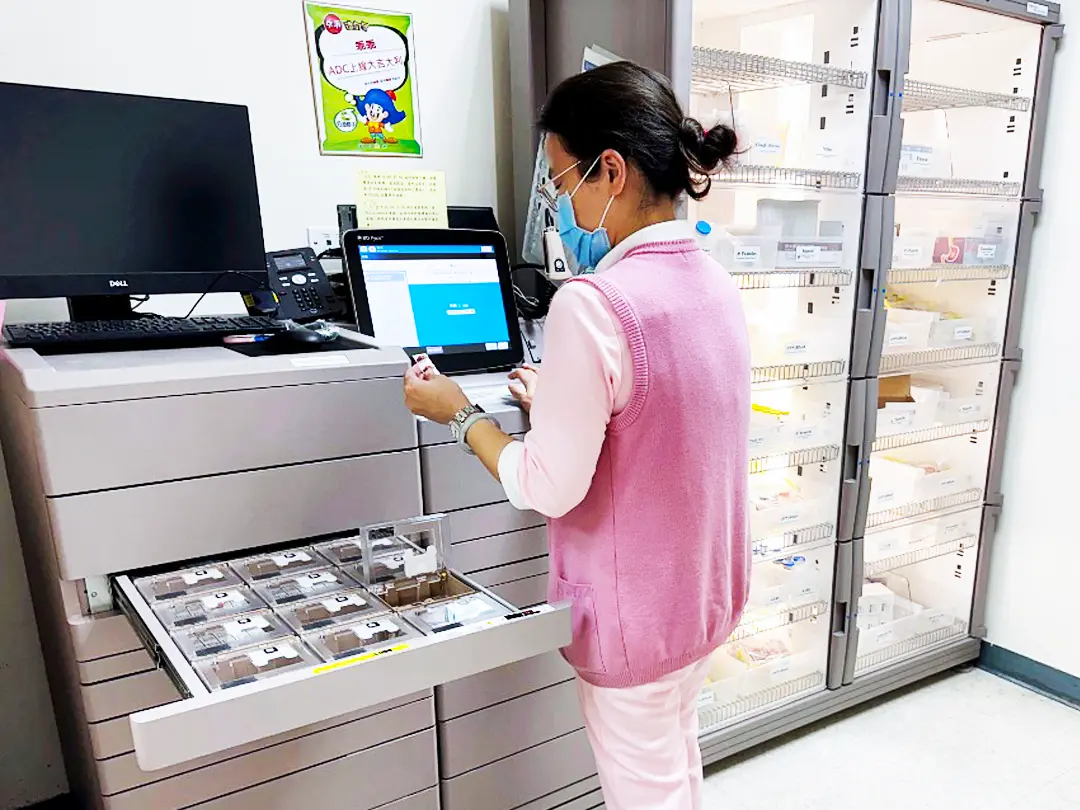
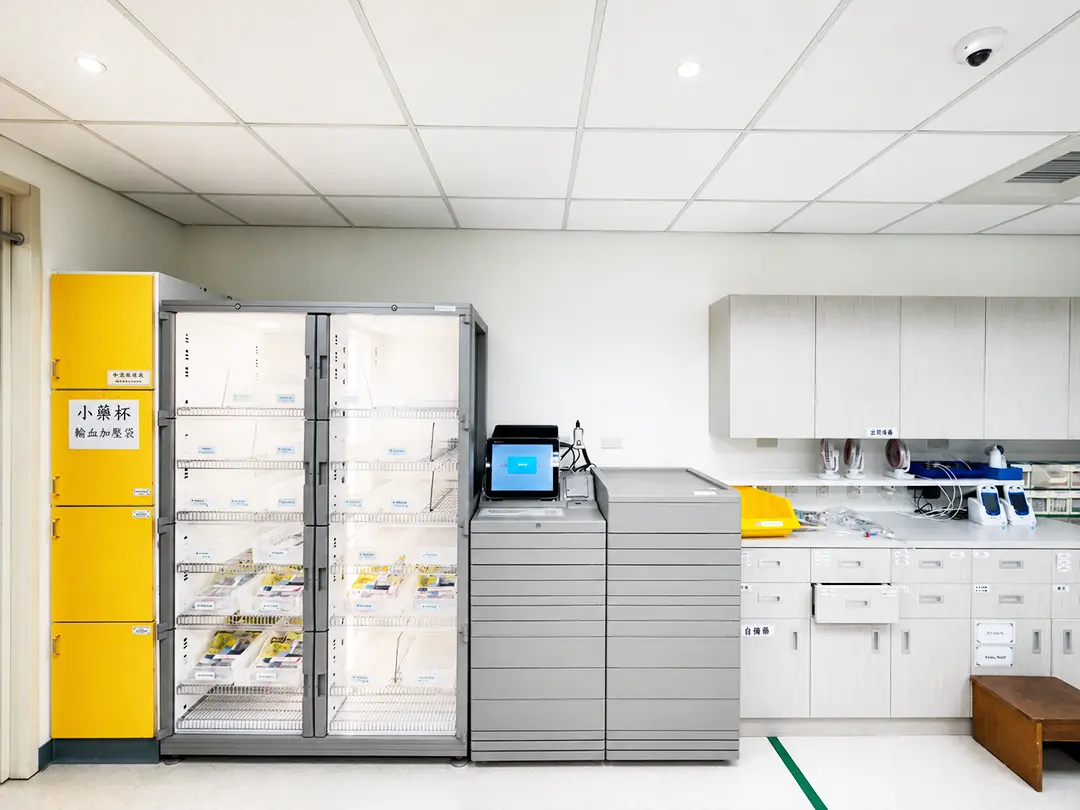
NTUH's Department of Pharmacy launched the Automated Dispensing Cabinet (ADC) project in 2017, using three strategies – 'A-Grade Management (ADC), D-Zero Waste (Digital), C-Hand Innovation (Creative)' – to transform the inpatient drug supply model from traditional UDD to a comprehensive, full-prescription, full-item, hospital-wide ADC system. By 2025, a total of 53 units were installed at the East Campus, 14 at the West Campus, and 14 at the Children’s Hospital, covering over 90% of inpatient wards, making it the largest and most integrated ADC system in Taiwan. The program has successfully implemented closed-loop medication management, significantly reducing medication errors, return rates, and nursing workload, while enabling pharmacists to devote more time to clinical pharmaceutical care.
Taiwan's largest ADC system (expanding across 3 campuses)
Full-prescription integration (oral, injectable; all dosage forms)
Utilizes an enhanced exception handler mechanism to ensure real-time data synchronization
'My Patient List' function linked to shift scheduling system
Controlled drug inventory linked to hospital shift-check system
Deployment scale: East 53 units, West 14 units, Children's Hospital 14 units; with over 90% of inpatient wards hospital-wide implemented (as of the end of 2025)
Coverage: ADCs cover over 80% of high-utilization ward medications, enabling timely medication availability at the point of care
Quality improvement: The number of returned medication cases decreased by more than 60%
Workforce optimization: Monthly transport manpower requirements reduced by 2,075 working hours
Substantially reduces medication return rates
Decreases time spent on medication searching and follow-up in wards
Enhances timeliness of medication availability
Ensures accuracy in medication retrieval and administration
Achieves closed-loop medication management
Waiting time for urgent medications reduced by over 90% after ADC implementation
Administration rate of stat orders within 30 minutes increased by 80%
Consistency between dispensing and administration reached 90%
Dispensing error rate decreased by 46%
Nursing satisfaction: ADC significantly reduces medication return workload (4.7/5) and improves timeliness of patient care (4.4/5)
Pharmacist satisfaction: Overall satisfaction score of 4.1/5
Knowledge dissemination: Invited to share ADC implementation experience at multiple institutions nationwide (8 sessions from 2019 to 2024)
The largest ADC deployment in Taiwan
Full integration of all prescriptions and all medication items, with hospital-wide implementation
Invited presentations: National Taiwan University Hospital (2019, 2022, 2023, 2024) and the Taiwan Healthcare+ Expo (2022), totaling 8 sessions
Transforms pharmacy practice from repetitive dispensing tasks to knowledge-based pharmaceutical care
Implements patient-centered closed-loop medication management
Transfers implementation experience to affiliated branches within the NTUH system
Serves as a national benchmark for healthcare institutions