All medical staff and patients
As the medical environment grows increasingly complex and patients’ demand for autonomy rises, our hospital actively responds to the Ministry of Health and Welfare's initiative to promote SDM to enhance healthcare quality. In 2016, we established the SDM Resource Center, pioneering the implementation of breast cancer SDM in outpatient care. By integrating clinical practice with research, we facilitate discussions about patients’ lifestyles and preferences, empowering physicians and patients to jointly select the optimal treatment plan.
Simultaneously, we focus on developing evidence-based decision support tools (PDA) and incorporating SDM into hospital-wide quality improvement competitions. Through educational training and workshops, we strengthen the promotion of SDM across the institution.
By 2024, our hospital’s SDM services have expanded to 66 items, with a cumulative service record of 68,586 cases. SDM has also been deeply embedded in PGY resident physician training, driving ongoing academic research and external publications. This demonstrates the significant impact of SDM in improving the quality of healthcare delivery.
.aiwan’s first SDM Resource Center.
.42 multidisciplinary SDM topics.
.Digital orders and case management.
.Interactive videos with knowledge checks.
.Evidence-based decision aids.
.PGY training in PDA development.
.Three Talk communication model.
.Regular audit and PDA updates.
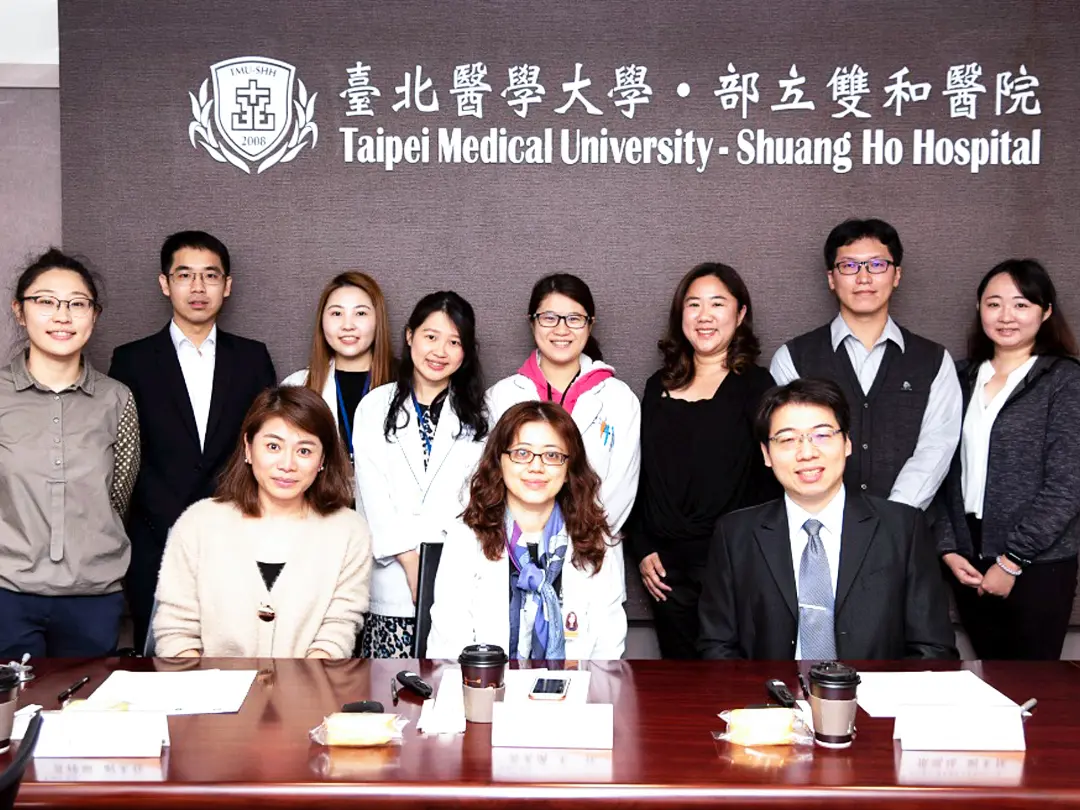
To ensure the effective implementation of SDM, the Department of Medical Quality and the SDM Resource Center jointly form teams to conduct SDM guidance and audits. Teams are required to demonstrate (simulate) the SDM process, with key review areas including the overall SDM workflow, case enrollment procedures, and the utilization of PDAs. If any deficiencies are identified in the team's execution, timely corrections are made to prevent diminished effectiveness of the SDM initiative.
Each SDM topic is assigned specific performance indicators to evaluate whether the intervention helps reduce patients’ decision conflicts. Additionally, satisfaction levels, implementation rates, and the number of options selected are reviewed. These performance indicators are established by the teams and subsequently reviewed and audited regularly by the Department of Medical Quality and the SDM Resource Center.
.42 SDM topics implemented.
.40 medical order/procedure codes established.
.7 topics developed with assistance from PGYs.
.3 RCT outcomes published.
.Decision support satisfaction score: 4.46.
.12 healthcare institutions mentored.
. 42 SDM topics incorporated into management.
. Order codes established for 40 items.
. Periodic audits of implementation workflows and case enrollment.
. Regular updates to decision aids based on the latest evidence.
. Comprehensive electronic documentation of the decision-making process.
. Verification of patient understanding via comprehension tests.
. Reduction of decisional regret and medical disputes.
.Satisfaction score for decision support: 4.46 points.
.An increase of 0.47 points compared to the previous year.
.Satisfaction feedback provided via interactive videos.
.Patients can re-watch health education content.
.Comprehension quizzes verify understanding of the information.
Through randomized controlled trials (RCTs), the impact of SDM on the quality of healthcare following patient decision-making is assessed, including the level of decisiveness in the decision-making process, comprehension of the disease and treatment options, and the degree of regret. To date, five papers—covering topics such as breast cancer surgical methods, rooming-in policies, rotavirus vaccination, hemostasis techniques in angiography, and the effectiveness of SDM implementation across northern and southern Taiwan—have been published in international journals, advancing medical research and clinical practice. For example, in the case of using muscle recovery agents after general anesthesia, the experimental group scored 4.06 in knowledge of their medical situation, compared to 3.63 in the control group (data collected from 2019–2020), as published in the Korean Journal of Anesthesiology (IF 5.167).
Dr. Hisayuki Miura, Director of the Department of Home Medical Care and Regional Collaboration Promotion at Japan’s National Center for Geriatrics and Gerontology, is scheduled to visit Shuang Ho Hospital on November 5, 2024, to observe SDM implementation.
.Enhance patient participation in major medical decisions.
.Establish standardized, cross-departmental SDM processes.
.Strengthen physician-patient communication and mutual trust.
.Reduce decision-making conflicts and medical disputes.
.Leverage digital tools to improve implementation and tracking efficiency.
.Cultivate communication and evidence-based practice skills among PGYs.
.Support 12 institutions in promoting SDM.