Target: 119 EMS arrivals. Strategy: A rapid info channel for major trauma, OHCA, suspected AMI & stroke empowers ER teams to proactively mobilize life-saving resources.
This project seamlessly integrates pre-hospital emergency care with hospital systems, enhancing emergency response capabilities and demonstrating excellence in medical collaboration and innovative technology. Key features include:
Establishing a "Mobile Ambulance Notification System" to effectively integrating EMS pre-hospital care information.
Pre-hospital Early Warning Notifications:
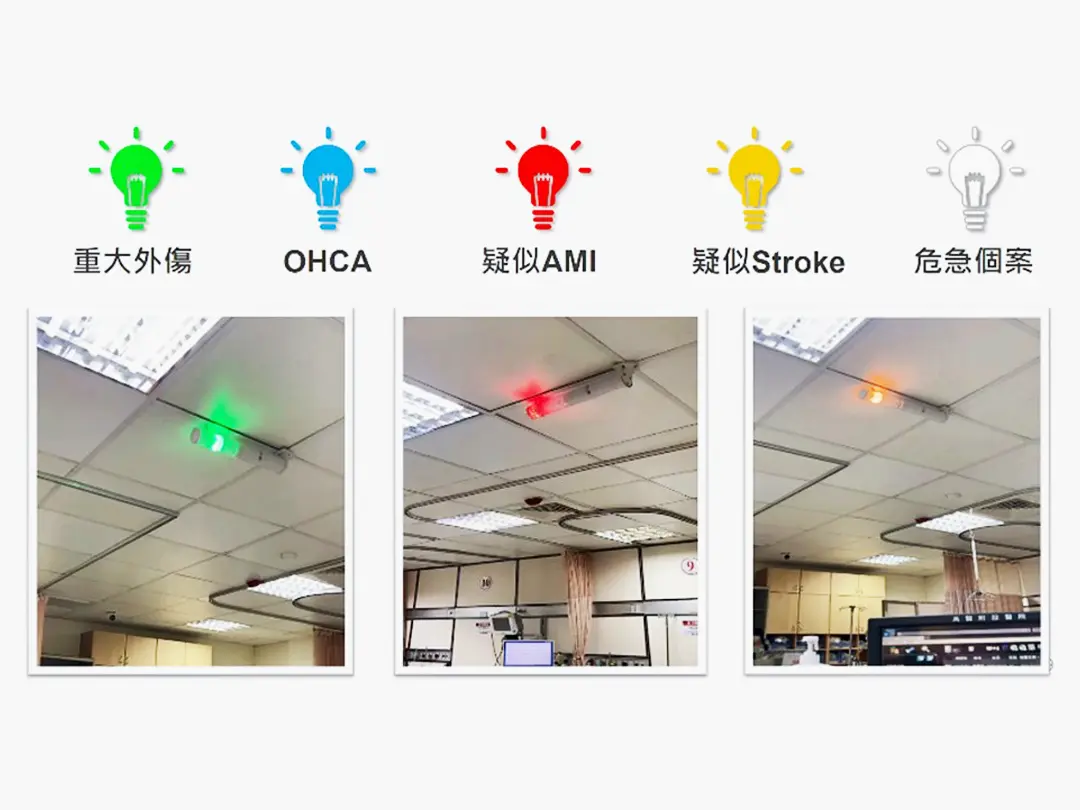
Installing warning flashing lights and SMS notifications in the emergency department to facilitate the advance preparation of physician personnel and resources.
Pre-arrival Emergency Order Placement:
Issuing emergency orders in advance upon receiving alert notifications, improving physicians' administrative efficiency.
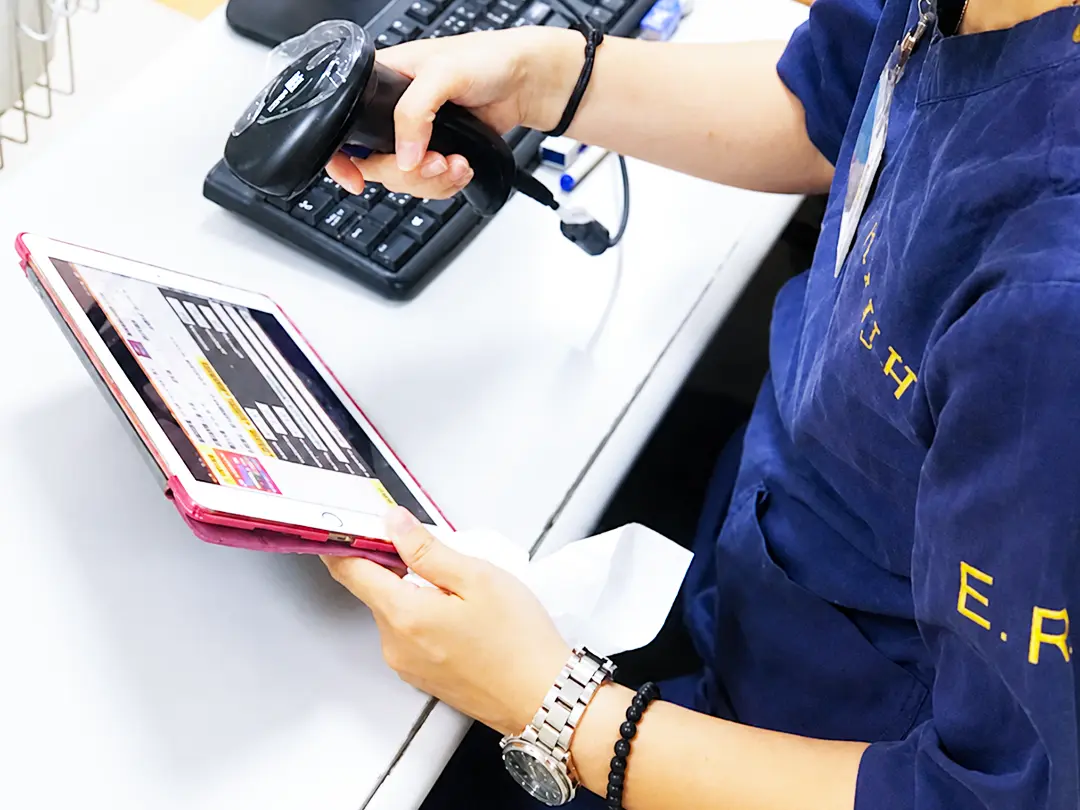
Shortcut for Pre-hospital Emergency Information in Clinical Systems: Reducing the need for repeated logins, saving time and effort.
Promoting Digitalization of Trauma Records:
Reducing physician documentation burden while enabling data reusability.
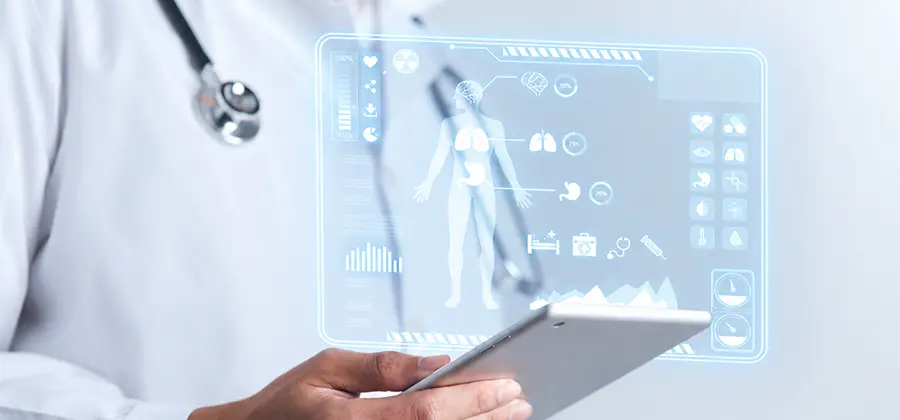
Utilizing Visualization Tools:
Including visualized shock index charts, ICU admission risk indices, and geographic maps.
Simplifying Critical Case Reporting:
Tailoring data delivery to meet the specific requirements of various stakeholders, thereby reducing the workload for reporting personnel.
Pre-hospital Early Warning & Proactive Deployment:
Integrates a Mobile Ambulance Notification System with dynamic ER alerts (visual/SMS). Enabling pre-arrival emergency order placement, this initiative advances preparation time for critical cases by 6.19 minutes, securing the 'golden hour' for major trauma, cardiovascular, and cerebrovascular emergencies.
Data Visualization & Seamless Integration:
Clinical systems feature direct EMS data shortcuts, eliminating redundant logins. Advanced visual tools—shock index charts, ICU risk algorithms, and spatial maps—provide instant clinical overviews. This reduces manual radio dispatch by 96.5%, significantly enhancing cross-team communication and decision-making.
Digital Trauma EMR & ESG Sustainability:
Transitioning to fully digital trauma records minimizes physicians' documentation burden by 25% while facilitating secondary data utilization for quality improvement. Aligned with ESG goals, this paperless initiative eliminates 700 hours of manual filing and saves 500,000 sheets of paper annually.
High Scalability & Regional Network Expansion:
Demonstrating outstanding scalability, the operational model was successfully expanded from major trauma to cover OHCA, AMI, and stroke. Furthermore, the system has been deployed across the KMU healthcare network (Kaohsiung Medical University Gangshan Hospital, Kaohsiung Municipal Siaogang Hospital, and Kaohsiung Municipal CiJin Hospital), solidifying a robust regional emergency care network.
Overall Service Volume: Successfully received averaging 931 cases per month.
Response Time Optimization:
Advanced ER preparation by an average of 6.19 minutes for all critical cases, and 5.62 minutes specifically for major trauma.
Clinical Efficiency:
Reduced physician charting time by up to 25% and decreased manual radio communication interceptions by 96.5%.
ESG & Paperless Operations:
This initiative saves approximately 500,000 sheets of paper annually and reduces physical medical record archiving time by 700 hours.
This project installs the "Data Exchange Software" provided by the National Science and Technology Center for Disaster Reduction on a dedicated server. A physical isolation firewall is established between this data and the hospital's internal servers to prevent the intrusion of unsafe data into the hospital's system.
The project is designed with a focus on clinical workflow practicality. Since all information is considered private, a strict quality management mechanism is implemented. The "Mobile Ambulance Notification System" is integrated into the hospital's unified system, with access permissions tailored to individual login identities. The "Pre-arrival Emergency Order Placement" function is exclusively available to physicians. After logging in, the system backend records all user activity.
The survey of clinical staff showed an average satisfaction rate of 97% after using this project.
Patent Granted in the Republic of China: "Pre-hospital Warning Method for Critical Patients," Certificate No. I843631.
Achievements Featured in the 2024 Trauma Innovation Special Report: This inclusion enhances the international visibility of the hospital and Taiwan's innovative integration in emergency medical care.(https://publuu.com/flip-book/153757/1241251)
Chao-Wen Chen (2024, June 19-23). Trauma Registration in Taiwan: Past, Now and Future [Conference presentation]. 23rd International Conference on Emergency Medicine (ICEM 2024), Taipei, Taiwan.
Yung-Sung Yeh (2024, June 19-23). Remote Areas Collaborate with Medical Centers Through Telemedicine for Efficient Cooperation [Conference presentation]. 23rd International Conference on Emergency Medicine (ICEM 2024), Taipei, Taiwan.
Quality Benchmark: Established a standardized response pathway, setting a benchmark for seamless EMS-ER data integration.
Care Benefits: The early warning mechanism secures over 6 minutes of golden time for resuscitation, significantly improving patient outcomes in critical conditions.
Clinical Standards: Innovative visualization tools and electronic medical records (EMR) alleviate clinical burden and enhance the quality of clinical decision-making.
Medical Sustainability (ESG): Achieved green healthcare goals by eliminating 500,000 printed sheets and 700 hours of manual filing annually.
Regional Network Expansion: This highly replicable model has been deployed across three hospitals within the KMU system, solidifying a robust regional emergency network.