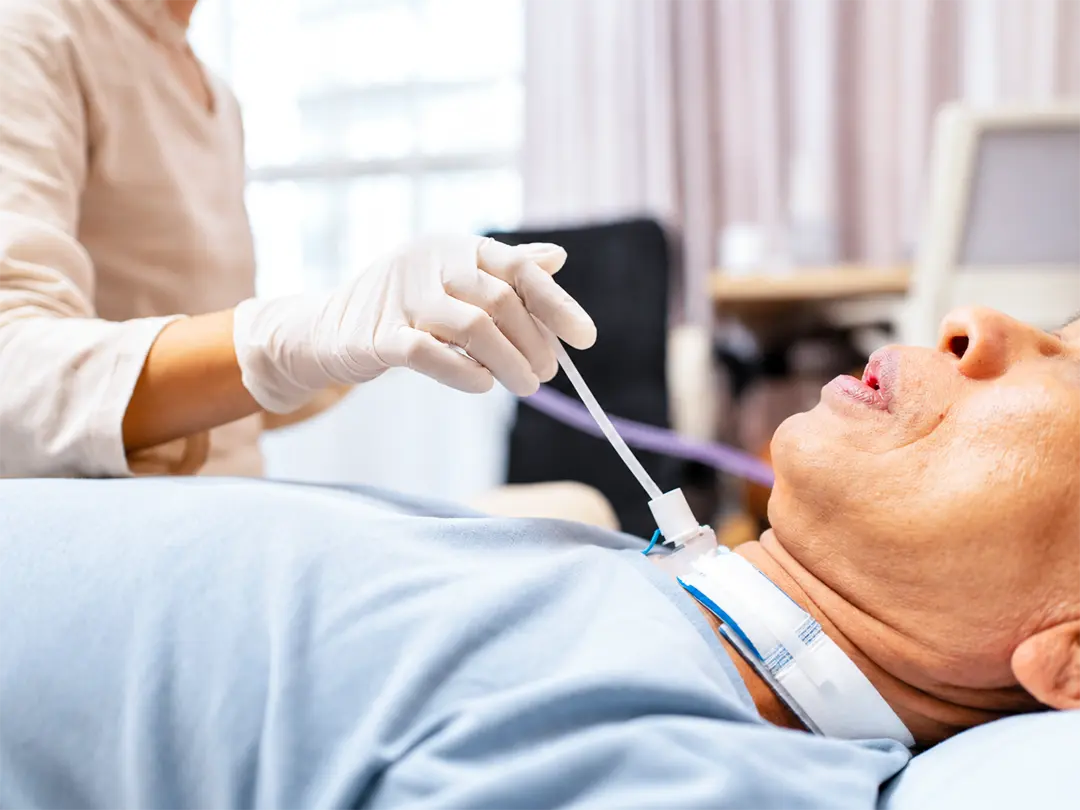
This model is applied to inpatients with tracheostomy tubes, nasogastric tubes, or urinary catheters, admitted under neurology, neurosurgery, or rehabilitation departments.
Inpatients often face challenges such as respiratory failure, dysphagia, and dysuria resulting from disease sequelae. The placement of tubes, including tracheostomy tubes, nasogastric tubes, and Foley catheters, is a common intervention to meet their basic life needs. However, in addition to causing psychological discomfort, these tubes increase the risks of infections, trauma, and accidental dislodgement. Such complications not only compromise patient safety but also place additional burdens on caregivers and escalate medical costs. For patients with more severe conditions, it is common to require multiple tubes simultaneously, further complicating care. To address these issues, our center has implemented an intelligent care system for the integrated management of "three tubes"—tracheostomy tubes, nasogastric tubes, and Foley catheters. This patient-centered system aims to identify suitable candidates for early tube removal during their hospitalization. By promoting safe and timely tube removal, we strive to enhance patients' quality of life, reduce the burden on caregivers, and support patients in achieving a tube-free life, ultimately facilitating their return to social participation.
Real-time visualization: three-tube map
Integrated care: three-tube management system
Safety standardization: standard operating procedures for tube removal training
Consultation fast-track: designated contact - nurse practitioner Jia-Lan Chang, initiating tube removal training
From April 2023 to March 2024, the number of services provided for tube removal training is as follows:
Tracheostomy tube removal training: 8 cases
Nasogastric tube removal training: 530 cases
Foley catheter removal training: 2,042 cases
Safety:
During the period from April 2023 to March 2024, patients and families who underwent tube removal training were followed up three months post-removal, either through medical record reviews or telephone interviews. No cases of re-intubation or mortality were reported.
Cure Rate:
From April 2023 to March 2024, patients whose tubes were removed and remained tube-free three months later achieved a safe and permanent removal status.
Tracheostomy Tube Removal Rate:
April–December 2023: 83.3%
January–March 2024: 100%
Nasogastric Tube Removal Rate:
Rehabilitation Department:
April–December 2023: 43.8%
January–March 2024: 35.3%
Neurology Department:
April–December 2023: 51.3%
January–March 2024: 47.5%
Neurosurgery Department:
April–December 2023: 42%
January–March 2024: 40%
Foley Catheter Removal Rate:
Rehabilitation Department:
April–December 2023: 73.6%
January–March 2024: 66.7%
Neurology Department:
April–December 2023: 76.3%
January–March 2024: 84.9%
Neurosurgery Department:
April–December 2023: 94.2%
January–March 2024: 88.1%
Tracheostomy removal: 6 cases, re-intubation: 0 cases, mortality: 0 cases
Nasogastric tube removal: 199 cases, re-intubation: 0 cases, mortality: 0 cases
Urinary catheter removal: 1,562 cases, re-intubation: 0 cases, mortality: 0 cases
Zero re-intubation rate at three-month follow-up for all tube types
Tube removal satisfaction survey
Quarterly patient satisfaction rate exceeds 90%
Consultation, follow-up, real-time monitoring and immediate communication via official Three Tubes LINE@
Poster accepted for the "ISQua’s 41st International Conference" (October 2025): Title: "Using Quality Control Circles to Enhance Swallowing Rehabilitation and Interdisciplinary Collaboration to Improve Nasogastric Tube Removal Rates in Stroke Patients with Dysphagia."
Winner of the 25th National Healthcare Quality Award (NHQA) – Thematic Category Competition.
International Journal Publication:
Hong JP, Lee CH, Hong CT, Chan L, Chung CC, Charoenpong P, Chiu HC, Liou TH. Functional assessment of patients with myasthenia gravis-related disability using WHODAS 2.0: A nationwide longitudinal study. BMC Public Health. July 2, 2025; 25(1):2210. DOI: 10.1186/s12889-025-23328-5. PMID: 40604668; PMCID: PMC12220094.
Research Projects:
4.1 TMU-JIRB Project No. N202503020: "Using Clinical Research Databases to Investigate the Associations Between Neurological Disorders and the Use of Tracheostomy Tubes, Nasogastric Tubes, and Urinary Catheters."
4.2 2024 Healthcare Personnel Research Project: "Ultrasound-based Exploration of Quantitative Oropharyngeal Parameters During Swallowing of Foods with Different Textures in the Elderly."
The center's medical quality control mechanism is overseen by Dr. Jia-Pei Hong.
Quarterly data collection and analysis are managed by Specialist Nurse Jia-Lan Chang.
When indicator results fall below the previous quarter's targets, the responsible physician will present a report during departmental meetings. Internal meetings will then be convened for regular review and improvement, with oversight and management provided by the hospital's Quality Control Department.