Patients with degenerative spinal diseases, spondylolisthesis, foraminal stenosis, compression fractures, and other diseases that cause spinal structural instability and require bone nail placement.
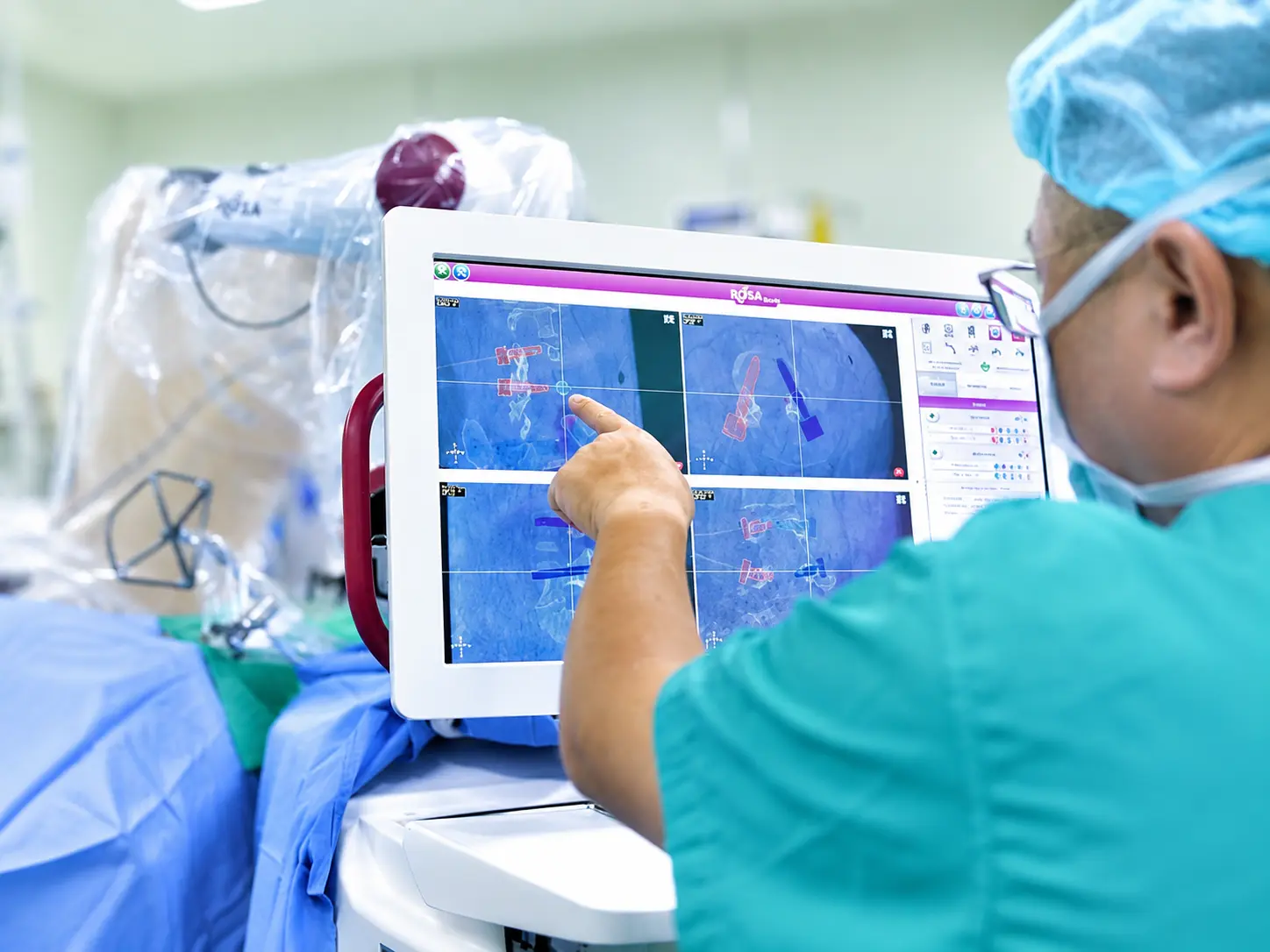
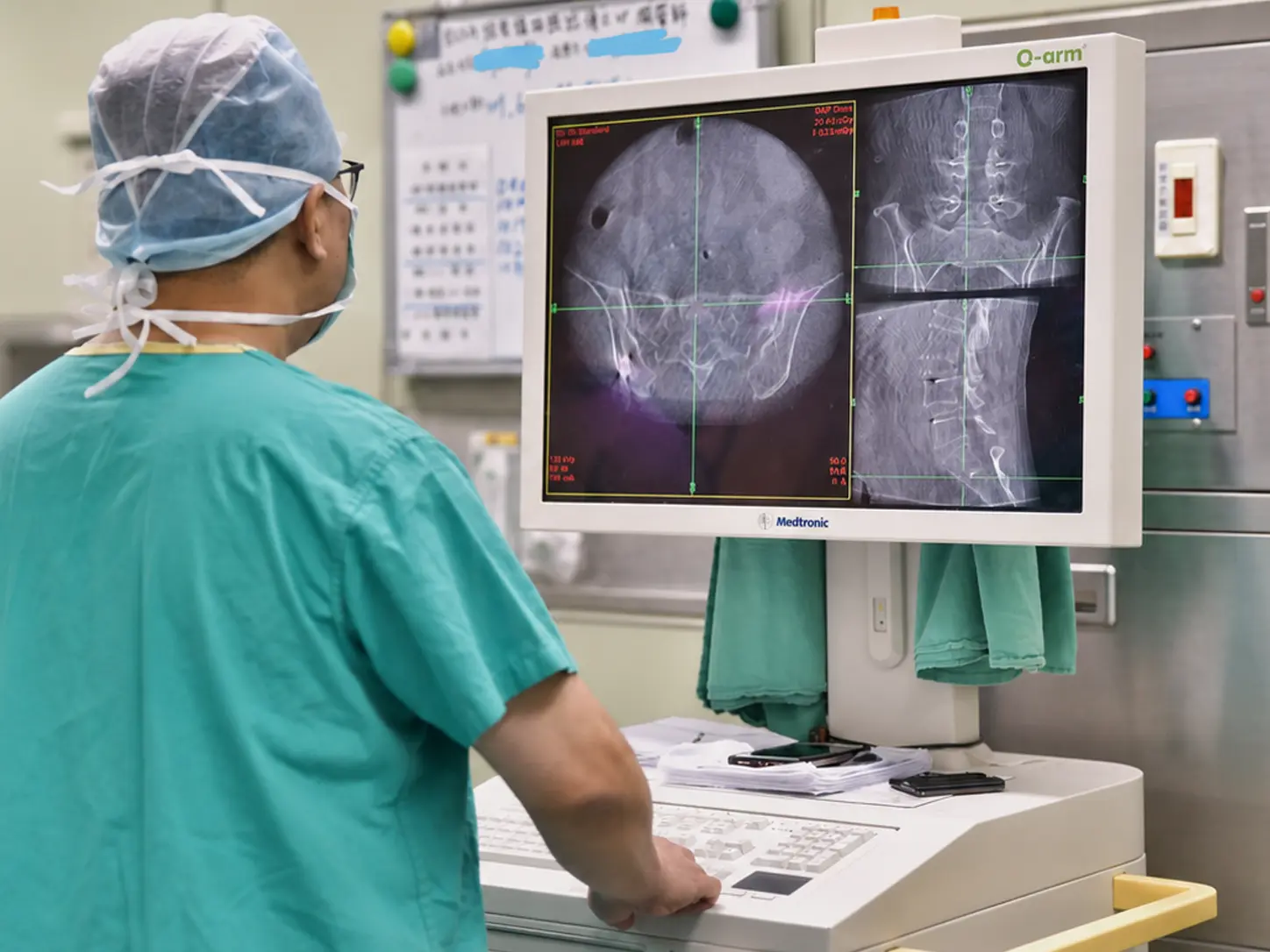
In response to the aging population and the increasing complexity of diseases, Shuanghe Hospital took the lead in introducing the robotic spine surgery assistance system (ROSA ONE® Spine). Physicians can pre-plan the surgical path and use it with 3D imaging, real-time dynamic tracking system and six-way robotic arm to greatly improve implant accuracy and surgical safety. The team continues to accumulate experience and develop a set of standardized procedures, which are regularly reviewed and improved to optimize surgical quality. Specialist personal therapists are also included to provide disease-related health education before surgery and continuous care and follow-up after discharge to improve patients' health literacy and help them return to normal life as soon as possible. In order to help Taiwan's medical industry stay at the forefront of the world, our hospital actively participates in robotic surgery guidance. Not only does it share its experience at major seminars at home and abroad, it will also establish the ROSA ONE® training center, the third in the world and the first in Asia-Pacific, in 2022 to provide hands-on hands-on operation teaching. course.
Robotic spine surgery assistance system (ROSA ONE® Spine).
Standardize surgical procedures.
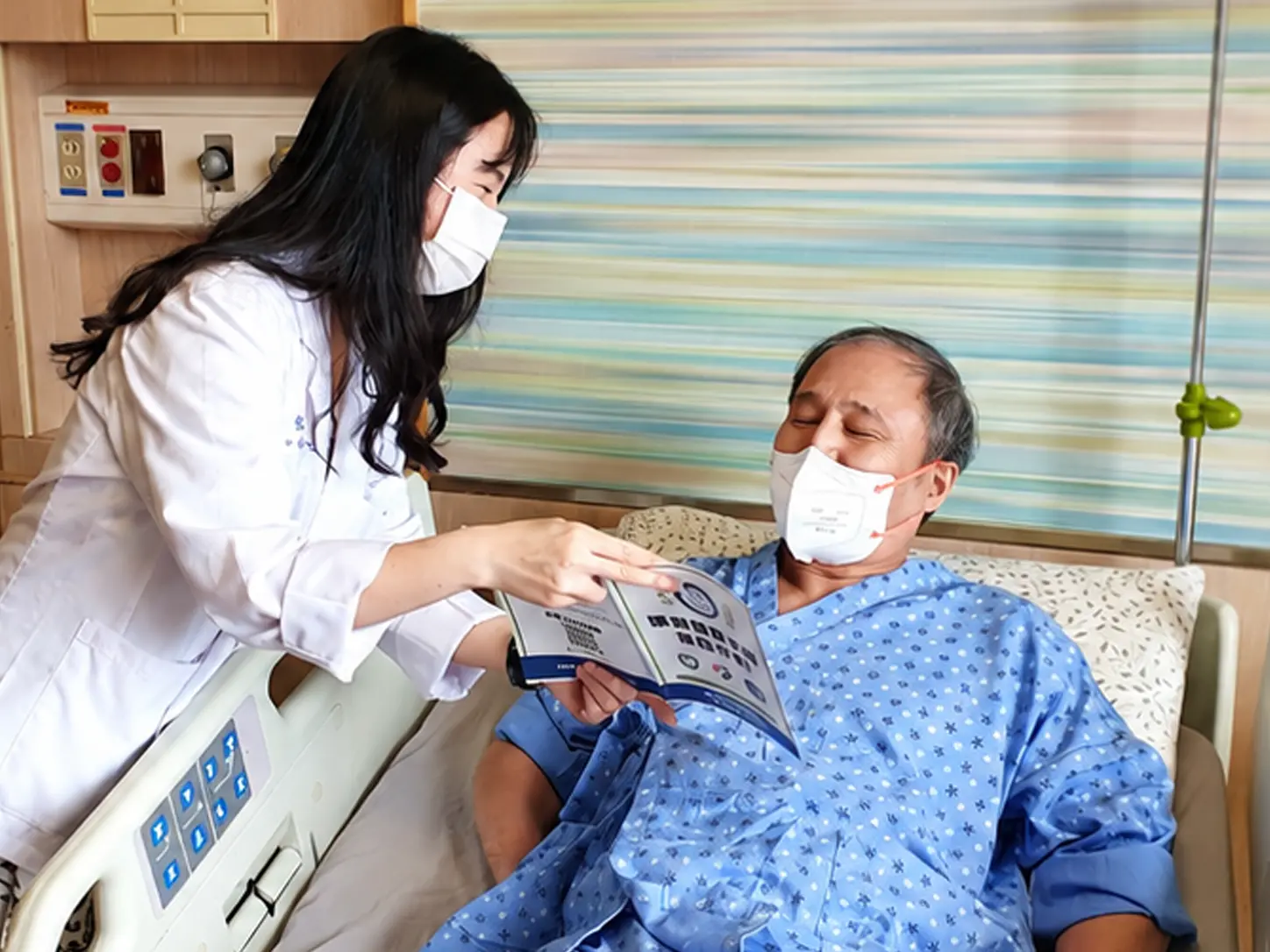
Precise and personalized care during the perioperative period.
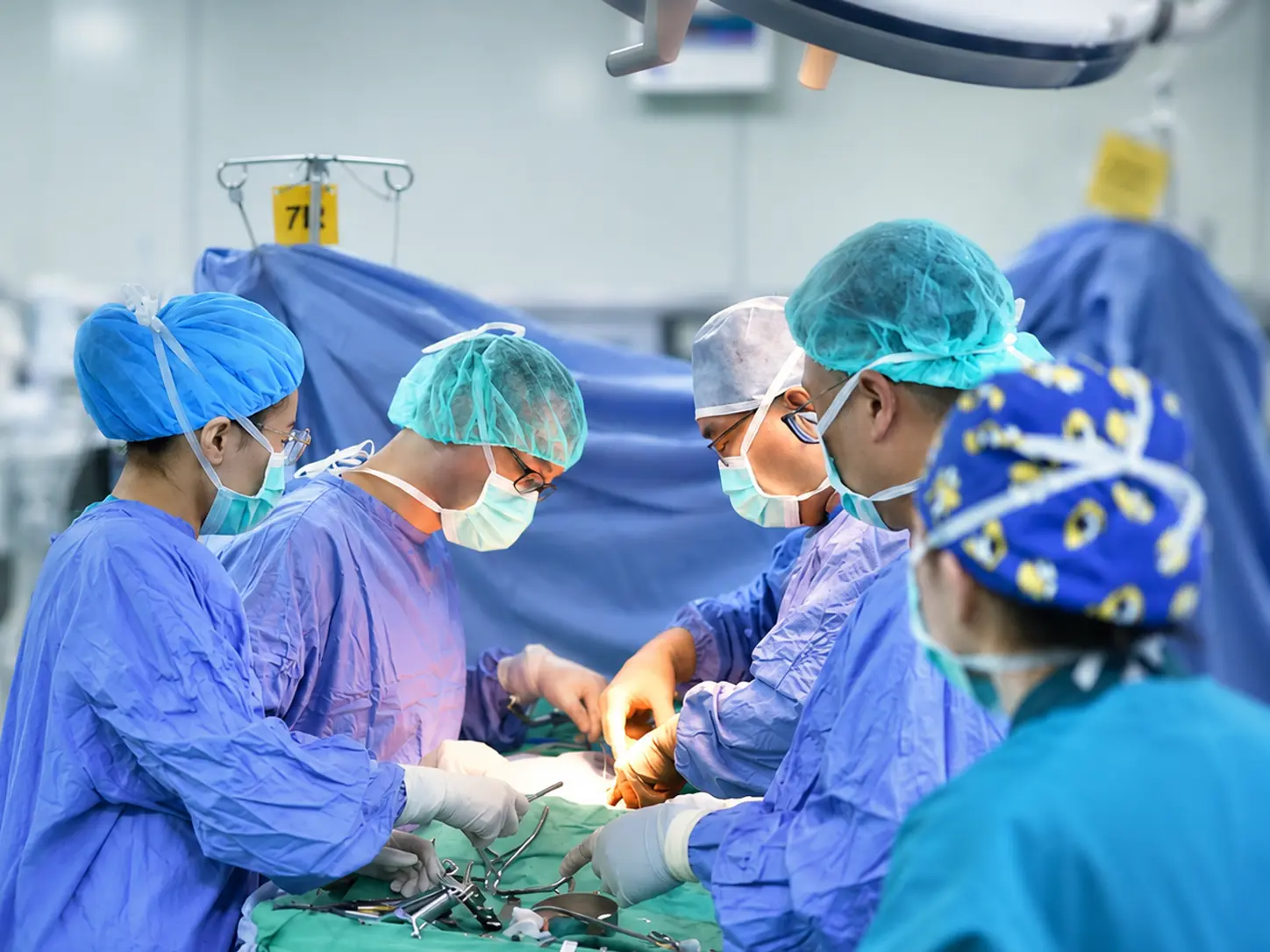
Since 2018, a robotic spine surgery assistance system has been introduced to provide patients with more precise surgical treatment options. The number of surgeries as of the end of August 2024 is 400 cases of spine (including thoracic and lumbar spine) and 3 cases of sacroiliac joints, with an average monthly number of 5.74. The indications for spinal surgery include spondylolisthesis, disc herniation, compression fracture and tumor compression. The average age is 65.62 years old, the average BMI is 25.81, and the average bone density is -0.82. A total of 2004 screws were inserted, and the average intraoperative blood loss was 312.53ml. (Supporting information: Table 1 and Table 2).
All ROSA ONE® Spine robotic surgeries are 100% completed, and the accuracy of nail placement is as high as 99.85% (supporting information: Lin, 2022).
Statistical data from patient self-administered questionnaires show that pain severity and disability levels have significantly decreased, as well as perceived physical health has significantly improved, which has a positive impact on mental health, postoperative quality of life has improved, and patient satisfaction is high. (Supporting information: Figure 1, Figure 2, Figure 3 and Figure 4)
No robot system-related complications were observed, and the incidence of adverse surgical events is extremely low, including 0% infection rate, 1 case of reoperation during hospitalization (0.25%), 0% reoperation within three months, 1 case of postoperative stroke (0.25%), and 1 case of postoperative lower limb surgery. There were 2 cases of venous thrombosis (0.50%), 9 cases of surgery-related pressure injury (2.25%), 3 cases of postoperative urinary retention (0.75%), and 1 case of postoperative intestinal obstruction (0.25%) (supporting information: Table 3).
.Robotic pedicle screw placement accuracy: 99.73%.
.Higher than the 98.24% accuracy observed in the manual placement group (based on a comparison of 224 TLIF cases).
.Monthly review of readmission and reoperation rates.
.Monitoring of outliers regarding operative time and blood loss.
.Intraoperative dynamic tracking for real-time correction of displacement.
.Automatic alerts and procedure suspension if displacement exceeds limits.
.Equipment maintenance and inspection performed every three months.
.Significant relief of postoperative pain.
.Reduced postoperative functional impairment.
.Improved postoperative quality of life.
.High overall patient satisfaction.
.Preoperative patient education provided by case managers.
.App-based follow-up reminders and feedback.
.Continuous follow-up for one year post-surgery.
The team has submitted two SCI articles so far, which were published in Neurosurgical focus (IF: 3.37) and Neurospine (IF: 2.38) (supporting information: Lin, 2022 and Hsu 2022).
Complete Chapter 19 of the book "2023 Latest Progress in Minimally Invasive Spine Surgery" - The Application of Robotic Arms in Minimally Invasive Spine Surgery (supporting information: Figure 6).
Establish the ROSA ONE® training center, the third in the world and the first in Asia-Pacific, in 2022.
Director Liu Hengwei announced the clinical results of our unit at the 2024 Global Spine Congress (supporting information: Figure 7).
ROSA surgical quality indicator meetings are held every month to discuss and review improvements on the surgical cases of the previous month. Each meeting is recorded electronically and uploaded to the cloud for the team to review at any time (supporting information: Figure 5).