Metastatic gastro-entero-pancreatic neuroendocrine tumors (GEP-NET) with SSTR expression; and
metastatic castration-resistant prostate cancer (mCRPC) with PSMA expression.
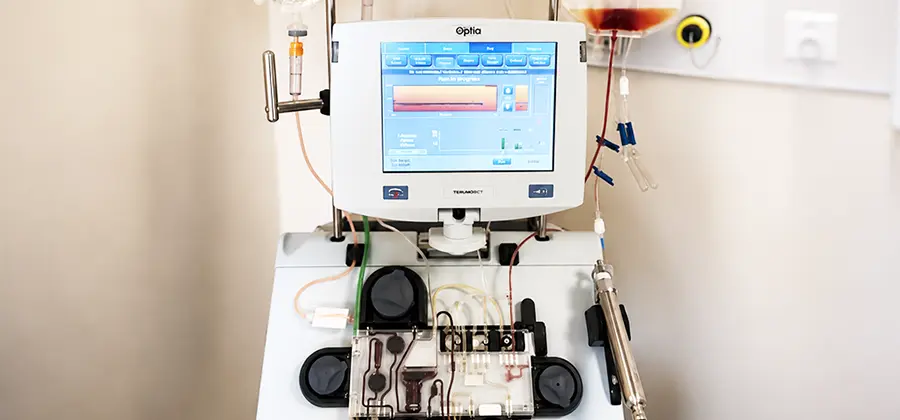
Radioligand therapy (RLT) integrates the concepts of radiation ablation and targeted therapy. By utilizing Lutetium-177 (Lu-177), a radioactive isotope emits beta particles, the cancer-specific radiopharmaceutical will bind exclusively to the molecular targets highly expressed on tumor surface. RLT enables precise targeting of tumor cells, therefore can minimize radiation damage to normal healthy tissues while maintaining effective treatment dose. Since September 2021, we constantly provide Lu-177 based RLT in our institute through multidisciplinary teams including specialists in nuclear medicine, medical oncology, endocrinology, surgery, urology, pharmacy, and nursing. We have established a standardized treatment procedure through interdisciplinary collaboration, which procedure comprehensively encompasses every detail from pre-treatment assessment, patient education for radiation protection, staff training and environmental setup, the safe preparation and automatic administration of radioactive drugs, post-treatment management, subsequent imaging and follow-ups, to the disposal of radioactive wastes. The standardized procedure is established to ensure the radiation safety of our team members, caregiver, and environment while committing high-quality RLT service, as well as a safe and comfortable experience for our patients.
Multidisciplinary Collaboration: Seamless interdisciplinary synergy driving precision oncology.
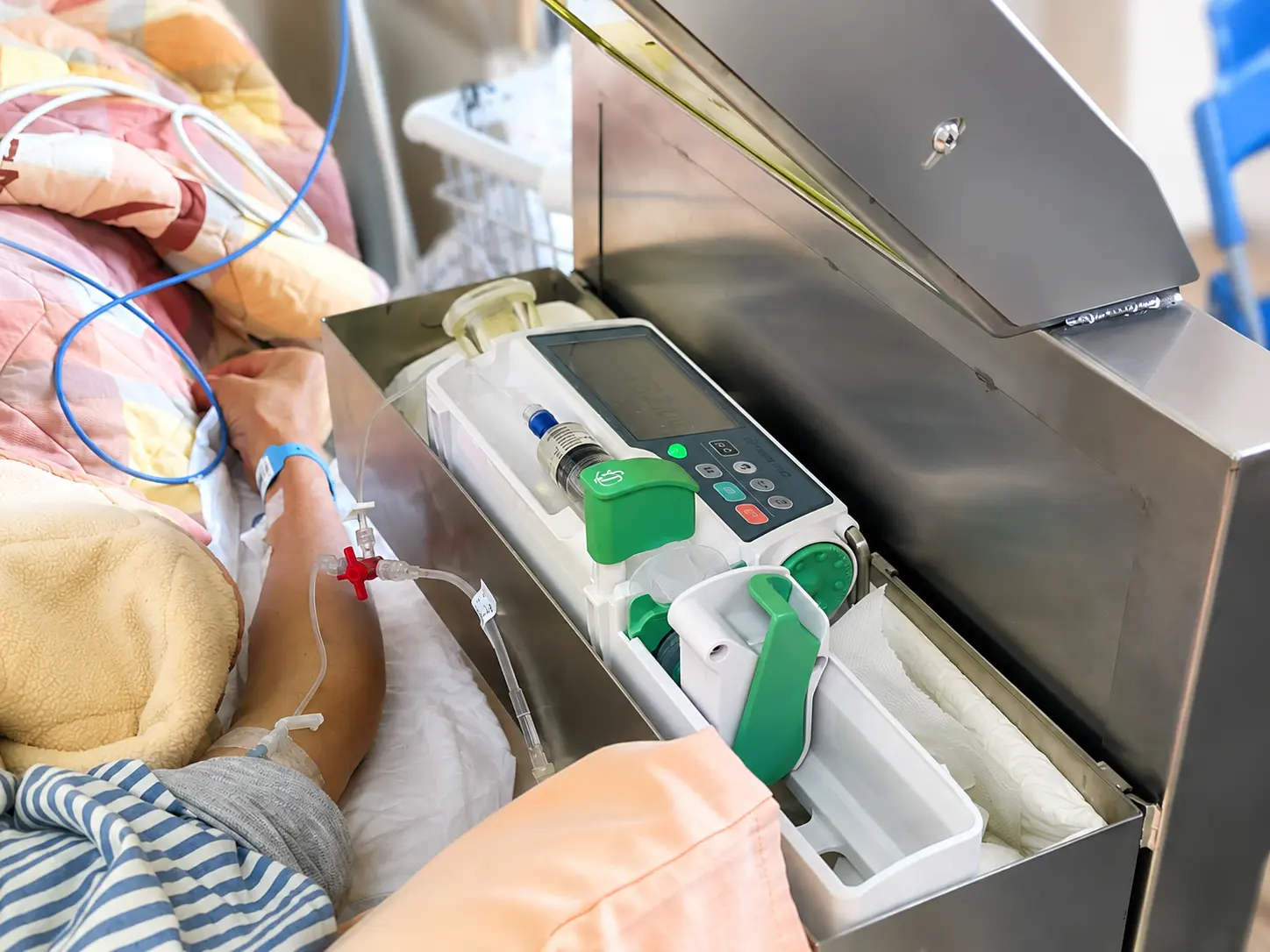
Meticulous Administration: Strict protocols for radiopharmaceutical delivery, staff radiation safety, and patient monitoring.
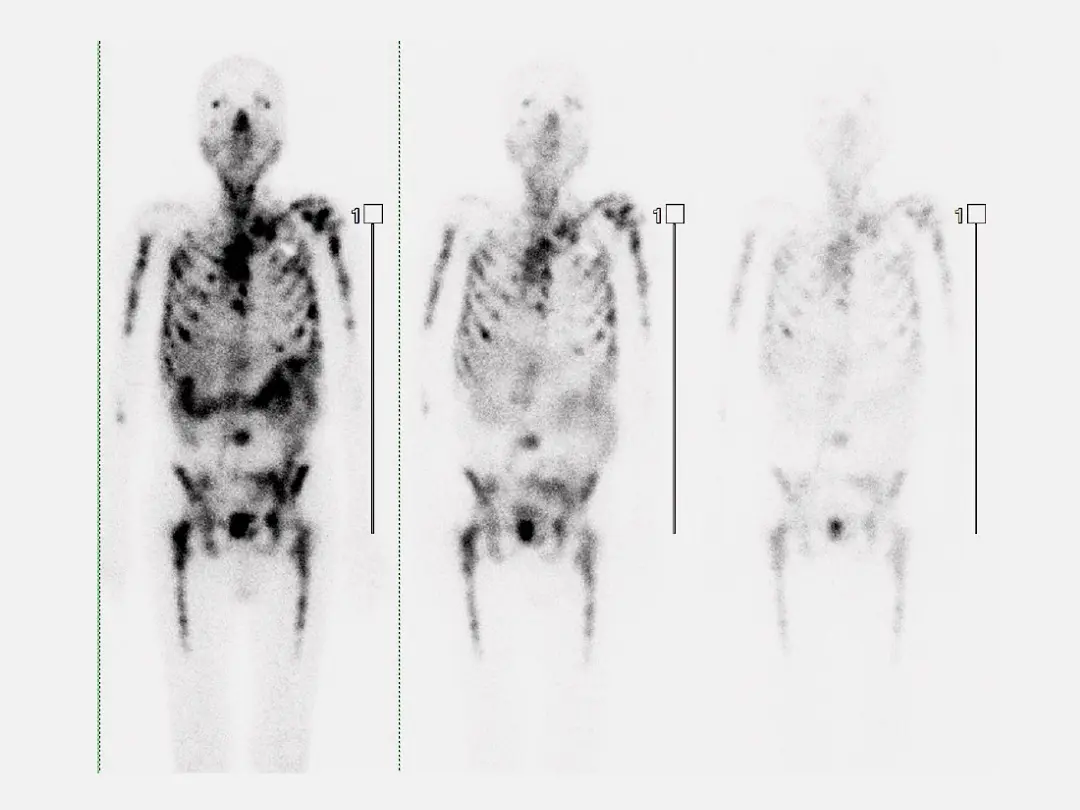
Advanced Imaging: High-precision post-treatment imaging evaluation to track efficacy.
Precision Selection: Leveraging Posluma PET for faster, highly accurate patient selection.
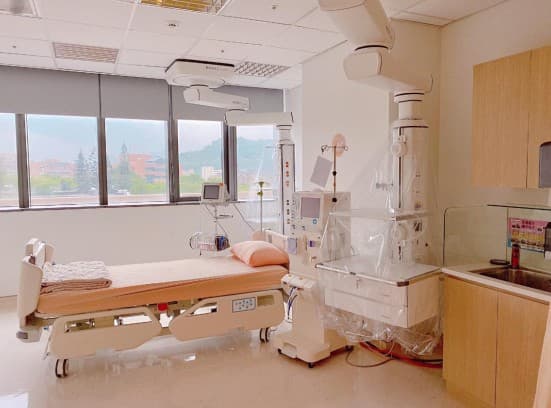
World-Class Facility: Taiwan’s first nuclear medicine unit with an ISO Class 7 cleanroom negative-pressure hot cell.
National Pioneer: Leading domestic nuclear medicine therapy; a rare national practice featuring the first domestic infusion pump delivery.
Therapeutic Breakthrough: Utilizing Pluvicto with its newly approved pre-chemotherapy indication this year.
Global Leadership: Spearheading PSMA-DC, a premier international, multicenter trial.
By May 2026, we have provided 173 treatments of Lu-177 based radioligand therapy, including 34 treatments for GEP-NET using Lu-177 DOTATATE, and 139 treatments for mCRPC using Lu-177 PSMA.
Radioligand Therapy Efficacy:
Clinical Success: Efficacy aligns with major Western trials, achieving an overall 48.1% PSA response rate, which surges to 92.9% for patients completing 4–6 standard cycles.
Safety Profile: Adverse effects (mild fatigue, nausea, bone marrow suppression) match Western data. Notably, Asian patients show significantly lower rates of dry mouth and eyes, indicating superior tolerance to Lu-177 PSMA RLT.
Local Production: No difference in efficacy or safety profile between patent drug (Pluvicto) and domestic product (Lu-177 PSMA-I&T).
Results mirror Asian cohorts, including Singapore (48 patients; 50–52% PSA response, 15–16% severe toxicity) and China (61.3% PSA response; minimal nephrotoxicity/ xerostomia), confirming consistent regional efficacy and safety.
Radioligand Therapy Procedure
Streamlined Diagnostics: Implementing Posluma PET drastically reduced pre-treatment PET wait times from 2–3 weeks to <1 week (40 cases to date).
Pre-Chemotherapy Advancement: Capitalizing on Pluvicto’s newly approved pre-chemotherapy indication in early 2026 (37 pre-chemotherapy treatments to date).
Radioligand Therapy Research
Global Research Leadership: Actively executing PSMA-DC trial, a cutting-edge international, multicenter trial combining external beam radiation and Pluvicto therapy (4 treatments to date).
Radioligand Therapy Safety Data:
Bone Marrow Toxicity: 12.5% patients had severe (grade ≥3) anemia, 3.1% had severe leukopenia, and 18.8% had severe thrombocytopenia, comparable to international reports.
Renal Toxicity: 3.1% patients had severe (grade ≥3) renal dysfunction, comparable to international reports.
Other common side effects including fatigue, GI upset were also comparable to international reports.
Rates of dry mouth or dry eye were significantly lower than Caucasian reports.
Radioligand Therapy Radiation Safety Data:
Dose Rate: Dose rate at 1 m from the patient dropped to 20 μSv/h within 2-4 hours after radioactive drug administration.
Medical Staff Exposure: Under standardized procedure and shielding protection, average exposure of medical staff on every treatment day (with 1-3 patients) was 0.11 mSv, significant lower than annual Taiwanese background exposure (1.6 mSv) or annual dose limit for Taiwanese radiation workers (20 mSv).
Caregiver Exposure: Under radiation safety education, average exposure of caregiver on every treatment cycle was 0.16 mSv during the first 24 hours, significant lower than annual Taiwanese background exposure (1.6 mSv).
Patients and Caregiver:
Most responsive patients experience pain relieve and life quality improvement.
Introductions and radiation safety education lower anxiety.
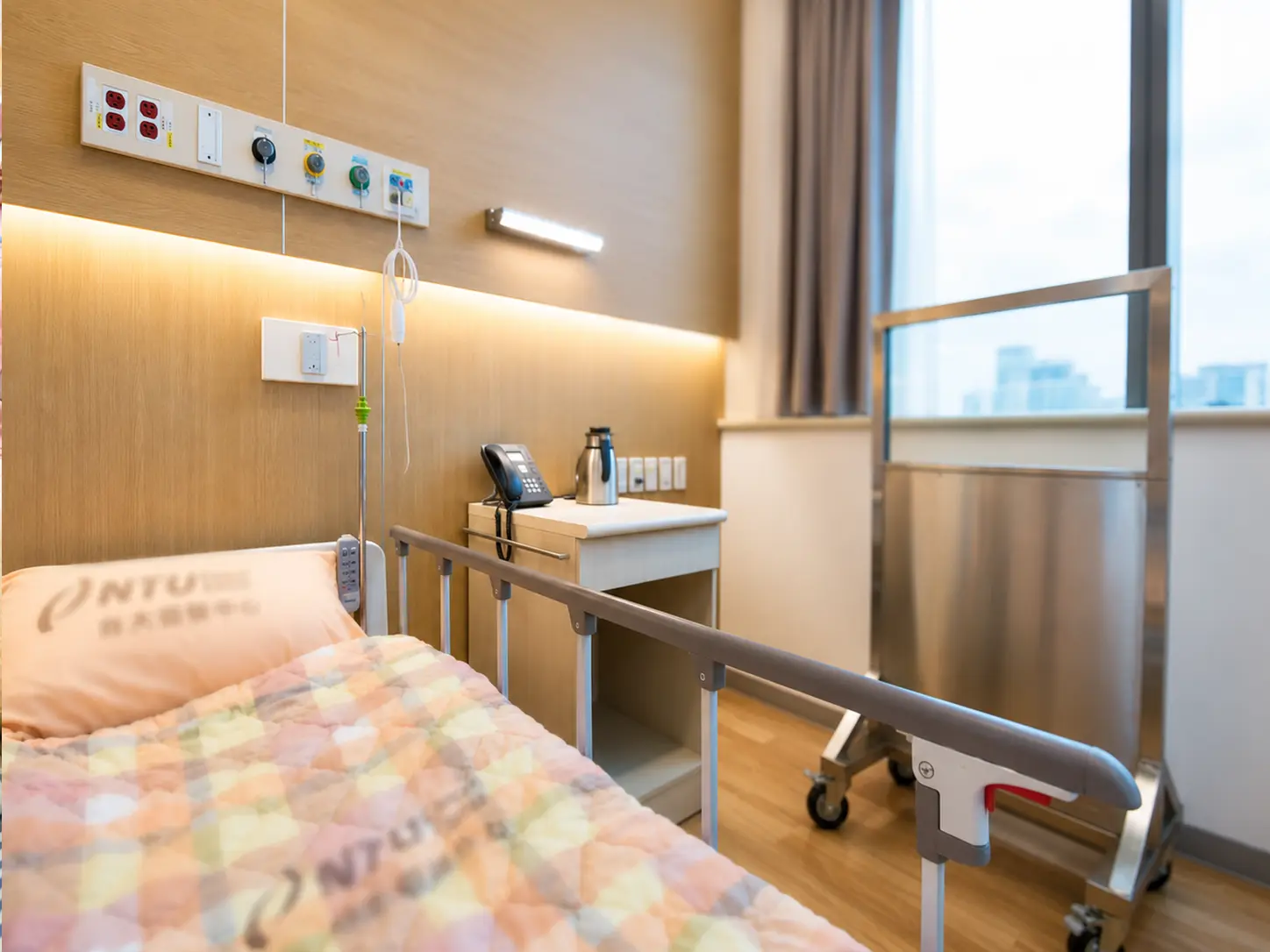
Comfort room and big windows help relieve stress during isolation.
Caregiver accompany strategy minimize risk for inhospital accident.
Medical Staffs:
Regular training programs for radioligand therapy introduction and radiation safety.
Regular emergency drill for medical and radiation accident, ensure proper radiation protection during emergent events, and relieve stress for staffs.
Provide easy communication channel to address any radiation related problems, adequate protection equipment, and keep track of the exposure of medical staffs.
Standardized procedure minimize risk for mistake and accident.
Journal Publication:
Lin PY, Lu HM, Chen CJ, Lu CP, Chen YC, Huang YH. Radioisotope Treatment Ward Design: the Facility at National Taiwan University Cancer Center. Taiwanese Journal of Applied Radiation and Isotopes. 2019 Sep;15(3):1775-1779.
Lin PY, Jhan KJ, Ko KY, Yang CC. Investigating the lesion detectability of Tc-99m planar scintigraphy acquired with LEHRS collimator for patients with different body sizes: A phantom study. J Appl Clin Med Phys. 2022 Oct;23(10):e13744.
Yang CC, Ko KY, Lin PY. Reducing scan time in 177 Lu planar scintigraphy using convolutional neural network: A Monte Carlo simulation study. J Appl Clin Med Phys. 2023 Jun 1:e14056.
International Conference Presentation:
Lu CC. Comparative Safety and Efficacy of 177Lu-PSMA-617 and 177Lu-PSMA-I&T Radioligand Therapy in a Taiwanese Population with Metastatic Castration-Resistant Prostate Cancer. Oral presentation, SNMMI, 2025 Jun.
Chiang MT, Chuang PJ, Lu CC. Dosimetry of Radiation Exposure to Patients, Caregivers, and Medical Staff Following Lu-177 PSMA Therapy. Oral presentation, EANM, 2025 Oct.
Tsai SY, Pu YS, Hong CH, Chuang PJ, Lu CC. Evaluating the Diagnostic Value of Dual-Time F-18 PSMA-1007 PET/CT in Prostate Cancer. Poster presentation, EANM, 2025 Oct.
Our radiation safety data support safe and reproducible Lu-177 based radioligand therapy
Our team actively engage in SCI journal paper publication, international conference presentation, domestic academic speech and education
Our team receive visits from other hospitals not yet introduce Lu-177 based radioligand therapy, share our experience to build a RLT multidisciplinary team and environment setup, and standardized treatment strategy
Standardized care enables promotion of Lu-177 based radioligand therapy in Taiwan, which results in accelerating approval of patent drug and its widened indication