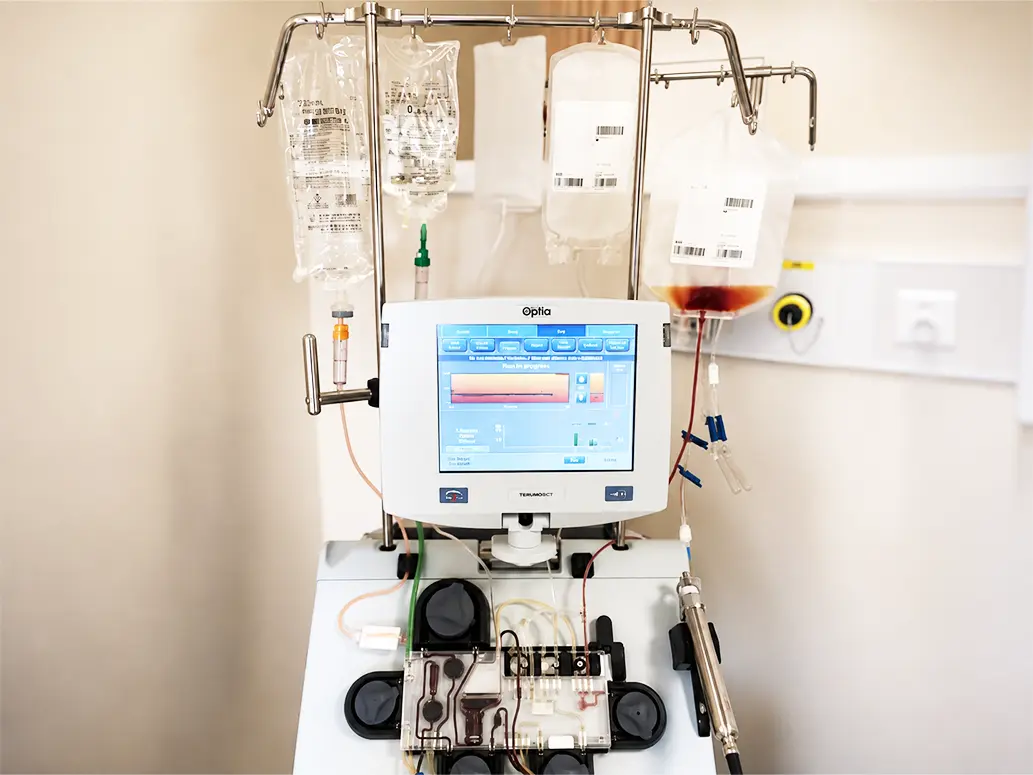
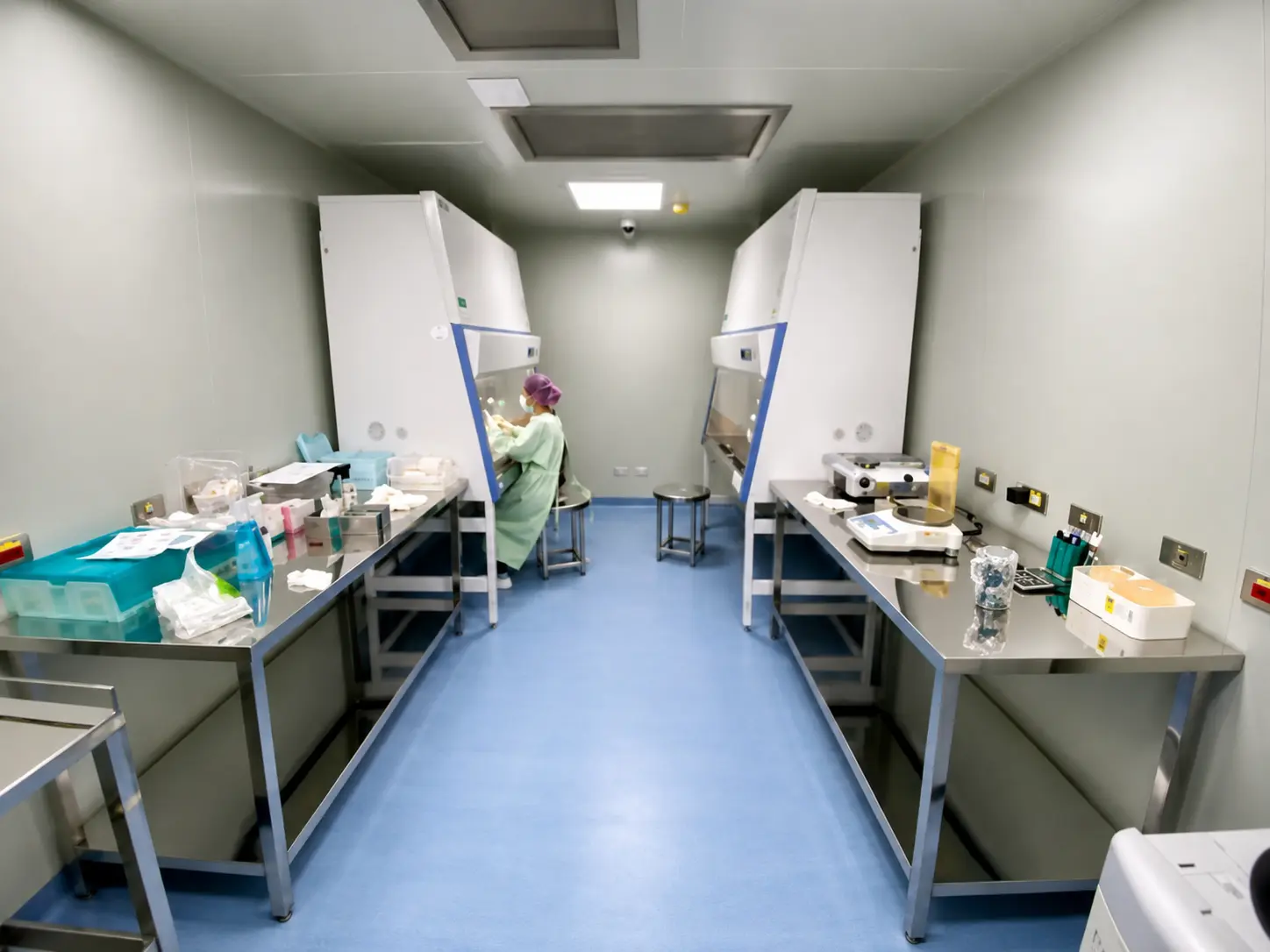
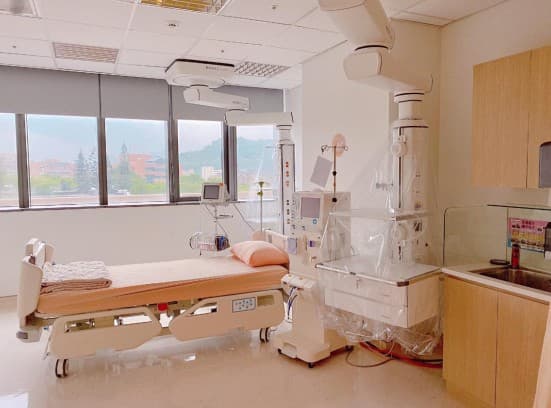
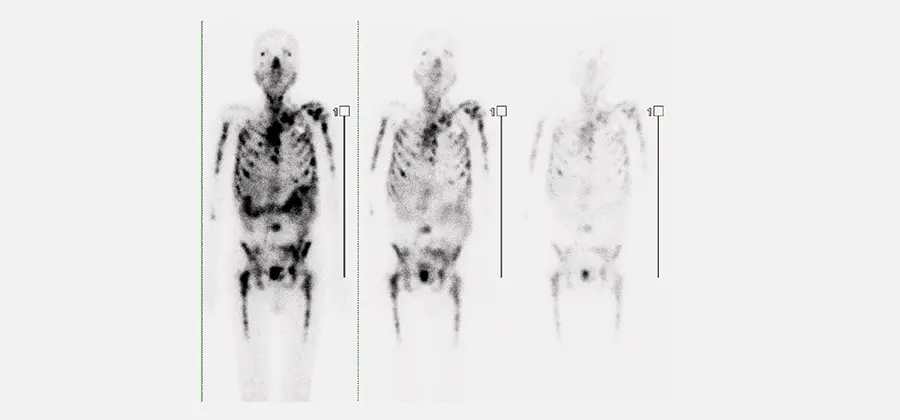
Our unit treat patients with a wide range of hematologic diseases, serving patients across Taiwan to international, and providing transplantation therapy and multidisciplinary integrated care.
Addressing the growing scarcity of fully matched donors, the Allogeneic Haploidentical Stem Cell Transplantation(HSCT) Care service by NTU Cancer Center’s Hematology-Oncology Department delivers top-tier, precision transplant care designed to achieve high survival rates and low complications. Powered by a comprehensive multidisciplinary team, this service optimizes advanced protocols and complication management. NTU Cancer Center carries on over 40 years of experience in allogeneic HSCT from NTUH and is currently one of Taiwan's largest transplantation centers, equipped with 30 transplant-unit beds and 23 HEPA-filtered isolation beds. Since transferring part of its services to NTU Cancer Center in 2020 for expansion, annual case numbers have grown steadily, reaching a total of 651 transplant patients treated by December 2024.Our center achieved significant progress in the overall survival (OS) of these 651 patients, with a 1-year OS of 73.8%, 2-year OS of 66.3%, and 3-year OS of 61.3%. Broken down by type, the 3-year OS was 79% for autologous and 50.4% for allogeneic transplants. The primary factors impacting allogeneic survival include an older patient demographic, high haploidentical transplant proportions, and a high disease risk index. Specifically, our cases are predominantly middle-aged and elderly, with 37.6% aged more than 60 (N=245). Furthermore, among allogeneic cases, over half (57.5%, N=234) involved HLA-mismatched donors.
High Proportion of Allogeneic Transplants: Allogeneic transplants account for 62.5% (N=407) of the total transplant volume, while autologous transplants comprise 37.5% (N=244).
Predominance of Elderly Transplant Patients: High concentration of middle-aged and elderly individuals within the patient demographic.High Ratio of Haploidentical Transplants:
A significant portion of cases utilize haploidentical (half-matched) donors.
Utiliz ation of the GIAC Protocol: Combined infusion of bone marrow and peripheral blood stem cells.
Comprehensive DSA Screening and Standardized Desensitization: Comprehensive testing for donor-specific anti-HLA antibodies (DSA), paired with a standardized DSA desensitization protocol.
Application of the PTCy Protocol: Implementation of post-transplant cyclophosphamide for graft-versus-host disease (GVHD) prophylaxis.
Independent Transplant Infrastructure: Equipped with a dedicated, autonomous transplant team and a specialized hematological laboratory system.
Digitalization and AI Integration: Implementation of digital imaging and AI-driven systems for peripheral blood and bone marrow smear differential interpretation.
Largest Capacity in Taiwan: Equipped with 30 transplant-unit beds, making it the largest bone marrow transplant ward capacity in Taiwan.
Rapid Milestone Achievement: Total transplant volume reached 651 patients within a four-year period.
1.6-Fold Growth in Transplant Volume: The number of transplant cases at NTU Cancer Center has grown 1.6-fold within three years.
High Proportion of Allogeneic Transplants: Allogeneic transplants account for 62.5% (N=407) of the total transplant volume, while autologous transplants comprise 37.5% (N=244).
Predominance of High-Risk Malignancies: Acute Myeloid Leukemia (AML) and Myelodysplastic Syndromes/Myeloproliferative Neoplasms (MDS/MPN) constitute the largest proportion of transplant indications by disease type.
3-Year Overall Survival (OS) at NTU Cancer Center: Approximately 79% for autologous stem cell transplants (Auto) and 50.4% for allogeneic stem cell transplants (Allo).
Outcomes for Elderly Allogeneic Transplant Patients: 1-year OS of 49.5% and 1-year DFS (Disease-Free Survival) of 40.6% among elderly patients undergoing allogeneic stem cell transplantation.
Outcomes for Mismatched Allogeneic Transplants: 2-year OS of 45.8% and 2-year DFS of 25.4% for HLA-mismatched allogeneic stem cell transplantation.
Process Indicators (Quality and Patient Safety Compliance Rates)
Intravascular Catheter Care Compliance: Achieved 100% for three consecutive years (2023–2025).
Oral Mucositis Care and Patient Education Completion Rate: Reached 100% for two consecutive years (2024–2025).
Intravenous Antineoplastic Administration Compliance: Reached 100% in 2025.
Caregiver Contact Precaution Accuracy: Reached 100% in 2024.
Nursing Staff Hand Hygiene Compliance and Accuracy: Achieved 100% in 2023.
Nursing Staff MDRO (Multidrug-Resistant Organisms) Isolation Precaution Accuracy: Achieved 100% in 2023.
Outcome Indicators (Adverse Events and Risk Management Data)
Patient Fall Rate: Decreased consistently from 0.14% in 2023 to 0.045% in 2025.
Medication Error Incidents: Significantly reduced from 9 incidents in 2023 to 3 incidents in 2025.
Blood Product Wastage: Maintained an optimal record of 0 incidents in both 2023 and 2025.
Intestinal Clostridium difficile Infection Density: Recorded at 3.42% in 2025.
Based on survey statistics collected from all inpatients in our department, patient satisfaction scores have consistently exceeded 95 points since 2021 (96.95% in 2021, 95.57% in 2022, and 96.37% in 2023).
Global Leadership in Blood Cancer Care: According to a 2018 study published in The Lancet, Taiwan achieved a perfect score of 100 in leukemia care based on the Healthcare Access and Quality Index (HAQ Index), ranking first among 195 countries globally.
Superior Outcomes in Elderly Allogeneic Transplants: For elderly patients undergoing allogeneic transplantation, NTU Cancer Center achieved a 1-year OS of 49.5% and a 1-year DFS of 40.6%, outperforming US benchmarks (1-year OS of ~44% and 1-year DFS of ~22%).Award-Winning Clinical Research at ICBMT 2025:
Dr. Sao-Chih Ni was awarded the Travel Grant Award at the International Congress of BMT (ICBMT 2025) for his poster presentation on allogeneic transplant outcomes in acute myeloid leukemia (AML) patients receiving an "augmented reduced-intensity conditioning (RIC) regimen." The study demonstrated a significant improvement in the 2-year overall survival rate post-2020 ($70% vs. 59%, p=0.039), despite a notable increase in the proportion of HLA-mismatched donors utilized during the same period (47.6% vs. 37.8%). These findings highlight the center's growing proficiency and continuously advancing success in mismatched donor transplantation.
Establish a Patient-Centered Stem Cell Transplantation Center: Dedicating infrastructure and care models entirely around the patient's journey and well-being.
Advance Diagnostic Testing and Monitoring for Hematologic Malignancies: Continuously refining cutting-edge diagnostic methodologies and long-term surveillance techniques.
Develop Next-Generation Cellular Immunotherapy: Expanding capabilities in advanced cell-based therapies to provide cutting-edge treatment options.
Comparable Survival Rates in High-Risk Cohorts: Despite treating a patient population predominantly classified as high-risk, our transplant survival rates remain on par with national benchmarks.