Patients seeking medical treatment and their family members
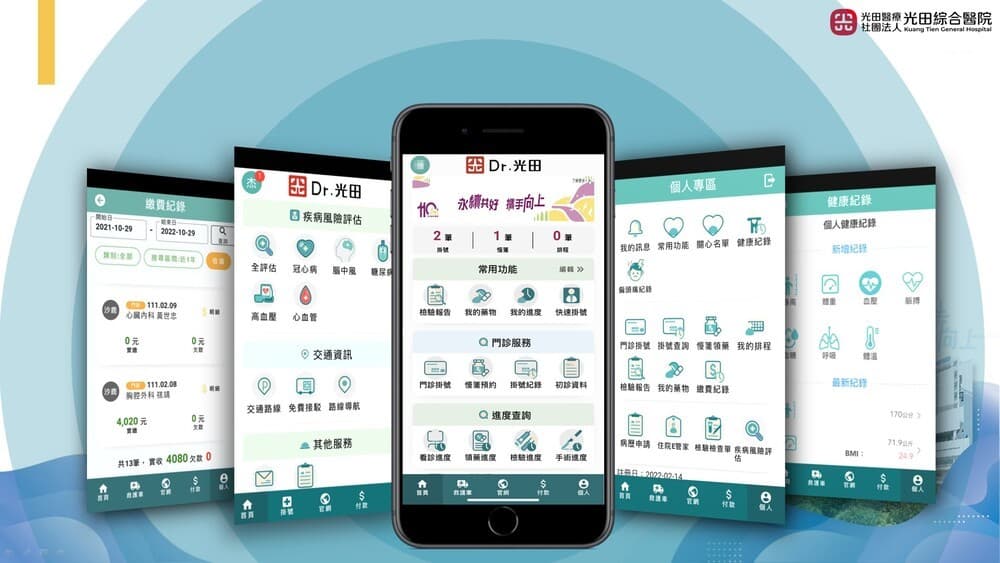
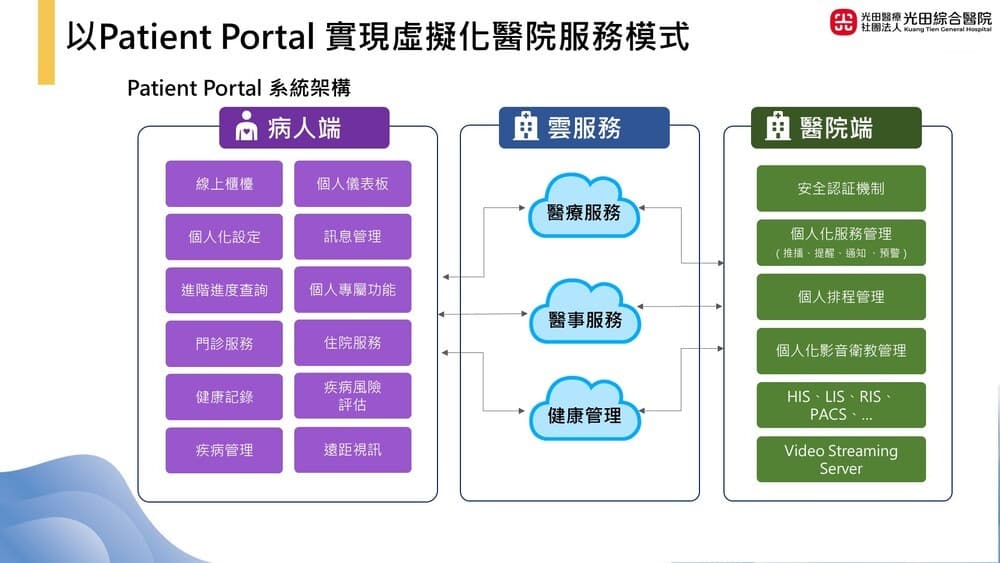
Kuang Tien General Hospital has established an innovative O2O virtual hospital service model through the "Dr. Kuang Tien APP". In response to the rapid development of telemedicine post-pandemic, this Patient Portal moves outpatient medical services, disease management, and health education to the cloud, providing zero-contact and continuous care. Key features include:
Virtual-Physical Integration: Offers complete online services such as fast registration, schedule tracking, mobile payment, and medical document application.
Mobile Bedside System: Breaks hardware limitations, allowing all inpatients (including those in standard beds) to access medical costs, schedules, and health info directly via their smartphones.
Home Disease Management: Built-in chronic disease risk assessments. It empowers patients (e.g., peritoneal dialysis, stroke) to record daily health data at home and consult medical teams via built-in video functions.
User-Centric Design: Adopts human factors engineering (achieving a SUS score of 82) to optimize the user interface with personalized dashboards.
The pandemic has spurred the rapid development of telemedicine, a zero-contact service model. In the past, telemedicine mainly involved doctors conducting consultations via video, while other services such as medical services, disease management, and health education did not transition to a remote service model along with telemedicine. Thus, they did not align with the future development trends of telemedicine. In response to the expanded application scope of telemedicine in the future, our hospital has established a new model of integrated virtual and physical patient services. This includes setting up a cloud service desk that allows patients to handle various tasks online. Services such as personal medication, medical records, examination scheduling, payment records, disease management, and health education are all moved to the cloud. This enables medical and healthcare services to extend from the hospital to the community and home via the internet. In the future, telemedicine must combine virtual and physical integrated service models to build a complete service ecosystem. Our hospital's integrated virtual and physical services span before, during, and after medical consultations, integrating online and offline service processes to respond to the rapid development trends of future telemedicine.
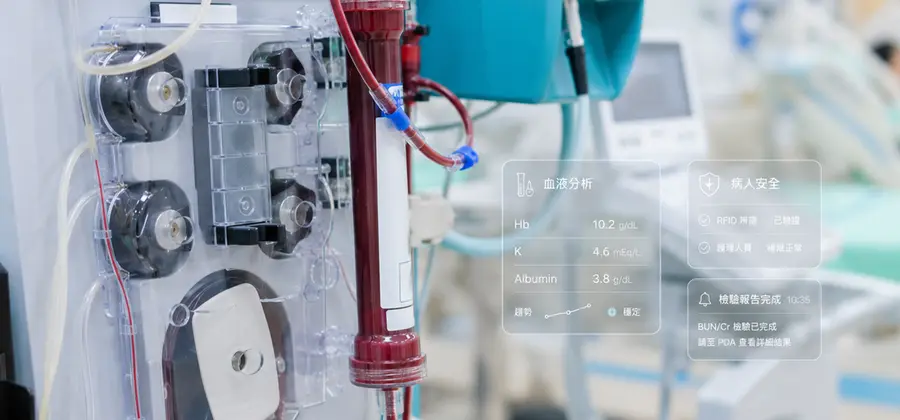
Improvement in care quality, such as: the incidence of hypokalemia decreased from 27.50% to 22.73%.
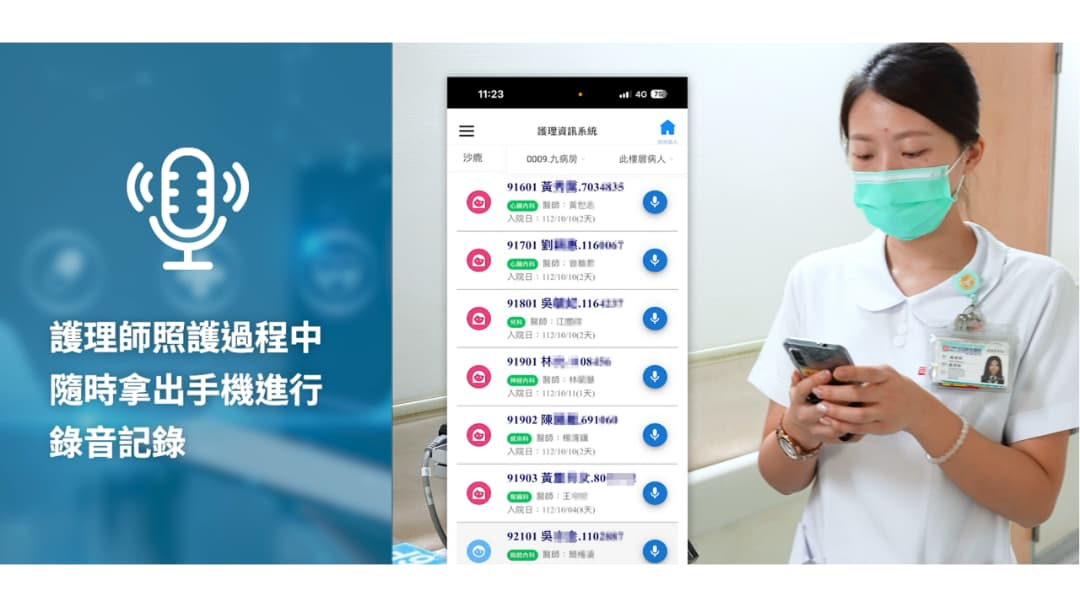
Before system assistance, medication management required 107 hours per month; after system assistance, it is reduced to 54 hours, a 50% reduction.
Home visit hours originally totaled 154 hours; after system assistance, it was reduced to 82 hours, a 47% decrease.
The incidence of peritonitis is less than 1.7 occurrences per 100 patient-months.
National Healthcare Quality Award - Smart Healthcare Category - Merit, Emblem, Special Award for Human Factors, Creative Award
Kuang Tien General Hospital prioritizes patient privacy and data security in its virtual hospital services:
High System Availability: Supported by remote server backup mechanisms and daily data backups, the system's service availability has consistently remained above 99.9%.
ISO 27001 Certification: The core IT systems and server rooms are continuously certified with the ISO 27001 international information security standard.
Multi-layer Network Defense: Implements strict firewall rules, real-time traffic dashboards, and automated anomaly alerts, alongside regular penetration testing and vulnerability scans.
Strict Real-Name Authentication: The APP uses a two-stage, three-step verification process (matching ID, birthday, and registered mobile) with OTP SMS to ensure user authenticity and protect privacy.
Encrypted API Transmission: Adopts JWT (JSON Web Token) mechanisms for all WebAPI data exchanges, ensuring encrypted, authorized access to prevent data leaks.
Video clinic pt sat: 94
Video clinic Dr sat: 95
Video clinic RN sat: 86
Overall APP satisfaction: 88
94% willing to continue use
90% willing to recommend APP
SUS usability score: 82