Key indications: Myocardial diseases (heart failure, myocarditis, CAD), cardiomyopathies needing long-term tracking, and complex congenital cases requiring pre/post-op hemodynamic imaging
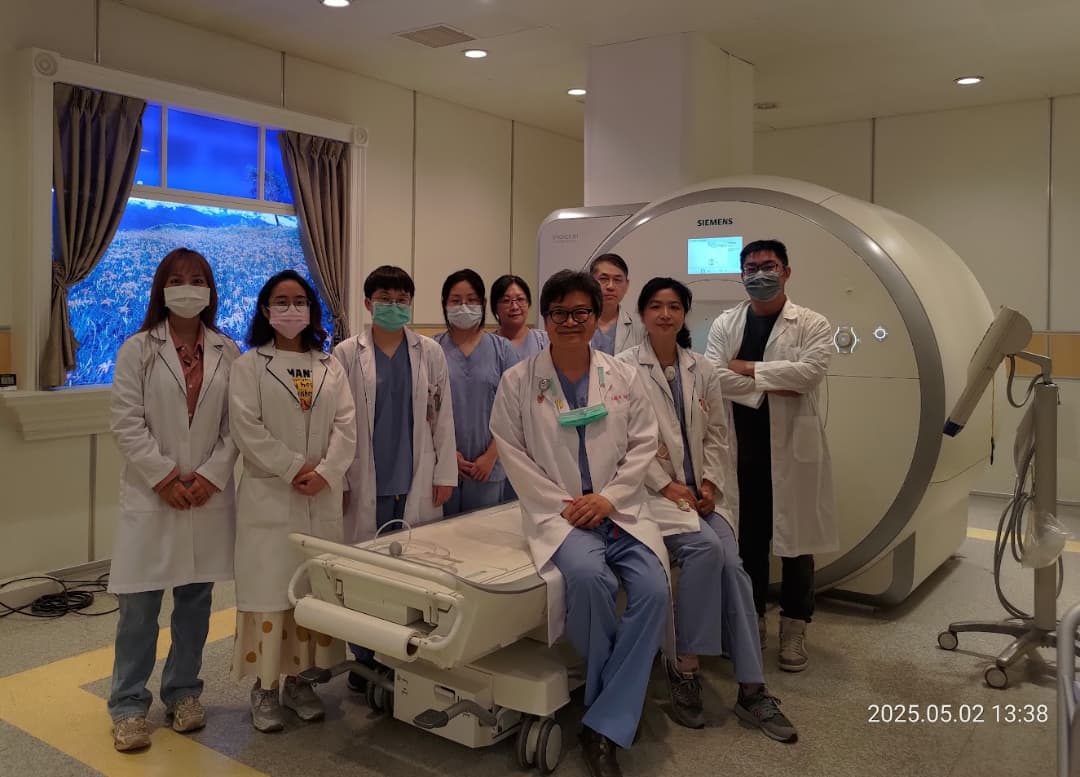
Kaohsiung Veterans General Hospital (KVGH) is a pivotal referral center for adult and complex congenital heart disease in Southern Taiwan, offering comprehensive cardiology and surgical resources. Our team specializes in advanced MRI for precision diagnosis—an essential tool for evaluating cardiovascular conditions.
As pioneers in Cardiac Magnetic Resonance (CMR) research, we have overcome high-field imaging artifacts and established stable, reproducible scanning protocols. Through collaboration with global academic institutions, we have developed world-leading innovative technologies, establishing six major innovations and seven key features to enhance clinical efficiency and patient care.
As an ASCI-certified training center, KVGH is dedicated to cultivating international talent and advancing MRI research in cardiovascular medicine through academic exchange.
World-first Myocardial Diffusion Tensor Imaging (DTI): Used for myocardial remodeling assessment and cell therapy guidance.
World-first Tissue Dynamic Mapping: Simultaneously evaluates left and right ventricular functions and interactions. Pioneering 3T CMR technology in Taiwan with a real-time remote monitoring system to ensure scanning quality.
Patented Photoplethysmography (PPG) Finger Sensor: Developed to shorten T1 mapping scan times, utilizing AI-assisted structured reporting to enhance efficiency and standardization.
In 2024, the cumulative CMR service volume reached 1,046 cases.
The proportion of standardized CMR examinations is the highest in Taiwan.
The total volume and proportion of 3T CMR scans are the highest in Taiwan.
The 2-day completion rate for inpatient CMR examinations is 100%.
AI-assisted diagnostic accuracy (AUC) for Fabry disease reached 0.89.
The correlation between PPG/ECG and T1 mapping is as high as 0.95.
AI-automated image analysis time has been reduced from 1 hour to 15 seconds.
Rapid fingertip T1 mapping examination time has been shortened to 3 minutes.
Zero Safety Incidents: To date, there have been no safety-related adverse events recorded for CMR examinations.
Superior Safety Profile: The complication rate for CMR is 0%, significantly lower than the approximately 2% complication rate associated with invasive cardiac catheterization.
Medical staff service satisfaction exceeds 99%.
Patient and family satisfaction is 99%.
Received the highest honor from the 2024 ASCI (Asian Society of Cardiovascular Imaging).
Myocardial fiber mapping research cited in the 2024 SCMR Consensus Guidelines.
Pulmonary regurgitation assessment method cited in the AHA 2024 Guidelines.
1.Impact Factor (IF) and citation counts for international journal papers rank first in Taiwan.
Impact Factor (IF) and citation counts in the TP-KEM field rank first globally.
Impact Factor (IF) in the field of pulmonary blood flow perfusion ranks first globally.
Research on acute aortic syndromes incorporated into the 2014 ESC Guidelines.
Recognized as a training base for the ASCI Visiting Fellow Program.
AI combined with precision sets significantly improves diagnostic efficiency and treatment standardization.
DTI image-guided cell therapy breakthroughs in myocardial fiber tissue barriers.
High stability in responding to new technologies and long-term multi-faceted output to avoid risks.
Established a platform for diagnostic challenges to effectively promote high-quality CMR technology in Taiwan.
Rapid fingertip T1 mapping screening to identify subclinical cardiomyopathy for early treatment.
Organizational Functional Mapping: Determining the Timing for Pulmonary Valve Replacement in TOF.