Patients receiving postoperative PCA
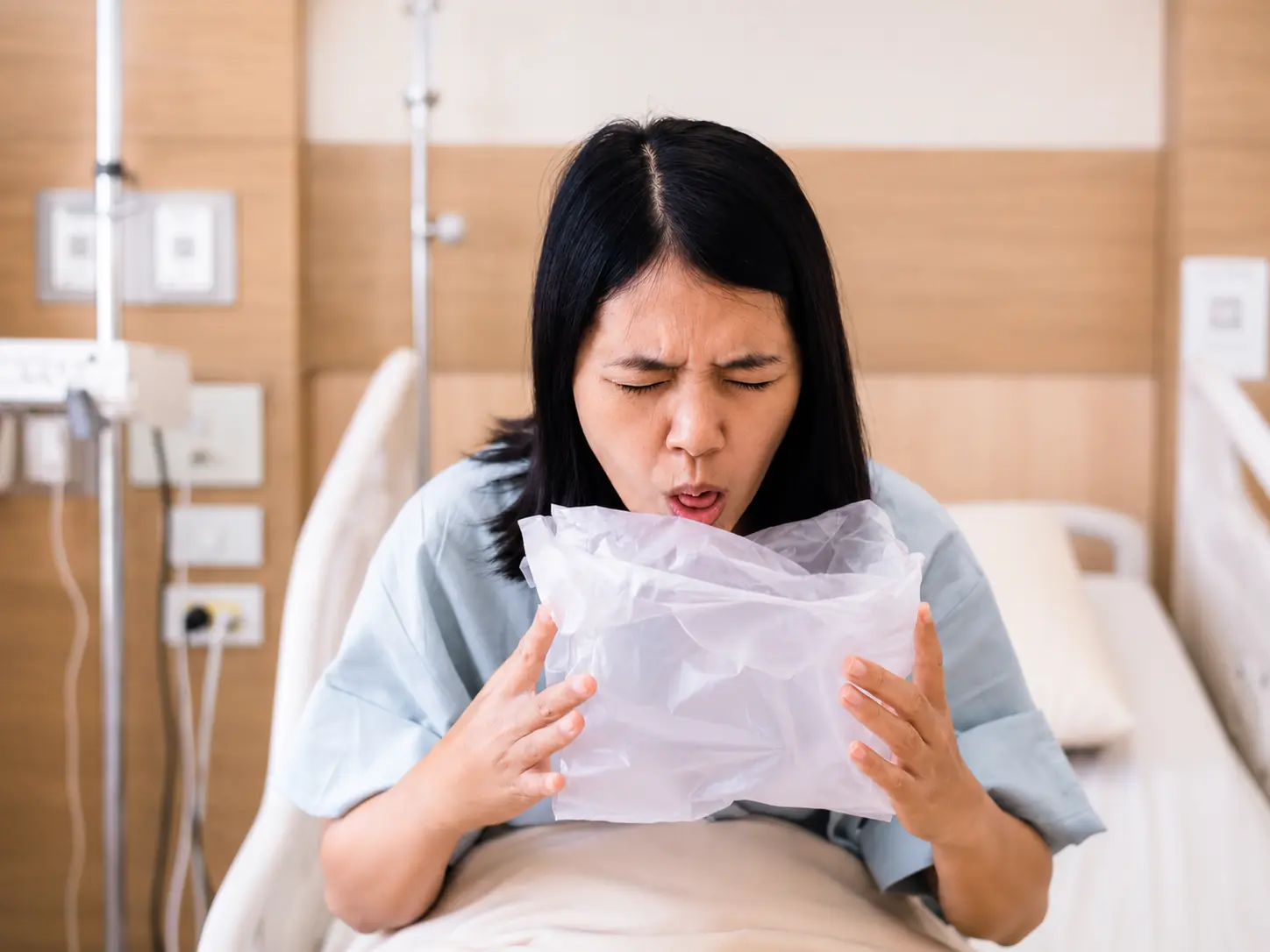
Implementing the anesthesia team's excellent research findings on PONV into clinical practice, and utilizing the PDCA quality management cycle to reduce the incidence of nausea and vomiting associated with postoperative patient-controlled analgesia.
Mandatory Opioid Exposure & High PONV Risk in PCA
。PCA patients face inherent opioid exposure and high PONV risk.
Dedicated PCA Team & Comprehensive Records
。Special task force ensures detailed clinical tracking.
Quality Management via PDCA Cycle
。Applying Plan-Do-Check-Action for continuous improvement.
Targeting the PONV High-Risk Group
Simplified Apfel Scoring in Pre-Anesthesia Interface
。Integrating quick PONV risk assessment.
Dual-Drug Prophylaxis for PONV
Implementation of CICARE Framework
Tracking the incidence of pure nausea, as well as nausea and vomiting, among approximately 1,500 to 2,000 patients receiving postoperative patient-controlled analgesia (PCA) services annually at Chi Mei Medical Center from 2011 to 2018.
The rate of isolated nausea dropped from 24% to a minimum of 9.78%.
The rate of concurrent nausea and vomiting dropped from 37% to a minimum of 5.99%.
Overall achievements include preoperative assessment, real-time drug delivery, postoperative visits, and 10 quality improvement cycles.The incidence of respiratory depression (respiratory rate < 8 breaths/min) was 0.05%.
The overall satisfaction rate of surgical patients regarding anesthesia ranged from 81.8% to 84.6%
Published 21 SCI papers on PONV.
SCI: 19 (17 Original clinical, 1 Basic research, 1 Review)
Non-SCI: 2 (Original clinical).
Findings cited and adopted by 12 major international clinical guidelines.
Publication volume leads among single medical centers in Taiwan and Asia.
Contribution density: 17/60 (28%).
All 17 clinical studies enrolled in key international meta-analyses.
Research incorporated into guidelines by 18 prominent medical societies.
Served as foundational evidence for 12 major international PONV guidelines.
Invited to write review articles for high-impact journals.
Dexamethasone effectively prevents PONV.
Added Ondansetron (Supren) as a prophylactic antiemetic.
Developed antiemetic administration mnemonics for easy recall, simple read-back, and zero order-communication errors.