Hemodialysis patients
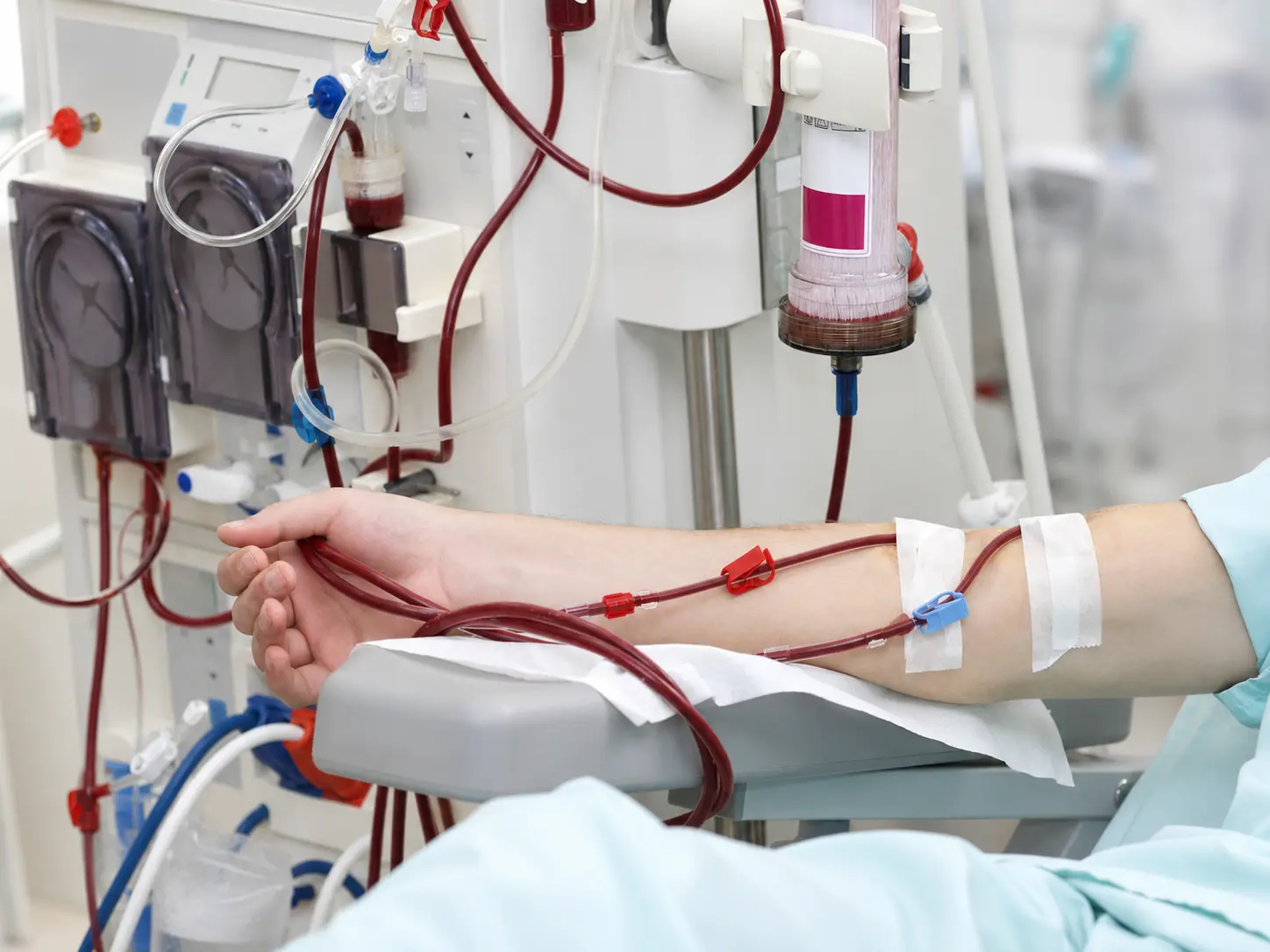
Intradialytic hypotension (IDH) is a persistent fear among patients undergoing hemodialysis. It causes severe discomfort, increases the risk of complications—including myocardial ischemia, stroke, and intestinal ischemia—and is associated with increased mortality. This system integrates structured healthcare big data, IoT, and innovative AI technologies to provide personalized precision-medicine alerts. It pioneers a two-stage warning system for both pre-dialysis and intradialytic hypotension, and further embeds AI into nursing care workflows, enabling implementation across hemodialysis units in multiple hospital campuses.
Pioneering a two-stage warning system for hypotension before and during hemodialysis
First to incorporate parameters from the previous and penultimate dialysis sessions into IDH risk prediction
First to integrate AI with nursing care workflows
Deployable across hemodialysis units on multiple hospital campuses, including the main campus, Chiali Chi Mei, and Liouying Chi Mei
Built-in online satisfaction feedback mechanism, enabling continuous system optimization
The world’s only clinically implemented AI-based IDH system with validated real-world clinical outcomes
The world’s only IDH system successfully integrating AI with nursing SOPs
Training dataset: 70,000 records
Updated data were incorporated by the end of 2022, totaling approximately 500,000 records
Best-performing model for Stage 1 pre-dialysis prediction (XGBoost): Accuracy 0.854, Sensitivity 0.802, Specificity 0.864, AUC 0.917
Best-performing model for Stage 2 intradialytic prediction (XGBoost): Accuracy 0.858, Sensitivity 0.858, Specificity 0.858, AUC 0.936
AI-based prediction reduced the incidence of intradialytic hypotension: before AI implementation (October–December 2020), the incidence was 26.1%; after AI implementation (October–December 2021), the incidence decreased to 20.6%, representing a 5.5% absolute reduction (P<0.001).
The combination of AI and nursing SOPs achieved greater effectiveness: the incidence was 16.1% with AI implementation alone but without SOP integration (AI+/SOP−, January–April 2022), and decreased further to 12.9% after integration of AI with nursing SOPs (AI+/SOP+, January–April 2023), representing a 13.2% absolute reduction from baseline and a rate far below national and global averages.
AI serves as an assistive tool. In the small number of cases with inaccurate predictions, patients can still receive timely clinical management, preventing harm to their health.
Patients with chronic hypotension cannot be automatically excluded, accounting for approximately 5% of patients per dialysis shift; these cases require empirical exclusion by experienced nursing staff.
The remaining prediction errors, accounting for less than 10%, are addressed through optimization of clinical management workflows.
High satisfaction among the healthcare team: 4.7 ± 0.5 on a 5-point Likert scale.
Survey period: October 12–15, 2021, with a total of 45 feedback questionnaires collected.
Published in the journal of the Taiwan Society of Nephrology
Received the Excellent Paper Award from the journal of the Taiwan Society of Nephrology
Best Paper Award at the 2022 6th International Conference on Medical and Health Informatics
Awarded the 2022 NHQA National Healthcare Quality
Award Smart Healthcare Category Certification Mark Received the highest honor, the Titanium Award, at the 2023 Green Idea International Invention and Design Fair
Reduced additional personnel costs: with AI and nursing care workflow intervention, the system saves NT$139,500 in personnel costs annually.
Reduced overtime workload for nursing staff: with AI and nursing care workflow intervention, the system saves 23 days of nursing time annually.
Improved dialysis safety and quality for patients.
Collaboration with domestic dialysis machine manufacturers is currently under discussion.
The world’s most comprehensively evaluated IDH system, covering incidence reduction, economic cost savings, and time cost savings.