Home-Based Hospice Care
Terminally Ill Patients
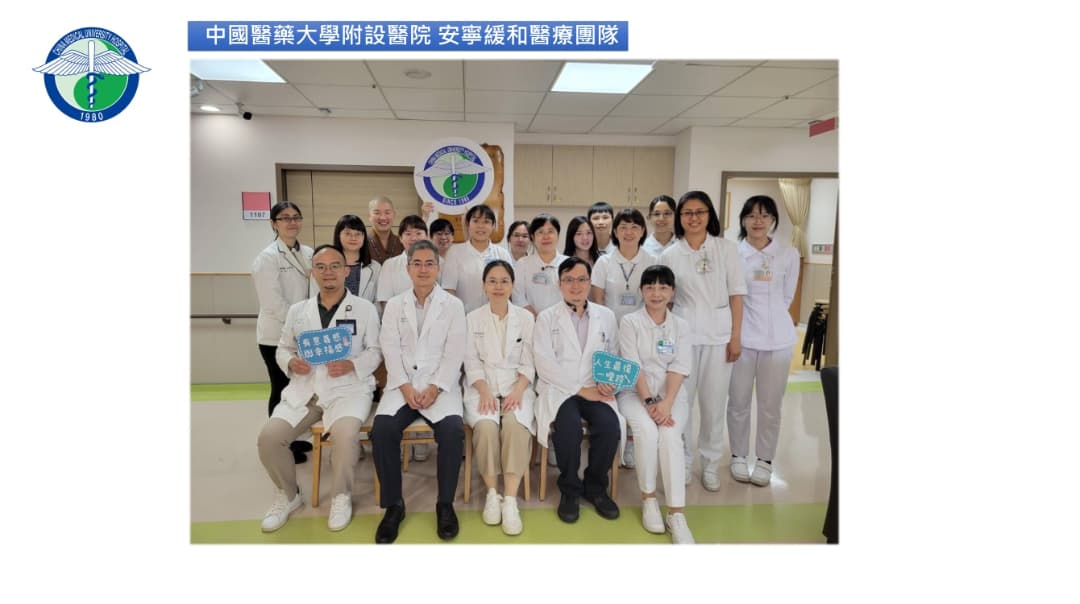
The hospice palliative care unit in China Medical University Hospital was established in September 2002. The target population included all terminally ill patients. In addition to in-patient palliative service, our palliative care team offers hospice out-patient clinic, hospital consultation, hospice shared-care, and hospice home-care service. We aimed to provide comprehensive palliative team care and promote the quality of life of these terminal patients and their families. Our hospice palliative care team members include medical doctors, nurses, social workers, chaplains, and hospital volunteers. In order to provide total care of bio-psycho-social and spiritual status, we combined medical treatment with complementary and alternative therapy to achieve comfort of the patients. As for those discharged patients, hospice home-care visit would be arranged as needed, and visit the patient according to the clinical condition. If any unexpected problems occurred, the caregivers could call our helpline at any time. Through the continuous medical care, we help the patients and families with better adaption of the end of life.
By integrating comfort-focused nursing care, diverse palliative care models are applied to enhance comfort for terminally ill patients while actively guiding family members to participate in the care process, thereby improving quality of life and achieving peace for both life and death.
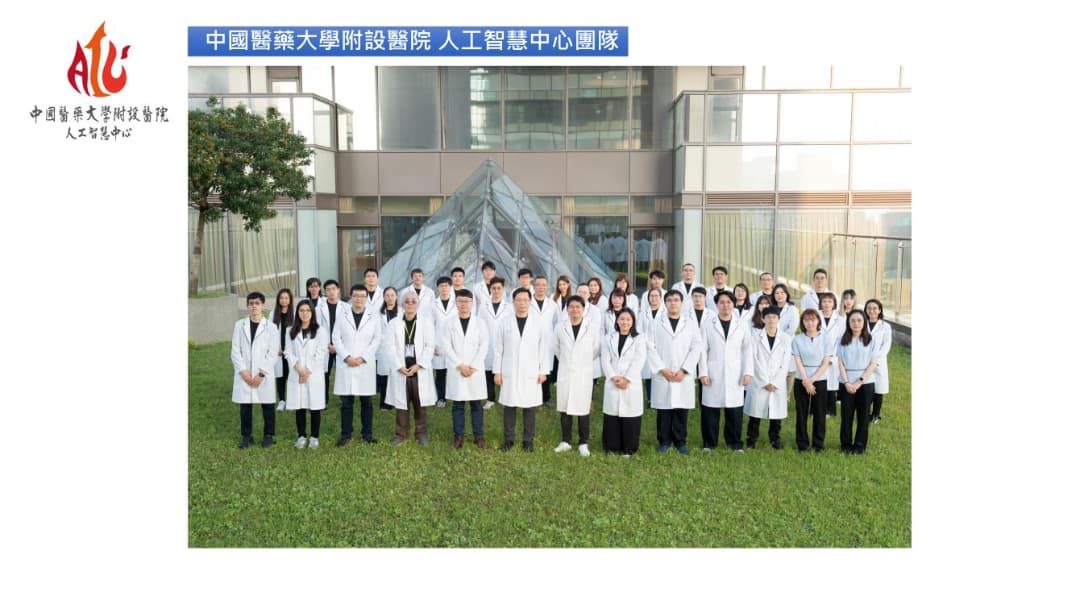
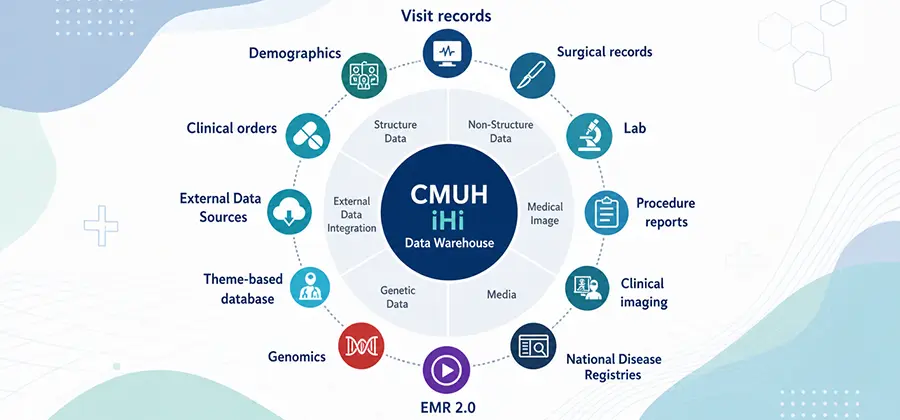
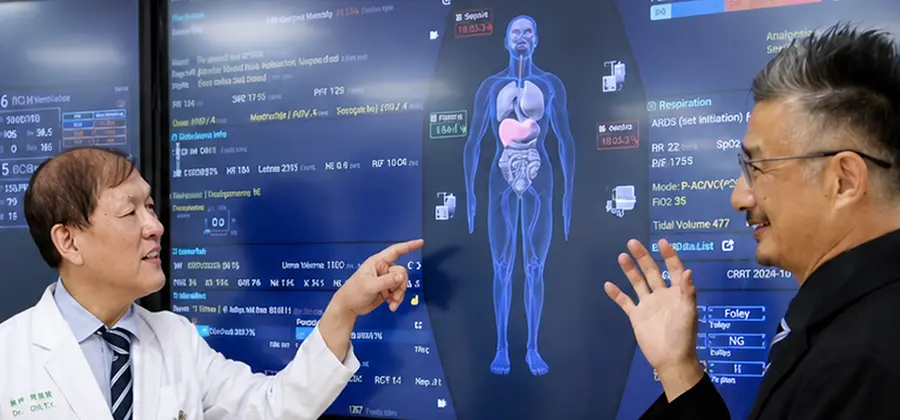
Generative AI–assisted nursing voice documentation, Power BI–based visualized decision support, and the Navi Care mobile inquiry system are incorporated to strengthen clinical decision-making.
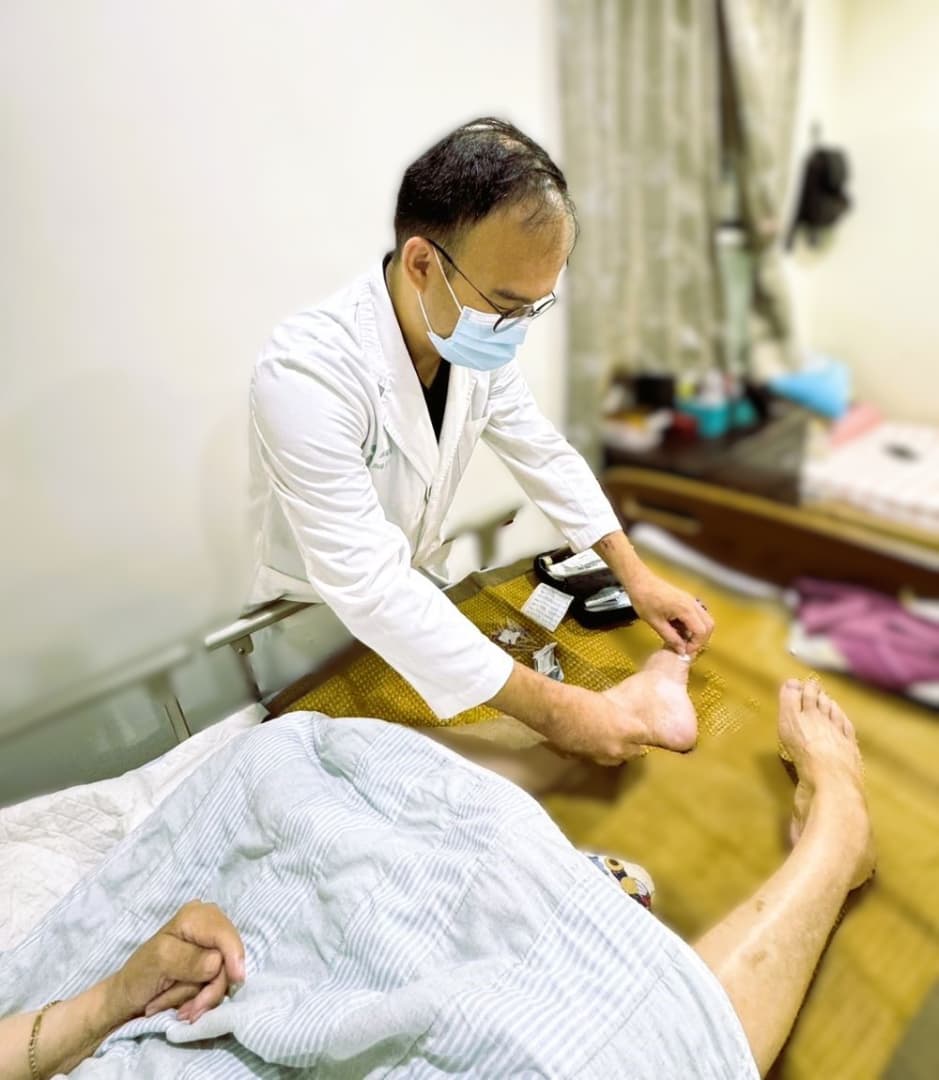
In addition, joint home visits by Western and Traditional Chinese Medicine practitioners are promoted to ensure smooth transitions during the integrated home care phase and seamless continuity of medical resources.
Home-based hospice care has remained stable over the past three years:
New cases: 359 in 2022 → 376 in 2023 (growth) → 350 in 2024 (slight decrease); 184 cases recorded from Jan–Jun 2025.
Total home visits: 3,161 in 2022 → 3,344 in 2023 → 3,080 in 2024; 1,326 visits from Jan–Jun 2025.
End-of-life visits: 163 in 2022 → 162 in 2023 → 166 in 2024; 72 visits from Jan–Jun 2025.
Home visits by Chinese medicine physicians: 807 in 2022 → 853 in 2023 → 945 in 2024 (yearly growth); 351 visits from Jan–Jun 2025.
The rate of pressure injuries remained below 2.5%, indicating stable and effective prevention outcomes.
The success rate of referrals to home-based hospice care rebounded to 80.7%, highlighting the need to further strengthen interdisciplinary care transitions.
The rate of dying at home increased to 58.4%, demonstrating significance in relation to international benchmarks.
The rate of dying at home met the target starting in 2024 and has continued to improve.
Unexpected emergency department visits and intubation events occurred occasionally, indicating areas for ongoing quality improvement.
Family satisfaction increased year by year, reaching 97.6% in 2025.
Satisfaction with personal hygiene care consistently exceeded 90%, demonstrating strong effectiveness in dignity-conserving care.
The rate of dying at home increased to 58.4%, demonstrating significance against international benchmarks.
Seven outcomes were presented at international nursing and hospice conferences.
One oral presentation was delivered at the International Council of Nurses (ICN) Congress.
Multiple poster presentations were presented at APHN and AONSC conferences.
Applications of generative AI in hospice and palliative care were showcased through inter-hospital exchanges, medical technology expos, and senior care exhibitions.
Engagement with experts from multiple countries facilitated cross-national collaboration, including strengthened hospice partnerships under the New Southbound Policy, particularly with Malaysia.
Enhance domestic and international healthcare quality: Disseminate Taiwan’s hospice and palliative care quality improvement through international publications.
Establish standards of care: Develop home-based hospice visit models to promote consistency in treatment and care delivery.
Strengthen care effectiveness: Increase visit frequency, reduce unexpected emergency department visits at the end of life, and support dying at home.
Advance healthcare sustainability: Integrate Advance Care Planning (ACP) to reduce non-beneficial medical interventions.
Promote digital transformation: Implement generative AI–based documentation systems to enhance communication, quality management, and long-term care system resilience.