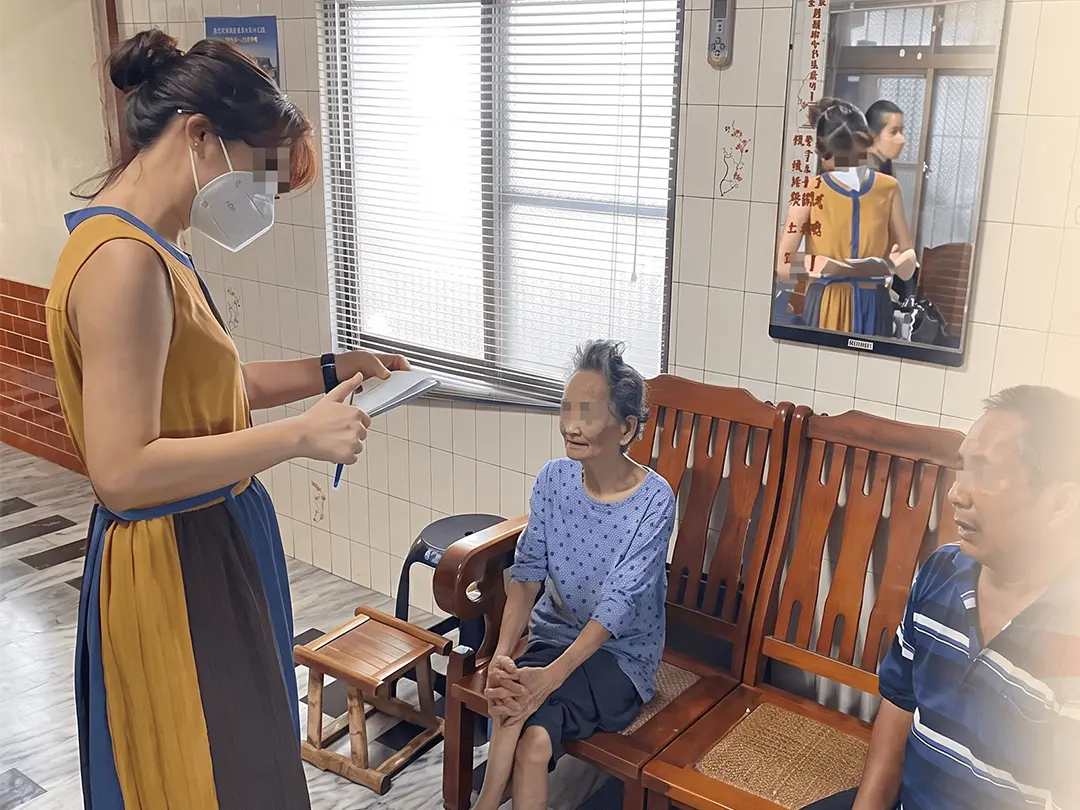
Confirmed dementia cases
High-risk groups with suspected dementia
Dementia patients' families and primary caregivers
Elderly seniors in the community
Dementia cases with chronic comorbidities
Dementia is a degenerative disease that often leads to cognitive impairment, behavioral changes, and a decline in daily life functions. This disease significantly impacts patients, their families, and society as a whole. In response, our hospital has developed an innovative dementia care model called the 1234 model. This model includes the following components:
Establishing a cross-professional team
Implementing care in two settings: hospital and community 3. Promoting 3D care steps: Discovering new cases, developing care strategies, and delivering integrated services
Providing four key interventions: Power BI analysis, a counseling center, a one stop service, and support groups.
Since the implementation of this model, there has been a significant increase in referrals for dementia cases over the past three years, demonstrating effective collaboration and execution. The introduction of Power BI has contributed to an overall medical service satisfaction rate of 92.3%. Namely, patients have shown deep appreciation for the medical team, and the process optimizations made possible by technology have yielded substantial results. Moving forward, our hospital will continue to enhance the application of the 1234 model, expand service capacity, and strive toward an all-age, friendly, and sustainable care model to improve the population's cognitive health and well-being.
Implement 3D care steps: Discover new cases, Develop care strategies, and Deliver integrated services.
Introduce Power BI visual modules for precision data analysis.
Establish a dedicated Consulting Center to provide professional guidance.
Set up a specialized care zone to deliver one-stop clinical services.
Launch dementia support groups to alleviate family caregiver burdens.
Newly diagnosed dementia cases in 2024: 179 persons
Total registered case count in 2024: 372 persons
Completed referral services by the Shared-Care Center: 95 cases
Referral growth rate from 2022 to 2024: 192%
Community referral success rate: 53%
Completion rate of the One-Stop Dementia Service: 100%
Convene the "On-Site Guidance & Internal Liaison Meeting" semi-annually.
Host annual dementia training sessions with at least 50 professionals and 30 caregivers per event.
Equip all care zones with anti-lost tracking bracelets for dementia patients.
Install comprehensive accessible facilities and anti-slip flooring.
Inspect fire safety systems and alarm equipment on a regular basis.
Hospital Environment: 86.2% in 2024 (up 4.2% from 2023)
Staff Service Attitude: 89.7% in 2024 (up 4.4% from 2023)
Clinical Care Process: 92.3% in 2024 (up 7.2% from 2023)
Waiting Time: 89.6% in 2024 (up 6.1% from 2023) Service
Outcomes: 87.0% in 2024 (up 2.8% from 2023) Overall
Satisfaction: 89.0% in 2024 (up 4.8% from 2023)
Care designs are built upon a foundation of multiple international studies.
Align with global standards by using data visualization to support clinical decisions.
Interdisciplinary collaboration workflows conform to international evidence-based trends.
The One-Stop Dementia Care Model provides significant reference value globally.
Patient support and self-care strategies are backed by international evidence.
The 1234 Model shortens care workflows, improves referral efficiency, and achieves seamless integration between hospital and community.
Enable precise decision-making and reduce care gaps through real-time Power BI monitoring.
Family members receive help from support groups to enhance self-care capacity and reduce burdens.
Continuous growth in service coverage and satisfaction facilitates a dementia-friendly, sustainable care system.