Acute Myocardial Infarction
Acute Coronary Syndrome, ACS
Yuan’s General Hospital is a mid-level emergency responsibility hospital. In 2022, key indicators for acute myocardial infarction (AMI) care—including in-hospital mortality rate(13.0%) and 14-day unplanned readmission rate(3.3%)—were higher than peer benchmarks. In addition, the prescription rates of beta-blockers at discharge (85.2%) and ACEI/ARB during hospitalization (34.4%) were below peer averages.
To address these gaps, we implemented a problem-oriented integrated care strategy linking the emergency department, catheterization laboratory, intensive care unit, and general wards. The model focuses on three core domains: optimizing reperfusion timeliness, improving adherence to guideline-directed medical therapy (GDMT), and strengthening post-discharge follow-up through case management.
Through interdisciplinary collaboration and workflow redesign, a structured and replicable AMI integrated care model was established to enhance overall care quality and clinical outcomes. In terms of outcomes, in 2025, the hospital achieved a 100% rate for both beta-blocker prescriptions at discharge and inpatient ACEI/ARB utilization. Furthermore, the 14-day unplanned readmission rate dropped to 0%, and the inpatient mortality rate decreased to 11.4%, demonstrating the clear effectiveness of these improvements.
Enhanced Acute Care Efficiency: Implemented a dedicated primary nursing system in the emergency department, introduced STEMI-specific LINE communication tools, developed an ACS emergency catheterization checklist, and pioneered the national “AMI Medication Kit” to significantly reduce treatment delays.
Integrated Interdisciplinary Care: Established an integrated handover communication platform and standardized order sets, with continuous monitoring and improvement of GDMT quality and adherence.
Innovative Post-Discharge Management: Appointed dedicated AMI case managers, created patient support groups and AMI education toolkits, and led nationwide implementation of “In-Care” wearable devices for post-discharge health monitoring.
Over 200 AMI patients have been managed and assisted over the past three years.
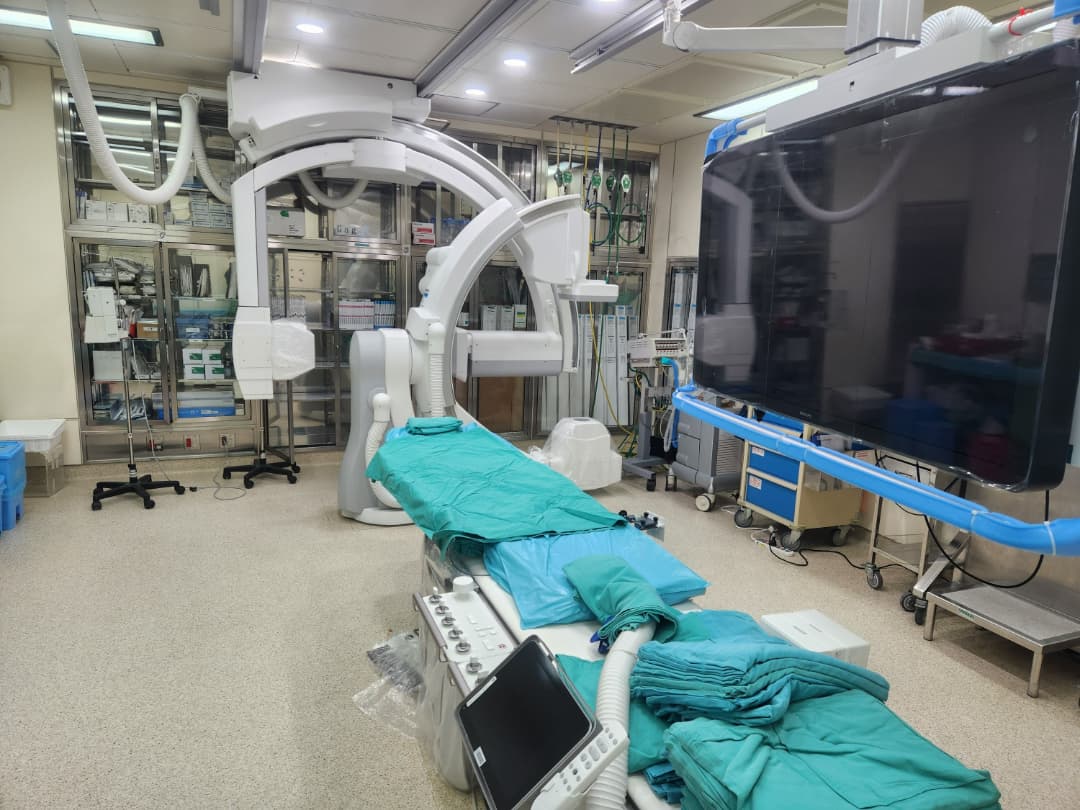
More than 100 emergency primary PCI (percutaneous coronary intervention) procedures for STEMI patients have been performed in three years.
AMI case managers have successfully enrolled and managed more than 200 patients.
The 14-day unplanned readmission rate for AMI patients in our hospital decreased from 3.25% to 0%.
The in-hospital mortality rate for STEMI patients in our hospital decreased from 13.0% to 11.4%.
Significantly shortened the average time to administer Dual Anti-platelet Therapy (DAPT) in the ER from 181.0±14.5seconds to 28.8±2.5seconds.
Achieved 100% adherence to GDMT (Guideline-Directed Medical Therapy) for STEMI patients, up from 34.4%.
Implemented the Acute Coronary Syndrome (ACS) Emergency Catheterization Checklist, with usage rate increasing from 0% to 100%.
Fully integrated the informatics system for emergency cardiac catheterization procedure timing, reaching 100% utilization.
Reached a 100% enrollment rate for AMI patients by case managers.
Achieved a 100% follow-up rate by case managers for discharged AMI patients.
Increased the smoking cessation referral rate for AMI patients (via case managers) from 0% to 92.6%.
Launched the use of "In-Care" wearable devices for discharged patients, increasing usage from 0% to 50%.
The 14-day unplanned readmission rate for AMI patients in our hospital decreased from 3.25% to 0%, which is lower than the national average of 1.95%.
The in-hospital mortality rate for STEMI patients in our hospital decreased from 13.0% to 11.4%.
Outpatient overall satisfaction with physicians averaged over 90%.
Inpatient overall satisfaction with physicians averaged over 85%.
A clinical study titled "Comparison between using wearable six-lead electrocardiogram and 12-lead electrocardiogram" is currently being conducted to evaluate the "In-Care" wearable device.
Promoting the overall quality of AMI care and optimizing patient outcomes in Taiwan.
Showcasing the tangible impact of integrated care and digital-aided tools on chronic disease management.