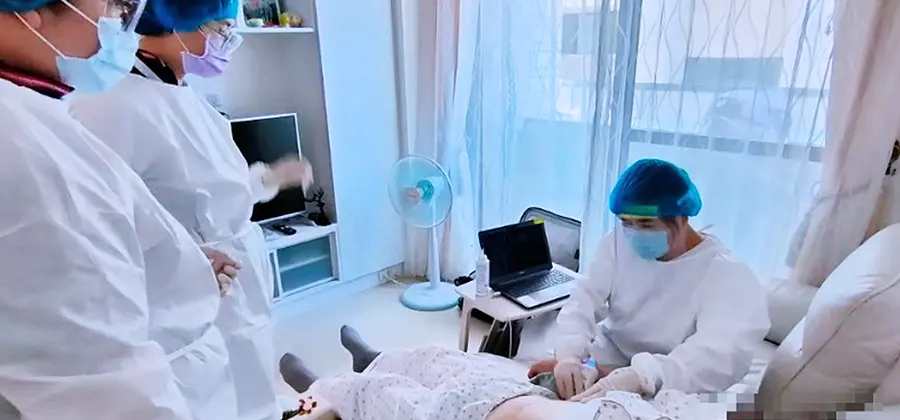
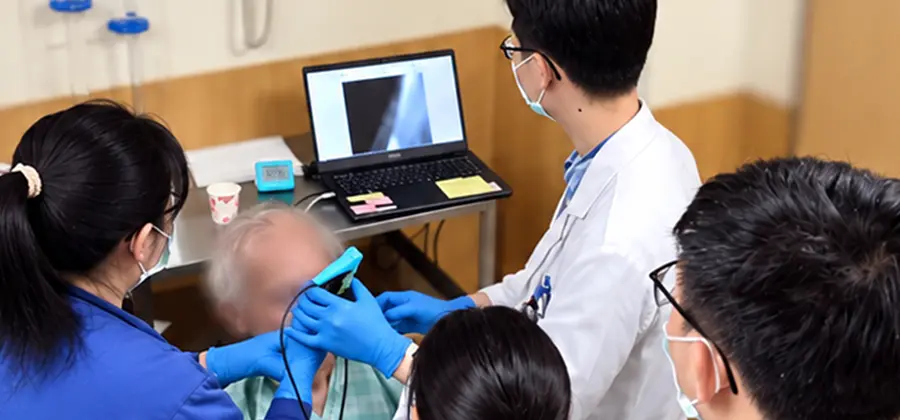
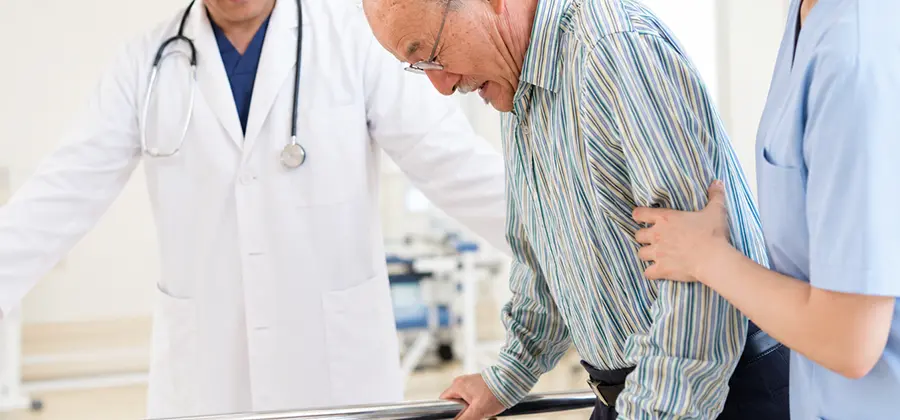
Older adults in community settings, adult day care centers, and home-based care cases.
Frail middle-aged and older adults undergoing digital mobility assessment, smart rehabilitation exercise intervention, referral, and clinical care integration
Global aging has led to an increase in elderly individuals with debilitating diseases, placing a greater burden on medical staff. Traditional muscle training and assistive devices often fail to track rehabilitation progress or encourage independent use.
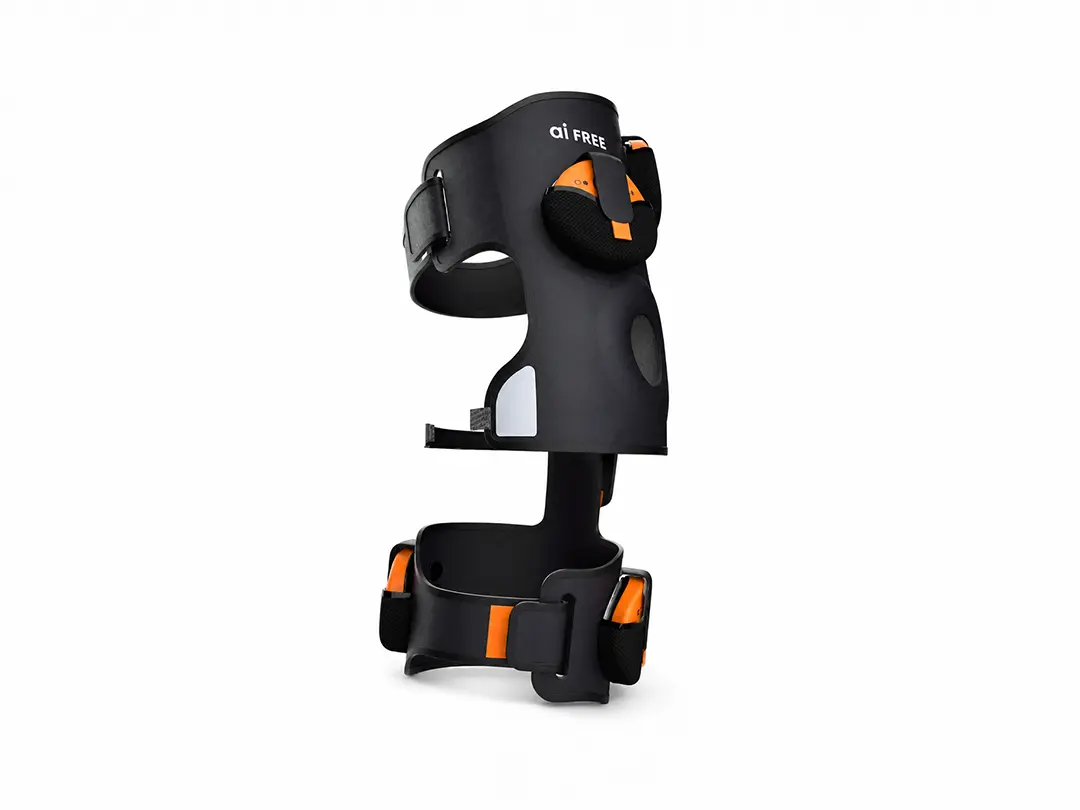
To address this, our team proposes the "Intelligent Health Promotion Service System," which combines a nostalgic interface and interactive games to engage elderly users. This system includes real-time scoring to boost motivation and utilizes AIoT technology for muscle detection and gait analysis, allowing professionals to monitor rehabilitation remotely.
We aim to deploy this lightweight system in urban and rural areas to assess weakness quickly and provide diverse rehabilitation interventions. Collaborating with hospital experts, we will establish a standardized process for detecting sarcopenia, ensuring a smooth transition of care from community settings to clinics while promoting the integration of digital rehabilitation.
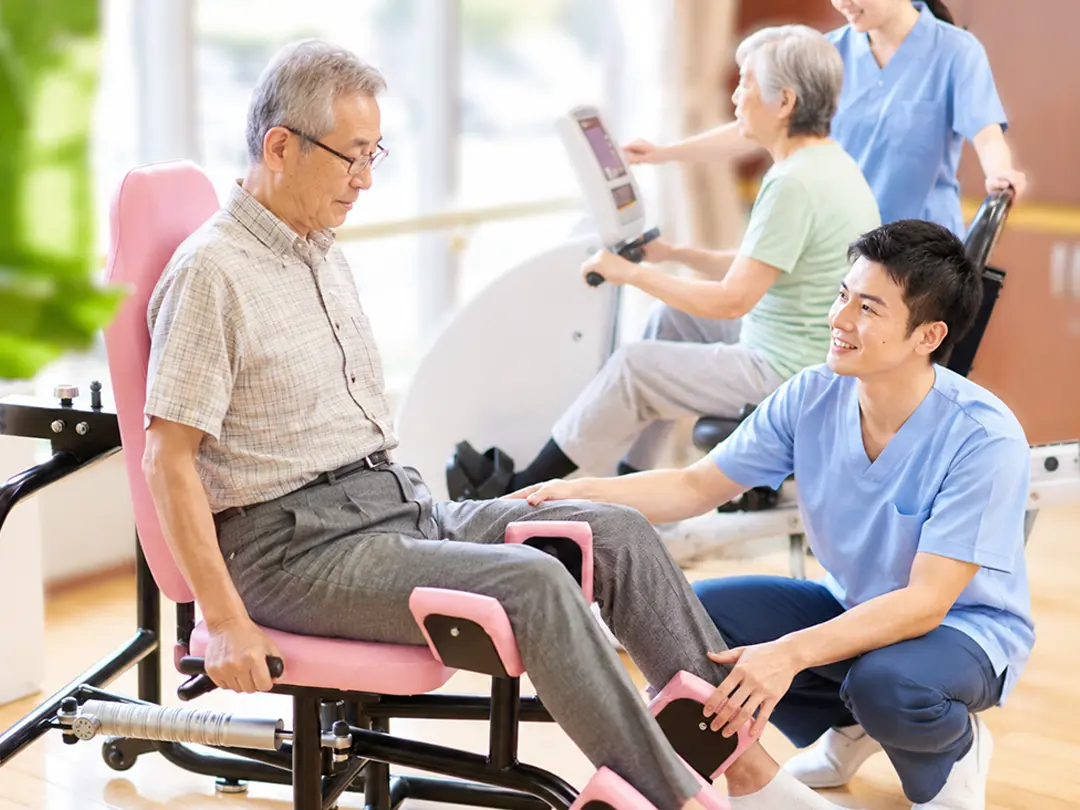
Cases are referred to the PTC through orthopedic outpatient clinics to standardize the clinical muscle testing specialists conduct. Supervised by physiotherapists, the "Intelligent Health Promotion Service System" (IHPSS) is applied twice a week (30-40 mins/session) for 12 weeks. Results show significant gains in lower limb strength, balance, & cardiorespiratory endurance, peaking at the 12th week.
After the results of previous studies, the Public Health Bureau, Tainan City Government, launched the “Intelligent Health Promotion Service System” to facilitate rapid frailty screening and rehabilitation across 37 districts. This initiative was highlighted during the “113th Tainan City Elderly Sports Group Carnival,” which saw over 1,000 senior participants. Remarkably, more than 80% of those involved demonstrated significant improvements in lower limb muscle strength after completing 12 weeks of exercise.
The Public Health Bureau, Tainan City Government, developed a digital care model integrating community needs with adult physicians' expertise using the “Intelligent Health Promotion Service System.” This system includes a testing module and various health promotion activities. If regression is detected, individuals are advised to seek further examination for conditions like sarcopenia or degenerative arthritis. The “Intelligent Health Promotion Service System” provides a supplementary digital rehabilitation module under physiotherapist guidance.
In June 2024, a team of interdisciplinary experts, organized by Vice Dean Prof. Yang-Cheng Lin, visited the Czech Technical University in Prague and the Technical University of Liberec for an academic exchange. They met with Ass. Ing. Lenka Lhotská, CSc., and Doc. Ing. Josef Černohorský, the Dean, to initiate a series of academic exchanges to enhance cooperation among the three institutions.
While both regions share a commitment to technological progress and education, Taiwan emphasizes interdisciplinary learning, whereas the Czech Republic focuses on in-depth professional expertise.
In light of the aging population, the World Health Organization (WHO) has proposed a program to support the health of frail elderly individuals through digital technology, which will be a key topic in discussions about the outcomes of this collaboration.
Through digital mobility assessments, smart rehabilitation systems, volunteer training, and the integration of healthcare professionals, this initiative aims to strengthen community residents’ awareness of frailty and enhance their motivation to engage in self-directed exercise training.rehabilitation experience were more willing to adopt new technology and performed well in both 'learnability' and 'confidence.'
The System Usability Scale (SUS) evaluation yielded a mean score of 62.2, indicating good usability. In the Technology Acceptance Model (TAM) evaluation, the mean scores for "Perceived Usefulness," "Perceived Ease of Use," "Attitude," "Behavioral Intention," and "Social Influence" were 4.2, 4.2, 4.3, 4.2, and 4.1, respectively, demonstrating a high level of overall acceptance.
Taiwan–Czech international collaboration was established to promote cross-national application of the digital mobility assessment and smart rehabilitation system. Czech scholars visited National Cheng Kung University to learn about the convenience and feasibility of using the system in community settings. As elderly care in the Czech Republic is mainly provided in residential care facilities, its care model differs from Taiwan’s community-based approach. The Czech team brought one assessment system back to the Czech Republic and applied for IRB approval, allowing graduate students to guide older adults in residential care facilities in single-mode training. This experience further demonstrated the potential of the smart rehabilitation system for international use.
A smart health education platform was developed to improve real-time feedback tracking and enhance the safety of interventions for frail older adults.
Digital mobility assessment and smart rehabilitation systems enhance the quality of frailty screening, follow-up, and intervention.
A standardized care process linking community services, referral mechanisms, and clinical care promotes early identification and continuity of care.
Individualized exercise and self-directed training help improve older adults’ muscle strength, balance, and daily functional performance, thereby reducing the risk of disability.
The integration of volunteers and healthcare professionals expands community service capacity and reduces the burden on medical and long-term care systems.
This study was reviewed and approved by the National Cheng Kung University HREC (no. NCKU HREC-E-113-726-2), supporting the dissemination of smart health care models in Taiwan and internationally.