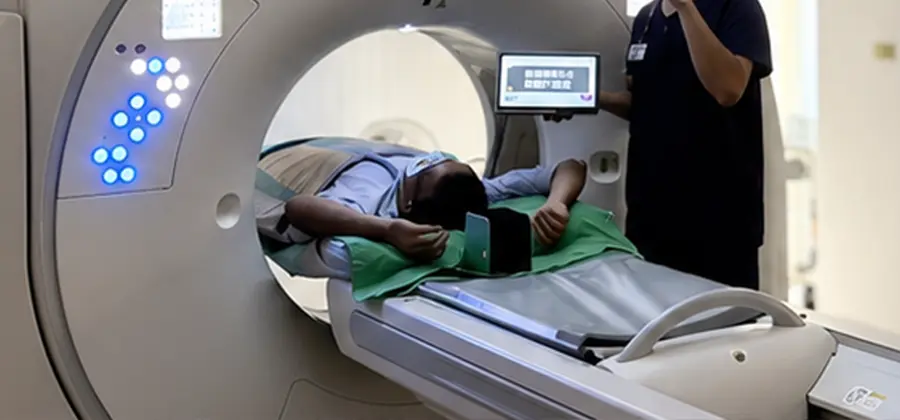
Dysphagia patient
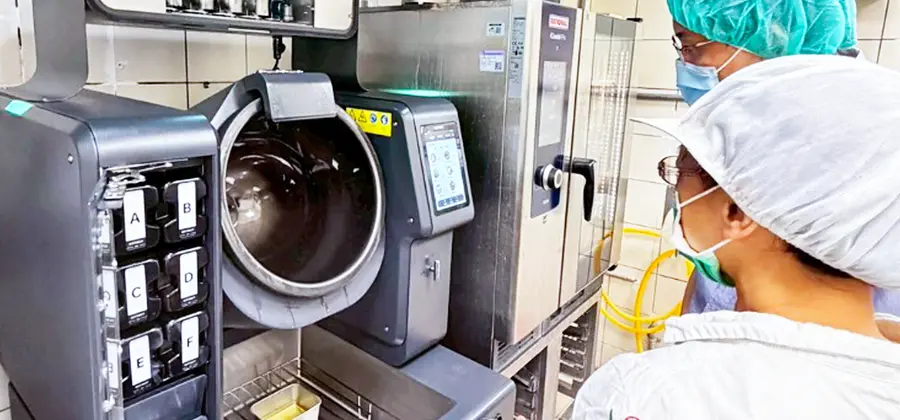
Oral Frailty patient
This pioneering institution assembled a multidisciplinary team, developed standardized diagnostic and care protocols, and continues to create innovative therapeutic tools—efforts that have earned multiple National Innovation Awards and National Sustainable Development Awards. This mission is especially critical as Taiwan becomes a super-aged society. These statistics highlight the limitations of purely hospital-based care. Recognizing this gap, our center extends its services far beyond its walls, actively conducting screenings in communities, long-term care facilities, and remote indigenous regions to coordinate localized care. To build a sustainable foundation of expertise, our center collaborates with schools to embed
swallowing therapy into health curricula and has successfully trained over 3,000 professionals to date. Its influence is also extending internationally, as our center shared its expertise to help Vietnam establish Southeast Asia’s first dedicated swallowing center. Through strategic partnerships and policy advocacy, our center has secured reimbursement for its services under national health insurance and long-term care programs, ensuring its work is both accessible and sustainable. By creating a globally unprecedented model that integrates hospital, academic, longterm care, and community resources, our center promotes health equity and sustainable care.
Integrative care: Integrated mastication and swallowing care services extending from hospitalized patients to the community, building a cross-professional care network
Community-based care: Extend services to communities, indigenous areas, and remote regions
Care accessibility: Enhance service convenience and coverage
Resilient Care : Prevent and screen for swallowing dysfumction
Care expansion: Promote national and regional care equity
International Impact: Promote global innovation in chewing and swallowing care through international collaboration
In the hospital, through standardized screening procedures and integrative care, high-risk cases are identified and addressed early, establishing a proactive care model. Associated education and care models are promoted to healthcare institutions at all levels, while also building international influence.
Dysphagia screening service:
In-hospital: A total of 30,381 in-hospital screening service
In the community: A total of 3,305 community screening service
Service area: Include 50% of counties and cities in Taiwan
Populations: Includes disadvantaged groups (homeless individuals), indigenous peoples, farmers, HIV patients and long-term care institutions.
Endoscopic swallowing examinations: A total of 368 examinations
Videofluoroscopic swallowing studies: A total of 499 examinations
Education for dysphagia care: With a cumulative total of more than 3,000 trainees in over 65 care units
Training center for Kaohsiung City’s long-term care professional services in feeding and swallowing care (CB02)
Associated education promotion and policy development
Overall Improvement Rates of Oral and Swallowing Function in Long-Term Care Institutions:
Overall improvement rate of OHAT score: 58%.
Overall improvement rate in MNA-SF: 86%.
Overall improvement rate in tongue coating: 83%.
Hospitalized Patients:
Screening rate for chewing and swallowing function: 100%.
Chewing and swallowing assessment rate : 100%.
Nasogastric tube removal rate: 28%–31%.
Achievement rate of body weight monitoring among long-term care cases with chewing and swallowing disorders: 85%–90%.
Achievement rate of hydration monitoring among long-term care cases with chewing and swallowing disorders: 76%–88%.
Nasogastric tube removal rate: 28%–31%.
Case or caregiver satisfaction rate: 92%–98%.
International collaborative research on the application of olive oil mouth rinsing for oral health in older adults.
Publication of research articles in international peer-reviewed journals.
Establishment of Southeast Asia’s first dysphagia center in collaboration with Vietnam’s 175 Military Hospital.
Hosting visits from medical institutions worldwide
Establish a standardized, multidisciplinary collaborative care model to serve as a national and international benchmark.
Integrate in-hospital and out-of-hospital long-term care units and community-based sites to develop an integrated medical–care model, delivering comprehensive care.
Develop and optimize screening and intervention tools through industry–academia collaboration.
Support relevant institutions in establishing chewing and swallowing care–related training programs to cultivate professional talent.
Provide advice for health policy formulation.
Export Taiwan’s experience to countries including Vietnam, Thailand, and New Zealand.