Pregnant women with gestational diabetes or diabetes
In line with the National Health Insurance Administration's policy to enhance maternal healthcare quality, from September 1, 2023, pregnant women diagnosed with diabetes will receive five glucose test strips per day from diagnosis until delivery. The medical system will automatically prompt physicians to prescribe test strips using an assigned health insurance code.
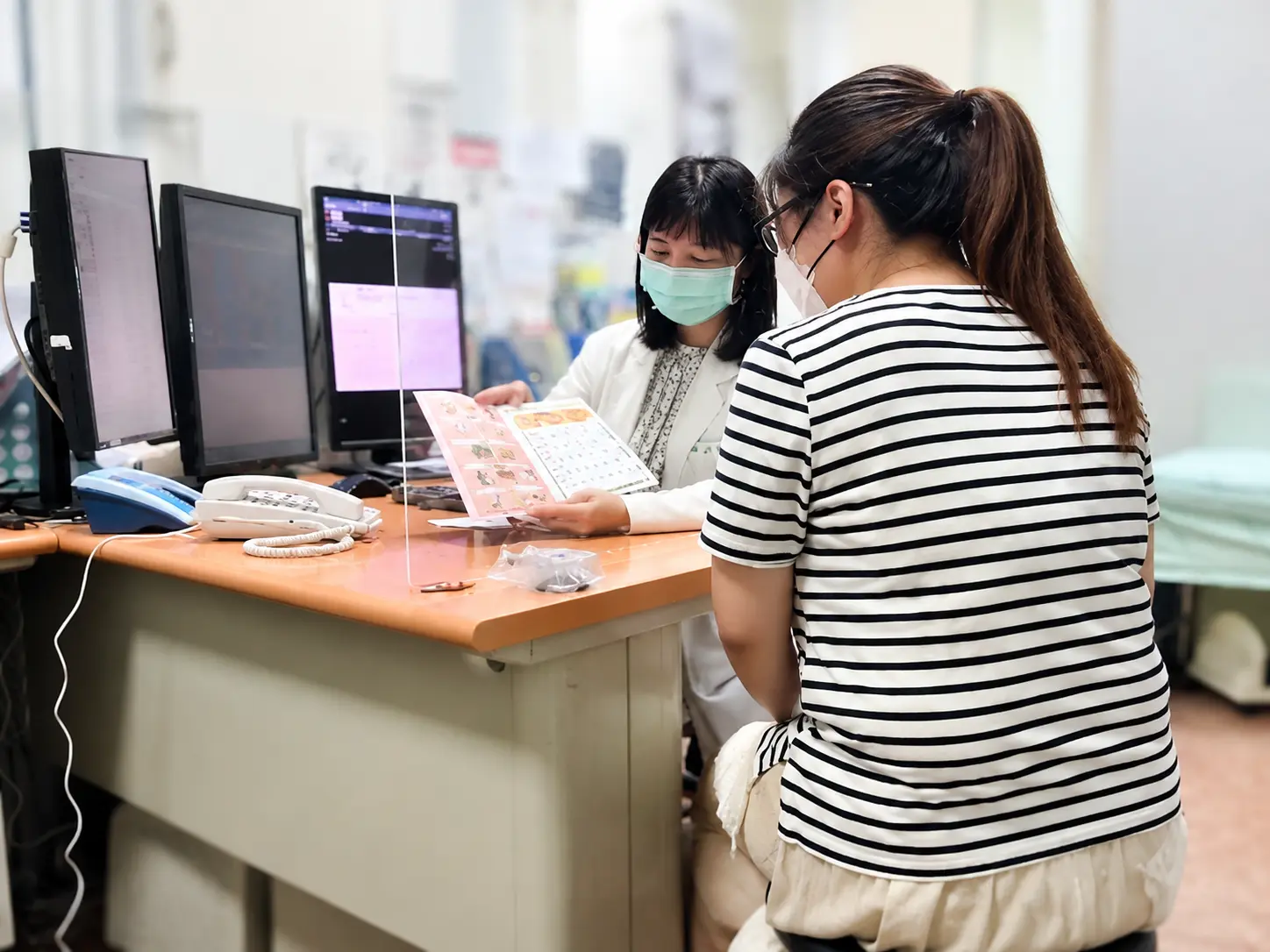
In collaboration with endocrinologist and obstetrics, diabetes nurse educators proactively assist in scheduling consultations with dietitians to ensure nutritional guidance.
Utilizing the cloud-based glucose management platform "Smart Sugar Control," a messaging broadcast feature sends reminders to postpartum women to return for glucose follow-ups 4-8 weeks after delivery.
Collaboration with the obstetrics department includes outpatient group health education and maternity classes to enhance patients' knowledge of diet, exercise, and glucose monitoring.
The cloud-based "Smart Sugar Control" platform integrates AI-powered food recognition and continuous glucose monitoring functions tailored for gestational diabetes patients.
Gestational Diabetes Mellitus (GDM) Care Outcomes & Risk Analysis
Unique Integrated Care in Central Taiwan Among the four medical centers in central Taiwan, our hospital is the only one equipped with an Integrated Outpatient Clinic for Gestational Diabetes Mellitus (GDM) and actively tracks this specific quality indicator.
Multidisciplinary Joint Care 50.7% of pregnant women received joint care provided collaboratively by the Department of Endocrinology, the Department of Obstetrics and Gynecology (OB/GYN), and registered dietitians.
High Screening Compliance The screening rate for the Oral Glucose Tolerance Test (OGTT) among pregnant women at our hospital is consistently maintained at approximately 90% annually.
2025 GDM Maternal Risk Analysis
Cesarean Section Rate: 52.2% among GDM mothers.
Preterm Birth Rate: 19.4% among GDM mothers.
Stillbirth Rate: 0%.
Average Length of Stay: 4.2 days for GDM mothers.
2025 Neonatal Risk Analysis
Hypoglycemia Rate: 14.9%.
Jaundice Rate: 14.9%.
Macrosomia Rate: 1.5% (Neonatal birth weight exceeding 4,000 grams).
Apgar Score Indicators: Neonates with an Apgar score < 7 at 1 minute is 7.5%; Apgar score < 7 at 5 minutes is 1.5%.
Average Length of Stay: 7.0 days for neonates.
In 2025, we held 4 joint OB/GYN education classes.
Analysis found 49.3% of GDM patients remained in exclusive OB/GYN care, with no significant difference in maternal or neonatal complications.
Improved Blood Sugar Control: Regular monitoring and personalized diet plans help GDM patients better control their blood sugar, lowering complication risks during pregnancy and delivery. Over the past 3 years, the average Cesarean section rate for GDM mothers was 48.7%.
Fewer Pregnancy Complications: Comprehensive care minimizes GDM-related risks like gestational hypertension, macrosomia (large babies), and premature birth, ensuring maternal and infant health. The 3-year average premature birth rate for GDM mothers was 17.8%, and the macrosomia rate was 1.2%.
Enhanced Fetal Health: Proper diabetes management reduces fetal developmental abnormalities, normalizes birth weight, and prevents issues like neonatal asphyxia and jaundice. The 3-year average neonatal hypoglycemia rate was 10.3%, and the jaundice rate was 27.8%.
Long-Term Health: Holistic GDM care lowers the mother's postpartum risk of developing Type 2 diabetes. Within one year postpartum, the clinic follow-up rate was 24.1%. Among those tested for HbA1c, 88.5% had normal blood sugar, 8.6% had elevated blood sugar, and 2.9% were diagnosed with diabetes.
Improved Quality of Life: Integrated care—including psychological support, nutritional counseling, and weight management—helps reduce maternal stress and anxiety. In 2025, patient satisfaction with the interdisciplinary team and our medical staff's service attitude reached 96.7%.
Daily QC Calibration of Blood Glucose Meters: 100% compliance rate
3-Day Real-Time Tracking via Smart Blood Glucose Monitoring System: 80% completion rate
7- to 14-Day Remote Feedback Mechanism: 80% execution rate
Adverse Event Rate: 0%
In 2025, a total of 61 responses were collected for the multidisciplinary care team satisfaction survey. The results are as follows: Satisfaction with Healthcare Professionals: 96.7% of the respondents expressed satisfaction with the service attitude of our medical staff, while 3.3% felt neutral or dissatisfied. Necessity of Multidisciplinary Care: 98.4% of the respondents agreed that multidisciplinary care is essential, with the remaining 1.6% holding a neutral view.
The hospital aligns its gestational diabetes care with guidelines from ADA, IDF, and WHO, ensuring global standards. Efforts extend to developing countries, promoting early detection and management to reduce maternal and neonatal risks.
Journal Publication:
Shiang-Hua Chang, Pei-Hsiu Hsin, Jia-Juen Lin, Yi-Sun Yang, Shih-Chang Lo, Chien-Ning Huang, Yu-Hsun Wang, Edy Kornelius. Evaluating the association between gestational diabetes and neonatal hypoglycemia in Taiwan: a retrospective study of 2,149 pregnancies. Front Endocrinol (Lausanne). 2025 Sep 4:16:1634074. doi: 10.3389/fendo.2025.1634074. eCollection 2025.
Aligning with International Standards Our care strictly aligns with ADA, IDF, and WHO guidelines. Establishing SOPs: Standardized protocols maintain service quality and minimize error risks. Regional Leadership & Impact: As central Taiwan's only Integrated Gestational Diabetes Clinic, we track key indicators. Our clinical outcomes were published in Front Endocrinol (2025), boosting global visibility.
Patient Care Benefits Reducing Complications: Tailored diets and monitoring lower hypertension and preterm birth risks (19.4% in 2025; stillbirth 0%). Fetal anomalies are minimized: macrosomia (1.5%), and neonatal hypoglycemia and jaundice (both 14.9%). Multidisciplinary Care: Specialists collaborate to personalize diet, exercise, and medication plans. In 2025, 50.7% of pregnant women received joint care, and the annual OGTT screening rate was maintained at ~90%.
Medical Sustainability & Smart Management Smart Tech: The "Smart Sugar Control" platform utilizes AI food recognition and continuous glucose monitoring to boost patient self-management. Proactive Tracking: Systems auto-remind physicians to prescribe test strips via insurance codes, while educators proactively schedule dietitian visits. Cloud Follow-ups: Automated 4- to 8-week postpartum reminders and ongoing maternity classes ensure efficient resource use and sustainable tracking.