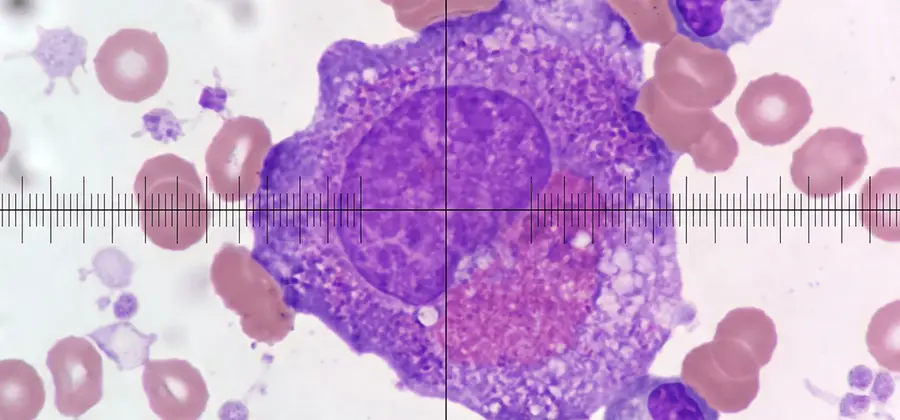
People living with HIV (domestic/foreign)
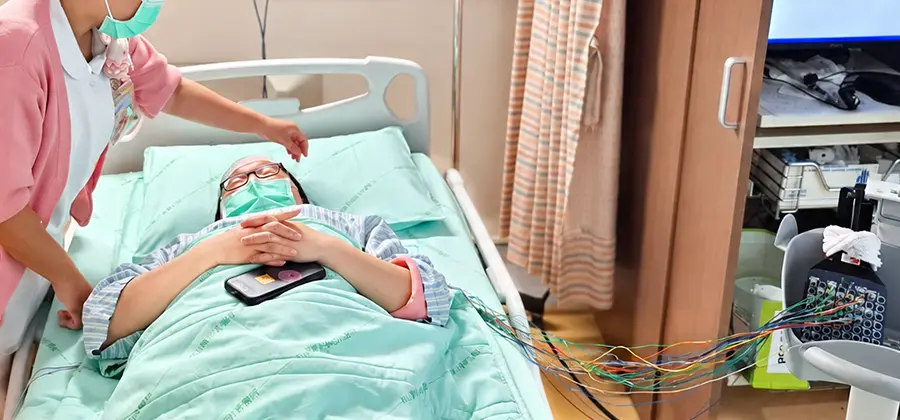
Complex HIV cases with substance use disorders
High-risk groups using PrEP/PEP
STD patients
Chung Shan Medical University Hospital has administered the Integrated HIV/AIDS Designated Medical Institution Program commissioned by the Centers for Disease Control, Ministry of Health and Welfare, since 2007. With over 17 years of experience, the hospital has built a comprehensive prevention network spanning clinical care, case management, health education, and campus outreach, serving as a key force in Taiwan's HIV prevention. To address public stigma and low screening uptake, the hospital promotes destigmatization campaigns and fosters supportive environments. Targeting younger populations at higher risk, it employs diverse educational strategies to boost prevention awareness and screening rates. As a university-affiliated institution, it integrates HIV education into campus curricula, cultivating empathetic, knowledgeable future healthcare professionals free from prejudice. The hospital coordinates multidisciplinary teams to deliver person-centered continuity of care—from screening and counseling through treatment to long-term follow-up—ensuring seamless service delivery. By bridging academic resources with community networks, professional expertise is translated into accessible health promotion across the region. Grounded in evidence-based practice and a people-first philosophy, this program advances medical care and public education in tandem, striving to build an inclusive, discrimination-free society.
Key Highlights Key Technology: In 2007, established Taiwan's first hospital-based HIV AIDS Committee, creating an institutionalized cross-disciplinary care coordination mechanism.
Distinguishing Features:
The only HIV-designated medical institution in Taiwan integrating NGO resources into care delivery.
Pioneer in adolescent HIV specialized care since 2003
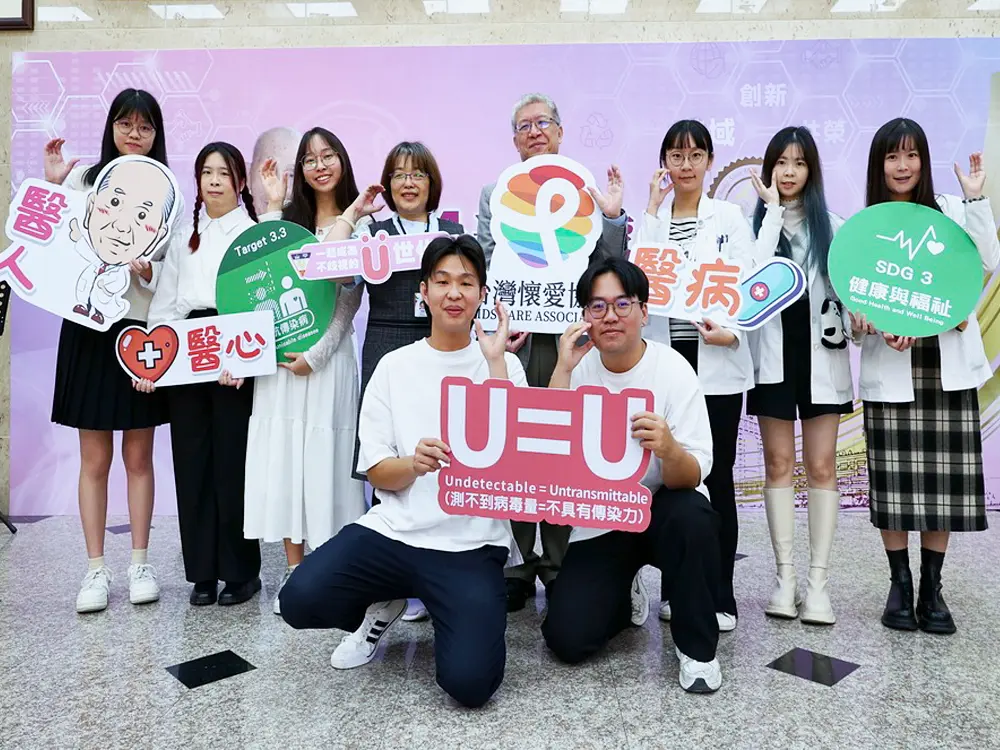
First HIV-designated institution in Taiwan to promote the U=U concept through a music festival.
Innovative Approaches:
Invited the Taiwan Public Health Student Association and Taiwan CDC officials to perform an HIV public welfare song together.
Applied Virtual Reality(VR)technology to simulate patients' medical experiences, effectively breaking down stigma and discrimination.
Proactively deployed mobile HIV screening vehicles to rural eastern Taiwan, bringing accessible testing services directly to underserved local communities.
Podcast, streaming platforms, and creatively designed coffee packaging to normalize HIV awareness in daily life Integrated HIV advocacy courses and de-stigmatization activities into campus graduation credit programs.
Co-organized the "A-Love" Music Festival with NGOs to advocate for health equity and inclusivity.
Since 2010, Chung Shan Medical University Hospital has conducted a cumulative total of 16,297 anonymous HIV screening tests.
Since 2010, Chung Shan Medical University Hospital has conducted a cumulative total of 16,297 anonymous HIV screening tests. Since 2020, Chung Shan Medical University Hospital has completed 27 outreach anonymous rapid HIV screening sessions.
The total number of HIV-positive patients receiving medical care within the past year has reached 909.
2020–2024: 100% referral rate for positive cases from HIV "one-stop" anonymous rapid testing clinics.
2021–2024: 97.5% medication adherence rate among infected individuals on treatment.
2021–2024: 97.3% viral load suppression rate (undetectable levels) among infected individuals on treatment.
Pioneered the use of long-acting HIV injectables in Central Taiwan and maintains the region's largest patient base, with 49 cases to date
From 2023 to 2025, total participation in the 'Love Is Daily' charity concerts exceeded 30,000 people.
2025 World AIDS Day & Library Week: 112 screenings completed.
Quality & Patient Safety:
(1 ) Undetectable viral load rate among patients on ART: 99% in 2024.
ART adherence rate: sustained at 97–98% from 2021–2024.
Managed 12 HIV-positive deliveries with 0% mother-to-child transmission rate.
Anonymous screening reactive-to-outpatient referral rate: 100% for five consecutive years (2020–2024).
Quality Management:
Same-day laboratory confirmation rate reached 95%, reducing diagnostic turnaround time.
ART initiation within 7 days of newly reported cases increased progressively, reaching 12 cases in 2025.
CDC-accredited immunochromatographic assay achieved in 2019, enabling HIV confirmation within 30 minutes.
Maintained complete availability of 16 original-brand antiretroviral agents ensuring treatment continuity.
Established standardized cross-disciplinary SOPs ensuring consistent care quality.
Risk Management:
24-hour emergency nPEP service available in the emergency department.
Implemented ADC+S intelligent medication cabinet and Med Cloud Cube, enhancing dispensing efficiency and safety.
Adverse Event Statistics:
12 HIV-positive deliveries with 0% mother-to-child transmission rate.
Reactive-to-outpatient referral rate maintained at 100% for five consecutive years (2020–2024), ensuring no cases lost to follow-up.
Patient/Service User Satisfaction:
2024 HIV Patient Healthcare Experience Survey (Anonymous Questionnaire):
Equal Care Experience Rate: 92% (no differential treatment based on HIV serostatus)
Identity Confidentiality Protection Rate: 85.2% (no unintended HIV status disclosure during clinical visits)
Healthcare Privacy Protection Satisfaction Rate: 76.1%
Patient Dignity and Respect Satisfaction Rate: 87.5%
HIV Awareness Exhibition VR Experience Satisfaction Rate: 92.4% (n=294 medical students)
User Feedback:
Following the implementation of HIV-friendly healthcare advocacy, stigma-driven protective behaviors among clinical staff demonstrated significant reduction: inappropriate double-gloving rate decreased from 30% to 7%; unnecessary physical distancing behavior reduced from 36% to 13%.
Additional Indicators (Healthcare Worker De-stigmatization Outcomes): U=U concept comprehension rate among healthcare professionals: improved from 27% to 94% Inappropriate double-gloving rate: reduced from 30% to 7% Unnecessary physical distancing behavior rate: reduced from 36% to 13%
HIV patient equal care experience rate: 92%
Executive Director Yu Chia-Hui is the first scholar in Taiwan to translate the Berger HIV Stigma Scale into Chinese, developing the 18-item Chinese HIV Stigma Scale (18-CHSS). The scale demonstrates excellent reliability and validity (Cronbach's α=0.92; CFA GFI=0.94) and has been authorized for use by research teams in Taiwan, the United States, Malaysia, and other countries.
Director Li Yuan-Di has published more than 20 SCI-indexed journal articles on HIV-related topics, covering research areas including HIV comorbidities, metabolic syndrome, and drug resistance.
At the 2025 APACC (Asia Pacific AIDS and Co-infections Conference), three research posters were presented, covering topics including shared decision-making (SDM) for long-acting injectable therapy, LINE@ digital platform applications, and the relationship between HIV stigma and quality of life.
Executive Director Yu Chia-Hui and the Taiwan CARE Association jointly presented a study at APACC on "The Correlation between HIV Stigma and Quality of Life among People Living with HIV in Taiwan.
Nurse Li Shu-Ying developed the Chinese version of the HIV-Related Fatigue Scale (C-HIRFS), which has undergone rigorous reliability and validity verification, providing a clinical assessment tool for healthcare professionals.
Healthcare Quality Improvement:
Established Taiwan's first institutional HIV Committee, standardizing cross-disciplinary care coordination.
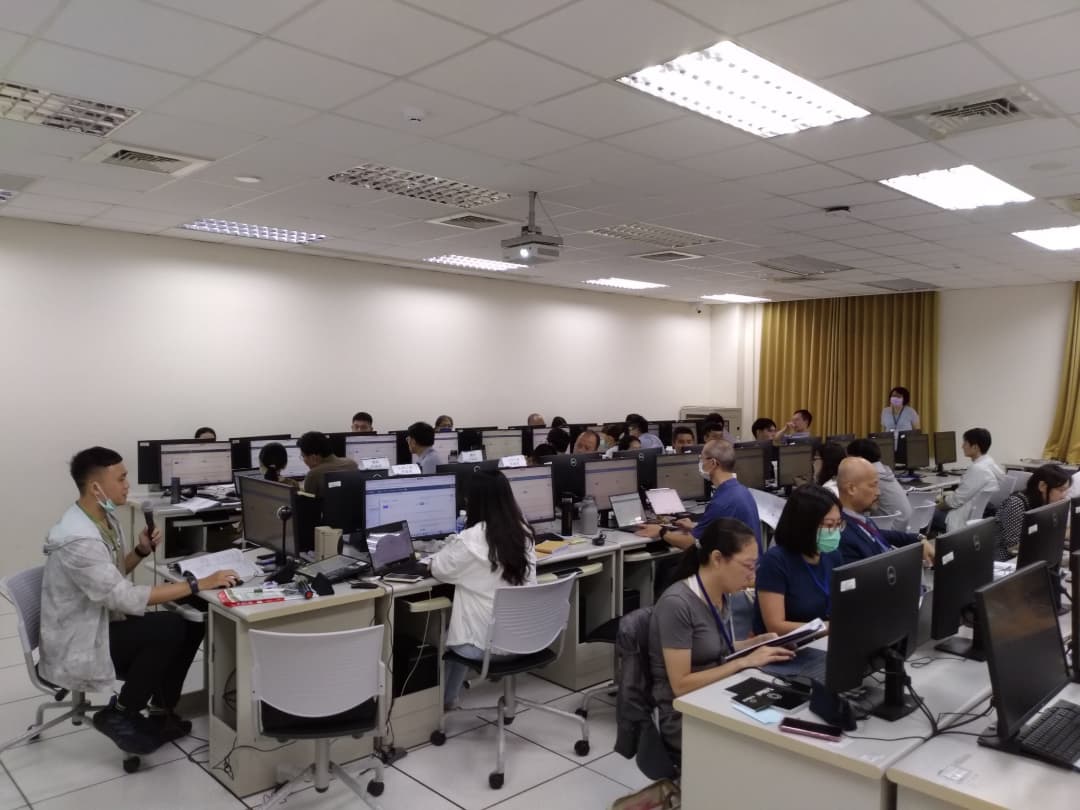
Deployed HIS-integrated screening alerts to prompt HIV co-testing during STD consultations, enhancing early detection.
Developed Taiwan's first ADC+S medication cabinet risk dashboard, awarded a R.O.C. invention patent.
Clinical Care Standards:
Pioneered an HIV long-acting injectable Shared Decision-Making (SDM) framework, expanding treatment options and reinforcing patient-centered informed consent.
Patient Care Outcomes:
Assisted 12 HIV-positive deliveries with 0% mother-to-child transmission rate.
Maintained complete availability of 16 original-brand antiretroviral agents, ensuring treatment continuity.
U=U awareness among healthcare professionals increased from 27% to 94% post-intervention.
Cumulative anonymous HIV screening reached 16,297 clients, advancing early diagnosis and treatment.
Healthcare Sustainability:
Sustained NGO funding to strengthen community HIV care; trained campus U Ambassadors for youth prevention education; built cross-sector partnerships forming a sustainable HIV prevention ecosystem.
Maintained active HIV peer-reviewed publication to support evidence-based clinical practice.
Developed and validated the 18-item Chinese HIV Stigma Scale (18-CHSS), licensed in Taiwan, USA, and Malaysia.