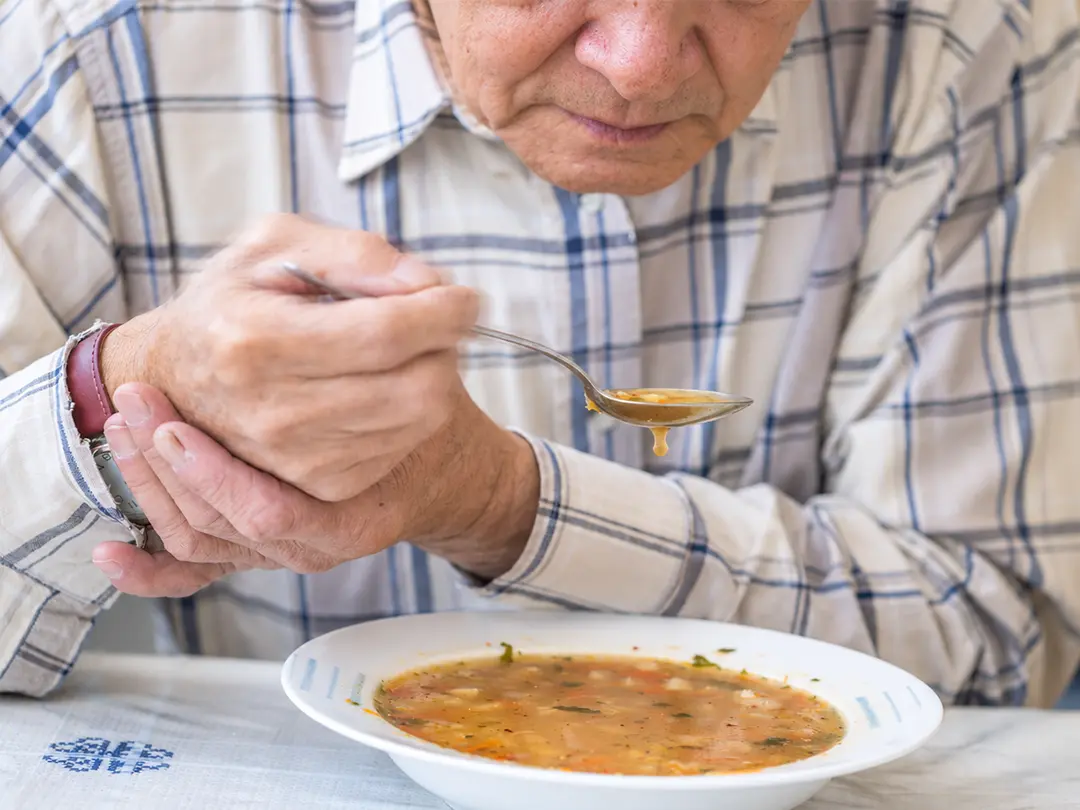
Patients with Parkinson’s disease, movement disorders, and DBS therapy • Patients with freezing of gait and tremor • Patients with functional movement disorders •
Develops comprehensive integrated care for Parkinson's disease and movement disorders using an proactive model. After initial neurologist evaluation, care coordinators actively schedule multi-disciplinary assessments, enabling all specialty evaluations to be completed in a single integrated clinic visit, addressing the challenges of the traditional model where patients must separately visit multiple departments.
Complete multi-specialty evaluation in single clinic visit
Proactive care coordinator contact system
Simultaneous cross-departmental evaluation
Customized treatment planning
Free fixed-time treatment services
Six-axis care development
International research collaboration
In 2025, the Movement Disorders and Parkinson’s Disease Integrated Care Clinic provided approximately 4,000
outpatient visits and delivered 1,107 treatment services, including medication optimization, rehabilitation, case management, and multidisciplinary care.
During the first half of 2026, approximately 100 patients were enrolled and treated through the program.
A multidisciplinary care model has been established, involving neurologists, nurse case managers, nurses, rehabilitation therapists, and other healthcare professionals.
Services include disease assessment, medication management, motor function evaluation, swallowing and nutritional assessment, fall-risk evaluation, and patient education.
The team also utilizes a smart Parkinson’s disease care platform and digital questionnaires to improve care quality and efficiency.
To date, the team has conducted nine research projects focusing on Parkinson’s disease care, freezing of gait (FOG), neuromodulation therapies, and physiological signal analysis, resulting in 14 publications and conference poster presentations.
Team members have delivered 14 invited lectures at domestic and international conferences, including eight domestic and six international presentations.
Through this integrated care model, the team has improved healthcare accessibility, treatment quality, and patient self-management while translating experience into research achievements, demonstrating expertise in movement disorders care and research.
Service Outcomes
Achieved a 100% physician referral rate for eligible patients.
Achieved a 100% first-treatment implementation rate across all participating 3.disciplines. Achieved an overall patient treatment completion rate of 86%.
No major patient safety incidents
A total of 411 questionnaires were collected in the 2026 Parkinson’s Disease outpatient satisfaction survey, including 321 completed by patients and 90 by caregivers, with a mean age of 70 years. Overall satisfaction with treatment services and willingness to recommend the service to others both reached 100%, demonstrating a high level of recognition and acceptance of the integrated care model among patients and caregivers. Regarding healthcare service quality, satisfaction rates for physicians’ attitude and clarity of explanation, timely assistance from case managers, clear treatment process explanations, team professionalism, interdisciplinary collaboration, and environmental comfort and safety all reached 100%. In addition, satisfaction with treatment scheduling appropriateness was 99.8%, convenience of treatment location was 99.5%, and smoothness of the care process after joining the integrated care team reached 98.8%. These findings indicate that the integrated care model effectively enhances patient experience, quality of care, and multidisciplinary coordination efficiency for patients with Parkinson's disease.
Participant in International Clinical Neurophysiology Society transcranial magnetic stimulation guidelines development
Participant in Taiwan Movement Disorder Society Parkinson's disease treatment guidelines
Chapter author for Oxford handbook of transcranial brain stimulation 2024 2nd edition
Author of Chapter 9 'Development and neuroimaging mechanisms of transcranial focused ultrasound' in Noninvasive Brain Stimulation textbook
Only Taiwan member of International Movement Disorder Society Clinical Electrophysiology Research Group
Research collaboration with University of Toronto Canada, National Taiwan University, National Health Research Institute
Publications in multiple international journals with highest JIF of 9.0
Invited speaker at international conferences in Denmark, South Korea, Malaysia, USA and others
Reduce patient transportation burden
Decrease family workday absence
Lower patient financial costs
Shorter waiting times
Reduce patient physical burden
Provide clear diagnostic direction
Improve healthcare quality and efficiency
Build neural control application foundation for movement disorder patients
Develop Parkinson's wearable devices
Develop Parkinson's biomarker protein 24-hour home smart monitoring