Patients of repaired ToF with RV failure who require ROVT reconstruction and surgical PVR
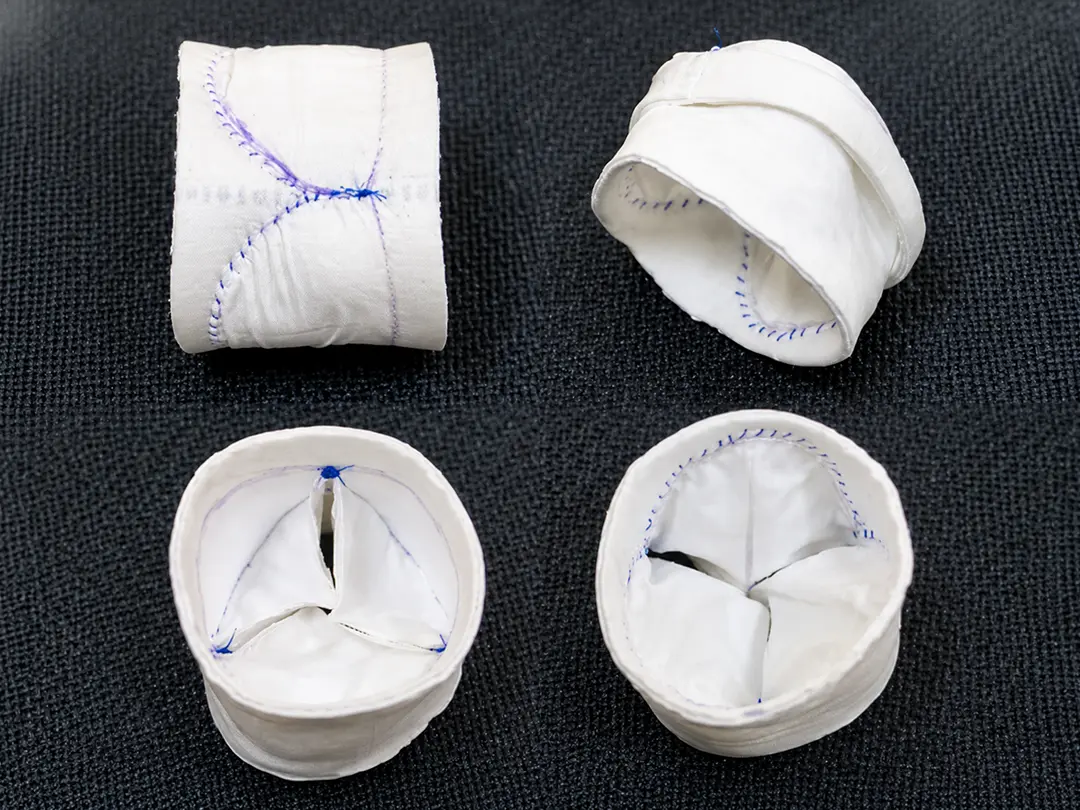
Using a “flip-over suturing” technique with an ePTFE valved pulmonary conduit to treat tetralogy of Fallot patients requiring pulmonary valve replacement simplifies the conventional multi-step construction of valved conduits and improves outcomes. This approach overcomes the previous lack of suitable valve substitutes and has successfully cured many patients. Our team has the largest surgical experience with this technique in Taiwan, achieving the nation’s best outcomes in terms of postoperative survival, freedom from reintervention, and low infection rates. These results are fully comparable to the best reported outcomes from leading centers worldwide.
The original “flip-over pulmonary valve suturing” technique was developed with the following advantages over conventional surgery: 1) No incision of the artificial conduit is required, reducing the risk of leakage and prolonging conduit durability. 2) The ePTFE valve leaflets are sutured to the outside of the conduit and then the conduit is flipped so that the leaflets lie inside the conduit, simplifying the construction steps. 3) Suturing at the folding points creates neosinuses of Valsalva, which helps reduce regurgitation and thrombus formation.
In collaboration with Tamkang University, a laboratory mock-circulatory system is used to test and monitor the leakage and durability of the ePTFE valved conduits. Using a transcatheter approach to implant an ePTFE valve stent into a previously placed ePTFE valved conduit (the “valve-in-valve” concept), the feasibility of a third-time (tri-do) transcatheter pulmonary valve replacement has been demonstrated, thereby avoiding repeat open-heart surgery.
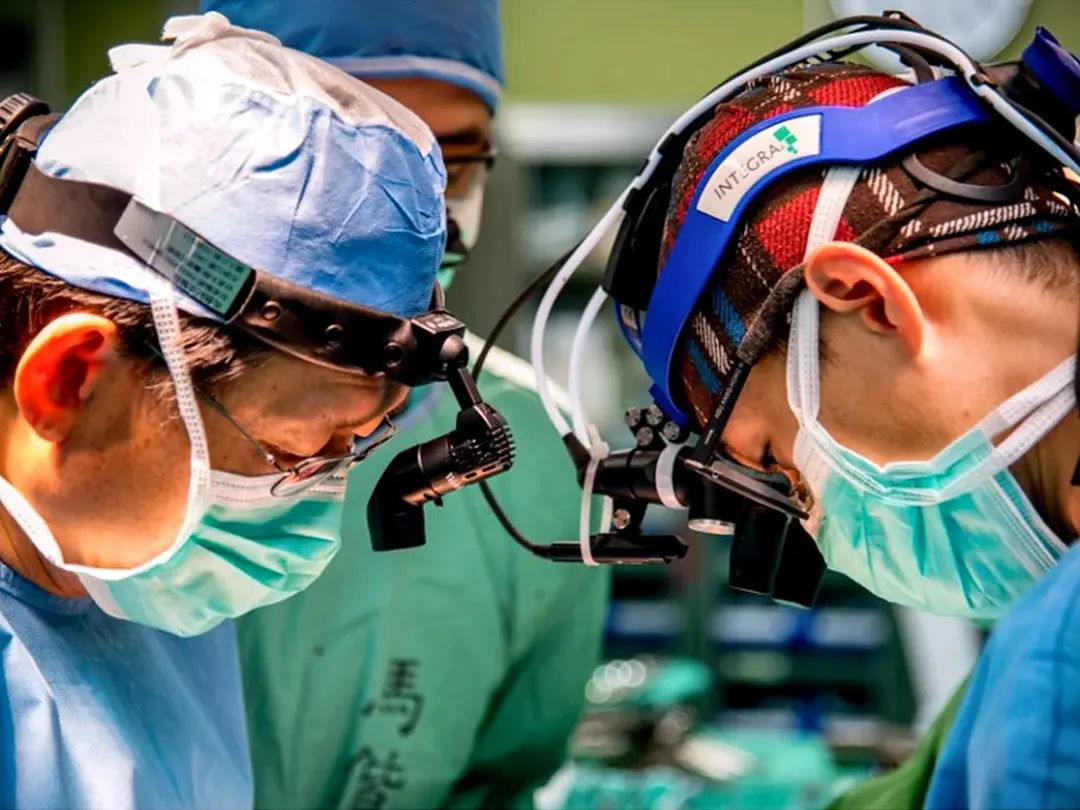
Since 2011, a total of 70 operations have been performed, including 65 patients with tetralogy of Fallot. Over the past 10 years, the MacKay team has completed nearly 600 pediatric open-heart surgeries, including 42 international pediatric patients.
Among tetralogy of Fallot patients operated on by our team, 98.5% required no further interventions and there were no cases of bloodstream infection.
The overall survival rate is 96.9%, and in more than 92% of postoperative patients only mild residual stenosis and regurgitation are observed, representing the best outcomes in Taiwan.
A 98% freedom from reintervention after surgery and zero postoperative bloodstream infections represent the best results reported in the literature.
Since 2016, 37 operations have been performed at MacKay with 100% survival, no reinterventions, and no infections.
After surgery, 100% of patients continue regular follow-up with our team.
High satisfaction reported within the patient support group.
1. A total of six related papers have been published:
“An efficient way to make a trileaflet conduit for pulmonary valve replacement.” (Ann Thorac Surg, 2013), cited 17 times.
“Handmade trileaflet valved stent graft for pulmonary valve implantation.” (J Thorac Cardiovasc Surg, 2014), cited 16 times.
“Successful Transcatheter Handmade-Valved Graft Stent for Branch Pulmonary Regurgitation: Novel Approach in a Special Event.” (Ann Thorac Surg, 2016), cited 12 times.
“In vitro study of trileaflet polytetrafluoroethylene conduit and its valve-in-valve transformation.” (Interact Cardiovasc Thorac Surg, 2020), cited 9 times.
“Evolution of pulmonary valve reconstruction with focused review of expanded poly-tetrafluoroethylene handmade valves.” (Interact Cardiovasc Thorac Surg, 2021), cited 17 times.
“Clinical outcomes of handmade polytetrafluoroethylene trileaflet-valved conduit used for pulmonary valve replacement.” (Eur J Cardiothorac Surg, 2023), cited 9 times.
2. The 2024 American Heart Association guideline explicitly mentions the clinical outcomes of handmade ePTFE valved conduits and recommends them as one of the treatment options for right ventricular outflow tract reconstruction in tetralogy of Fallot. (Circulation. 2024).
Using a highly accessible, low-cost ePTFE material provides an excellent option for pulmonary valved conduits in redo pulmonary valve surgery for tetralogy of Fallot.
The innovative flip-over suturing technique has a high success rate and very few long-term complications, and has been widely adopted by many teams domestically and internationally as a mainstream procedure.
Young attending physicians are trained and then dispatched to other hospitals in Taiwan to provide high-quality, easily accessible services.