The delayed medication waiting time affects the timeliness of medication administration for patients, which has caused trouble for clinical staff. We need to address this pain point.
Innovating ADC+S Dashboard for Enhanced Risk Management and Optimized Medication Services
To address prolonged wait times for online prescriptions, we introduced Automated Dispensing Cabinets (ADCs), becoming the first medical center in the nation to fully implement 31 ADCs across outpatient, emergency, inpatient, and pharmacy units—the highest number nationwide.
Recognizing the need for rigorous, real-time risk management, we developed the innovative ADC+S Dashboard. Designed from a human-centric perspective, it enhances ADC efficiency and ensures optimal medication quality for hospitalized patients. By integrating the PDCA cycle and HFMEA risk management, the system significantly reduces time and emergency medication retrievals for nursing staff.
This clinical safety mechanism has been patented and successfully transferred for application, demonstrating the impact of teamwork and continuous process improvement. Our commitment to integrating high efficiency and safety ensures a superior pharmaceutical care experience for patients, driving innovation towards sustainable healthcare development.
Exclusive Design of the ADC+S Risk Management Dashboard System.This uniquely designed system for ADC equipment management features a visualized risk dashboard, developed with a human-centric approach from the user’s perspective. It has been awarded two utility model patents and one invention patent in Taiwan:
Utility Model Patent: Patent No. M567034, with technology transfer completed.
Utility Model Patent: Patent No. M602371, currently under exclusive licensing.
Invention Patent: Patent No. I693568, currently under exclusive licensing.
The Department of Pharmacy is under the Medical Affairs Division and is responsible for all medication-related services throughout the hospital. The department actively participates in healthcare quality improvement, patient safety initiatives, smart healthcare innovation, and medication safety promotion programs. It also supports the operation of the Pharmacy and Therapeutics Committee and the Controlled Substances Management Committee. The department is organized into seven divisions, responsible for inpatient and outpatient pharmacy services, clinical pharmacy practice, medication procurement and inventory management, pharmacy information systems development and maintenance, performance indicator monitoring and reporting, as well as pharmacist and pharmacy student education and training. In 2022, the average monthly service volume included 69,870 outpatient prescriptions, 123,782.8 inpatient prescriptions, and 1,109.6 patient medication counseling encounters. In addition, a total of 20 patient education programs were conducted during the year.
The initial implementation focused on the Oncology Ward and Surgical Intensive Care Unit (SICU) as the target units for improvement. The pre-intervention period was defined as January–May 2019, prior to the installation of the first ADC in the Oncology Ward, while the post-intervention period was defined as June–October 2020, following the deployment of the second ADC in the SICU. These periods were used for effectiveness evaluation. Continuous monitoring was subsequently conducted through the second quarter (Q2) of 2023 to ensure sustained operational quality. 1.Inpatient On-line (STAT + PRN) Prescription Waiting Time The average medication waiting time in the target wards decreased from 70.8 minutes before implementation to 20.1 minutes after implementation, representing a 71.6% reduction. Among ADC-dispensed medications, the average waiting time was further reduced to 13.4 minutes. Continuous monitoring through Q2 2023 demonstrated sustained performance below the target threshold of 30 minutes. Average Monthly Number of Urgent 2.Medication Requests The average monthly number of urgent medication requests in the target wards decreased from 306.4 cases before implementation to 196.4 cases after implementation, representing an improvement of 35.9%.
Medication Safety – The dispensing near-miss error rate for medications managed through the ADC system was reduced by 100.0%. Environmental 2.Sustainability (Environmental) – As part of the hospital’s green healthcare and carbon reduction initiatives, paper consumption was reduced by 309.4 kg over a five-month period through process improvements.
Dual satisfaction rate: 90.2%
Outstanding Improvement Recognized Through International Peer Exchange and Conference Presentations
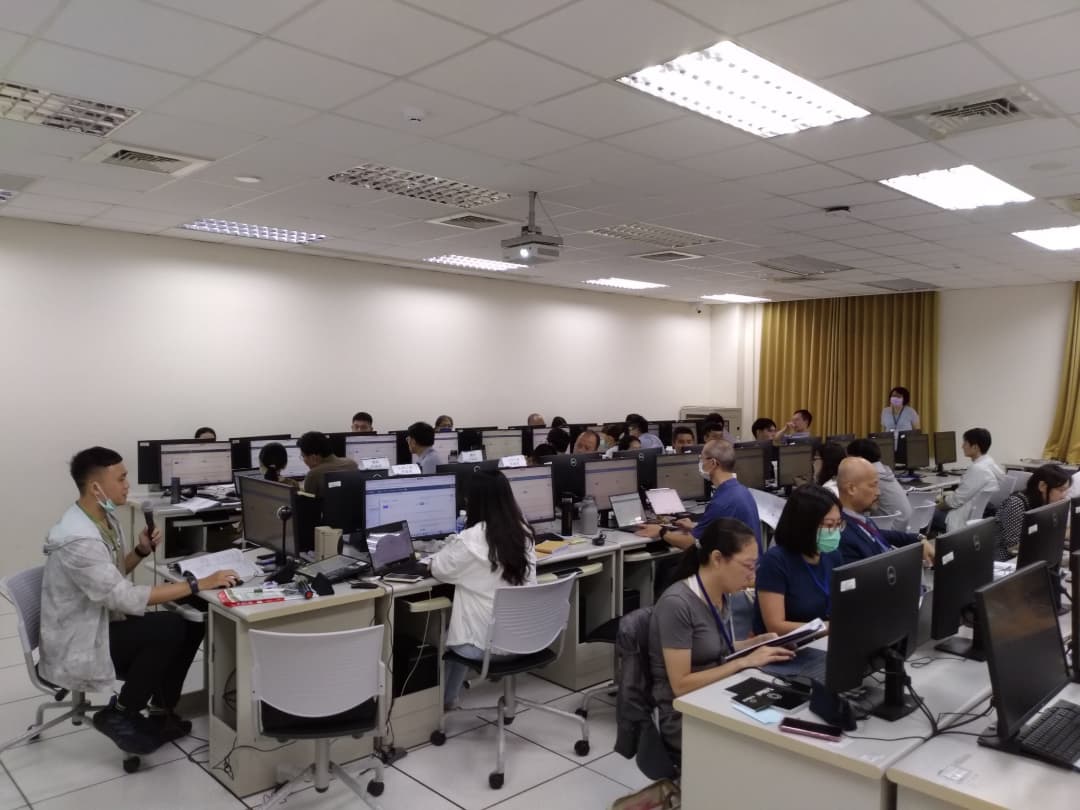
International Benchmarking Visits
. December 2023: Visit from Can Tho University of Medicine and Pharmacy, Vietnam.
. August 2024: Visit from Kiang Wu Hospital, Macau.
. September 2024: Visit from Tokushima University Nursing Department, Japan.
. September 2024: Second visit from Can Tho University of Medicine and Pharmacy, Vietnam.
Presentations at International Medical Conferences
2022- HCI International 2022:Information Display Redesign for the Drug-Refill Task of Automated Dispensing Cabinets:poster
2023- ISQua 2023 Abstract Submission:Enhancing the new process of intelligent drug delivery to ensure the safety and timeliness of medication for inpatients :poster
2023- Federation of Asian Pharmaceutical Associations (FAPA) Congress 2023:Establishing a new intelligent medication process to enhance medication safety and efficacy: Oral presentation
2024年- ISQua 2024 Abstract Submission: Establishing an Inpatient Online Prescription Closed-Loop Management System to Enhance Medication Safety and Efficiency: e-poster with a 10-minute Lightning Talk.
Clinical pain point resolution: Addresses extended medication waiting times and increased emergency medication requests
Enhanced medication safety and quality efficiency
Enabled intelligent algorithms and visual management
Full tracking and management of controlled substances
Automated replenishment navigation reduces stock-out risks
Continuous improvement mechanisms ensure ongoing optimization