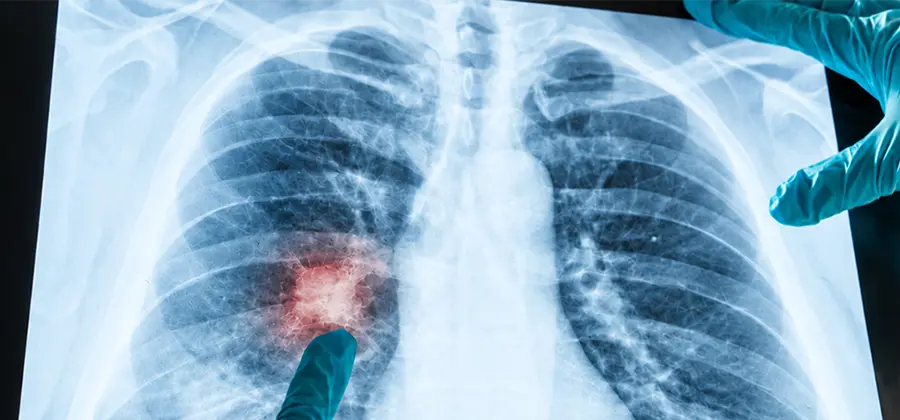
Taiwan NHI provides LDCT screening every 2 years for high-risk individuals: men 50–74, women 45–74 with a family history of lung cancer, or adults 50–74 with ≥30 pack-years smoking history.
Lung cancer remains the most common cancer and the leading cause of cancer-related mortality worldwide. Low-dose computed tomography (LDCT) has become an essential tool for early lung cancer screening, increasing the detection of stage 0–I disease. In 2022, our institution established a Hybrid Operating Room (Hybrid OR) integrating 3D uniportal thoracoscopic surgery with real-time CT-guided localization, enabling simultaneous localization and resection of pulmonary nodules. This approach achieved an 85% localization accuracy, a 90% malignancy diagnosis rate, and a pneumothorax rate of only 10%. In the same year, we collaborated with V5Med to develop the AI-assisted lung imaging system, V5-MED-LU01, which has received both TFDA and FDA certification. Using proprietary 3D image recognition technology, the system demonstrated 98.41% sensitivity and a 20% improvement in specificity. It also increased radiologist reading efficiency by 13% and improved institutional lung cancer cure rates by 7–12%, with a 10% improvement reported in U.S. clinical studies. The system reduces false positives and missed diagnoses, enhances physician–patient communication, and improves overall quality of care and clinical outcomes.
Thoracic Surgery: Key Features and Future Development
Our thoracic surgery program focuses on early lung cancer detection, precision diagnosis, minimally invasive treatment, and patient-centered care.
Precision Diagnosis
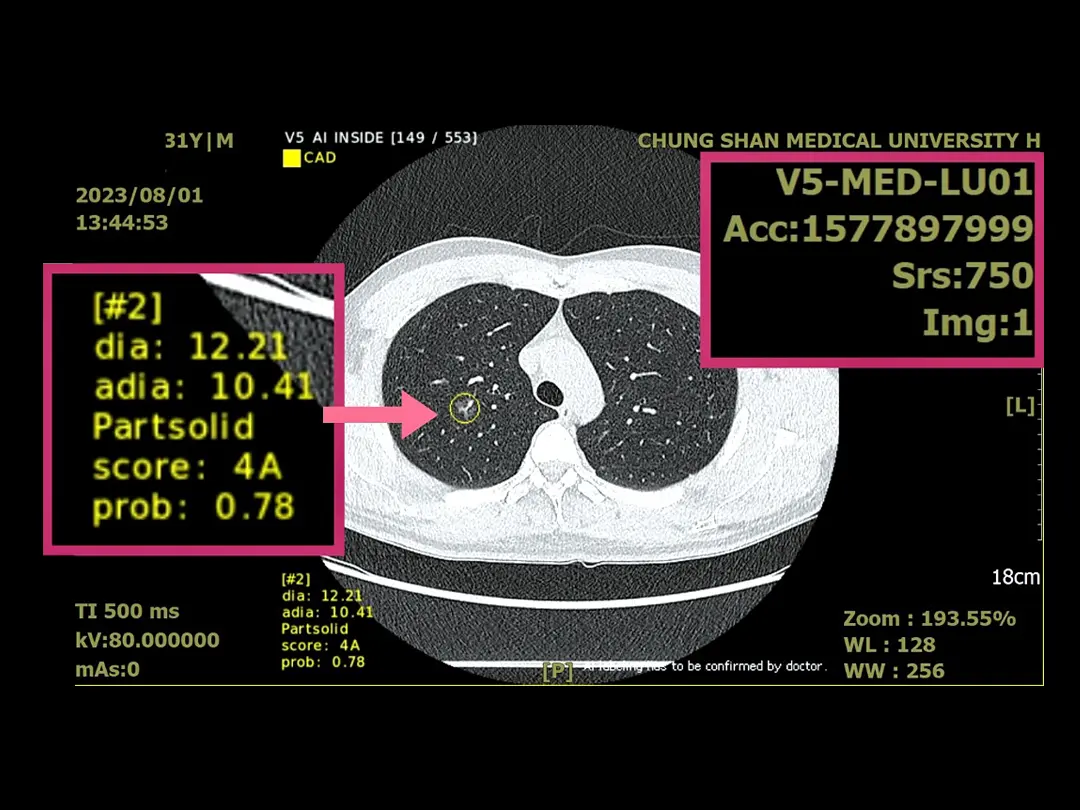
We support Taiwan’s National Lung Cancer Screening Program using LDCT. The AI-assisted lung imaging system, V5-MED-LU01, enhances pulmonary nodule detection and characterization. We also utilize 3D lung reconstruction and NGS to facilitate personalized treatment planning and precision oncology.
Minimally Invasive Innovation
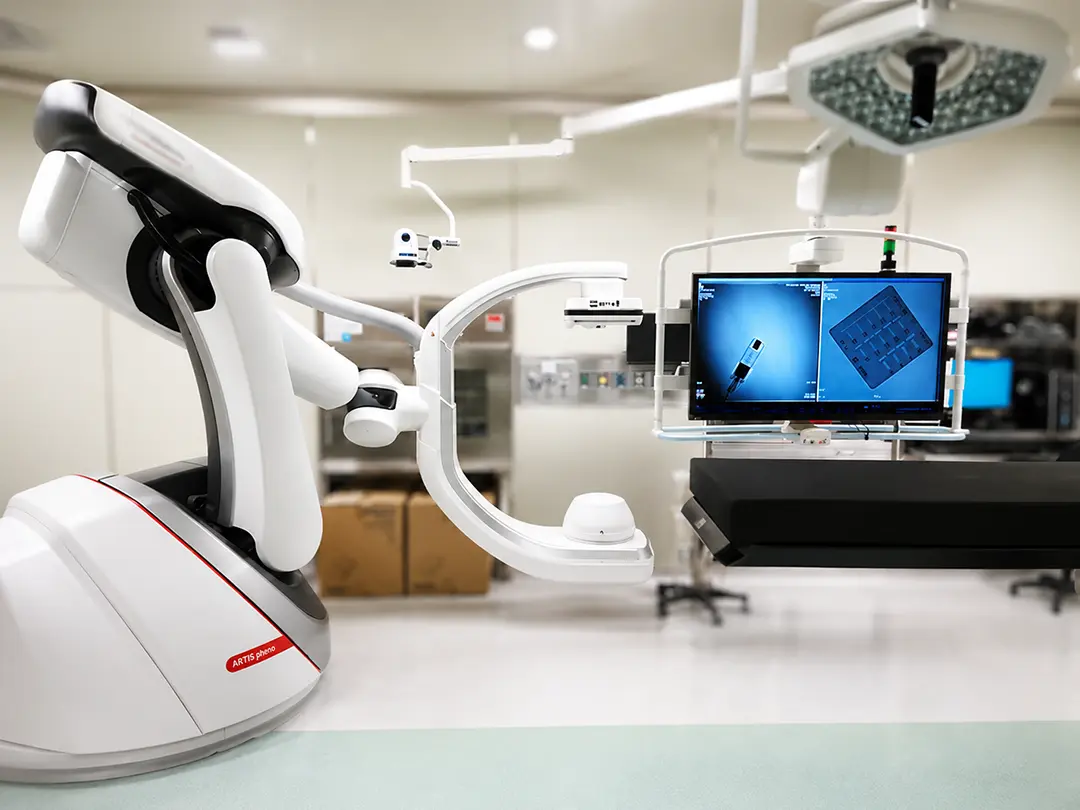
Our Hybrid OR integrates real-time CT-guided localization with advanced thoracic surgery. More than 90% of lung cancer procedures are performed using 3D uniportal VATS through an incision of approximately 3 cm. We also offer da Vinci robotic-assisted surgery, tumor ablation, and cryoablation.
Education and Research
We developed the LAGA laser-guided localization system and CT-guided training models to improve localization accuracy, surgical education, and technology transfer. Continuous collaboration with academic and industry partners drives innovation in precision medicine and smart healthcare.
Comprehensive Care
Through multidisciplinary teamwork, multimodal pain management, shared decision-making, international academic exchange, and community outreach programs, we provide comprehensive, high-quality care throughout the patient journey.
According to data from our Cancer Center, the implementation of low-dose computed tomography (LDCT) screening, advances in minimally invasive surgery, and multidisciplinary team collaboration have significantly improved lung cancer outcomes. Patient retention rates have consistently exceeded 97%, while curative treatment rates have increased to over 96%.
In 2022, our institution established a Hybrid Operating Room (Hybrid OR) integrating 3D uniportal video-assisted thoracoscopic surgery (VATS) with real-time CT-guided localization. This approach enables simultaneous localization and resection of multiple pulmonary nodules through a single approximately 3 cm incision, achieving 85% localization accuracy and a pneumothorax rate of only 10%. The malignancy diagnosis rate of surgically treated small pulmonary nodules has reached 90%.
According to the 2024 Cancer Registry, 58% of lung cancer cases were diagnosed at Stage 0–I, demonstrating the effectiveness of early detection strategies. Through the efforts of Central Taiwan’s only Lung Cancer Research Center, the integration of next-generation sequencing (NGS) and multidisciplinary precision care has further improved outcomes for advanced-stage disease. The diagnosis and treatment rate of intermediate-to-advanced-stage lung cancer reached 41%, while the 5-year survival rate achieved 99% for early-stage disease and 72% overall, reflecting continuous progress in lung cancer management and patient care.
According to studies from the Taiwan National Health Insurance Database, the detection rate of early-stage lung cancer (Stage 0–I) has increased to 36.3%, reflecting the effectiveness of LDCT screening and early diagnostic strategies. Advances in precision medicine, minimally invasive surgery, and lung-function-preserving techniques have further improved both survival and postoperative quality of life.
Our institution has achieved outstanding results in lung cancer care through a multidisciplinary approach. Patient retention and curative treatment rates consistently exceed 95%, while pulmonary lesion localization accuracy reaches 95%. Among individuals with a family history of lung cancer, the malignancy rate is 87.7%, highlighting the value of targeted screening in high-risk populations.
Notably, Stage IA disease accounts for 65.4% of newly diagnosed cases, and our early lung cancer detection rate reaches 98%, exceeding reported rates in Taiwan (36.3%), Japan (38.6%), and the United States (16%). Furthermore, the 5-year survival rate for early-stage non-small cell lung cancer (NSCLC) is 99%, compared with national averages of 79% in Taiwan, 80% in Japan, and 65% in the United States.
These outcomes demonstrate our excellence in lung cancer screening, precision diagnosis, minimally invasive treatment, and comprehensive patient-centered care.
Lung cancer remains the leading cause of cancer-related mortality worldwide. The NLST showed that LDCT reduces lung cancer mortality by 21%, while other studies report reductions of 20–43%. Taiwan’s National Health Insurance Database shows that early-stage lung cancer (Stage 0–I) detection has increased to 36.3%, highlighting the importance of screening.
To improve management of small pulmonary nodules and ground-glass nodules (GGNs), our institution developed the LAGA localization system in 2015, achieving 95% localization accuracy, a 6.4% pneumothorax rate, and an 87% malignancy diagnosis rate. In 2022, we established a Hybrid OR integrating real-time CT localization, 3D uniportal thoracoscopic surgery, and multidisciplinary care, increasing the malignancy diagnosis rate to 90%.
We also implemented the V5-MED-LU01 AI-assisted lung imaging system, using 3D Vision AI with 98.41% sensitivity. Clinical validation showed a 20% improvement in diagnostic sensitivity, a 13% increase in reading efficiency, and a 7–12% improvement in outcomes. Over the past decade, our institution has performed over 3,000 minimally invasive thoracic procedures. Early lung cancer detection reached 98%, and the 5-year survival rate for early-stage NSCLC reached 99%.
By integrating LDCT screening, AI-assisted diagnosis, precise localization, minimally invasive surgery, and multidisciplinary care, we established a comprehensive precision lung cancer program that improves survival and quality of life.
Our institution is committed to a patient-centered care model, providing comprehensive services that span cancer screening, diagnosis, treatment, palliative care, and community health promotion.
Through the integration of LDCT screening, minimally invasive surgery, and precision medicine, our lung cancer retention rate has remained above 97%, with a curative treatment rate exceeding 96%. More than 700 new lung cancer cases are diagnosed annually, reaching 927 cases in 2023.
Since implementing the AI-assisted lung imaging system (V5-MED-LU01) in 2023, early lung cancer detection has further improved, with over 90% of Stage IA lung cancer patients receiving timely diagnosis and treatment. The integration of minimally invasive surgery, NGS testing, and precision oncology has consistently produced outcomes superior to national averages.
According to Taiwan National Health Administration data, our 4-year survival rates were 98.91% for Stage I, 62.66% for Stage III, and 27.94% for Stage IV lung cancer, all exceeding national averages. The overall survival rate reached 72.13%, compared with 57.96% among medical centers and 51.91% nationwide, demonstrating outstanding clinical outcomes in lung cancer care.
Lung cancer remains the leading cause of cancer-related mortality worldwide. Our Hybrid Operating Room (Hybrid OR), integrating 3D uniportal thoracoscopic surgery and real-time CT-guided localization, achieves a 90% malignancy diagnosis rate for small pulmonary nodules. We also use the TFDA- and FDA-certified V5-MED-LU01 AI-assisted lung imaging system, which demonstrates 98.41% sensitivity.
Our institution is the only dedicated Lung Cancer Diagnosis, Treatment, and Clinical Trial Center in Central Taiwan, with a specialized unit for lung cancer research and precision medicine.
We also host annual international symposia on lung cancer, esophageal cancer, and thoracic diseases to promote academic exchange and clinical excellence.
Since 2015, our institution has developed the patented Laser Angle Guide Assembly (LAGA) localization system, achieving a 95% localization accuracy, a 6.4% pneumothorax rate, and an 87% malignancy diagnosis rate. Following the establishment of the Hybrid Operating Room (Hybrid OR) in 2022, real-time CT-guided localization, 3D uniportal thoracoscopic surgery, and multidisciplinary collaboration have enabled one-stop localization and resection of up to 6–7 pulmonary nodules per procedure, increasing the malignancy diagnosis rate to 90%.
In collaboration with V5Med, we developed the V5-MED-LU01 AI-assisted lung imaging system, which utilizes 3D Vision AI technology and achieved a sensitivity of 98.41%. Clinical validation demonstrated a 20% improvement in diagnostic sensitivity, a 13% reduction in physician workload, and a 7–12% improvement in screening and treatment outcomes. In Taiwan, EGFR mutations are present in 55.4% of lung adenocarcinomas, substantially higher than the 15–20% reported in Western populations, highlighting the value of precision-targeted therapy.
Our lung cancer retention and curative treatment rates exceed 97%, with a 5-year survival rate of 99% for early-stage lung cancer and 72% overall, demonstrating outstanding clinical outcomes in precision lung cancer care.