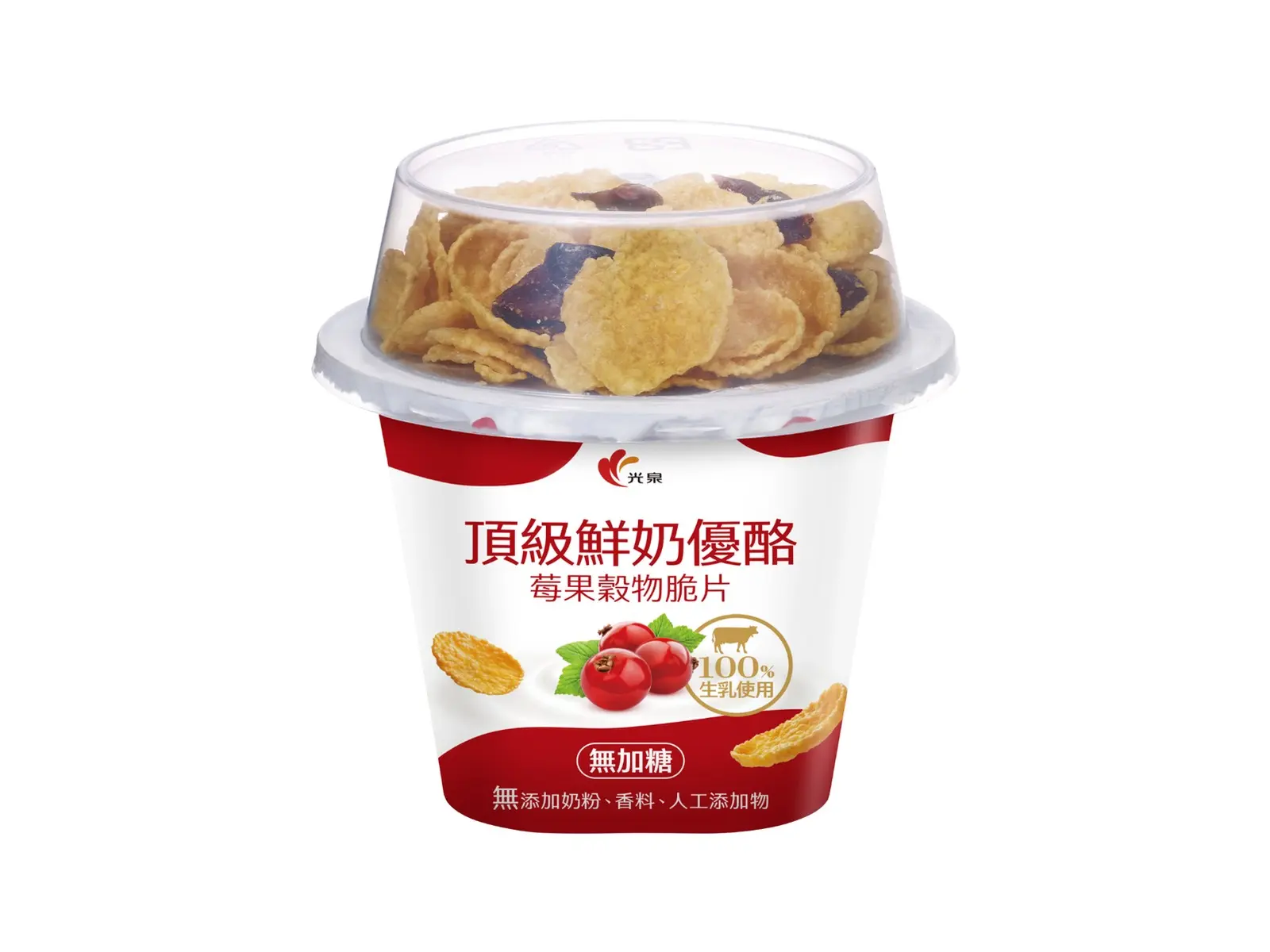
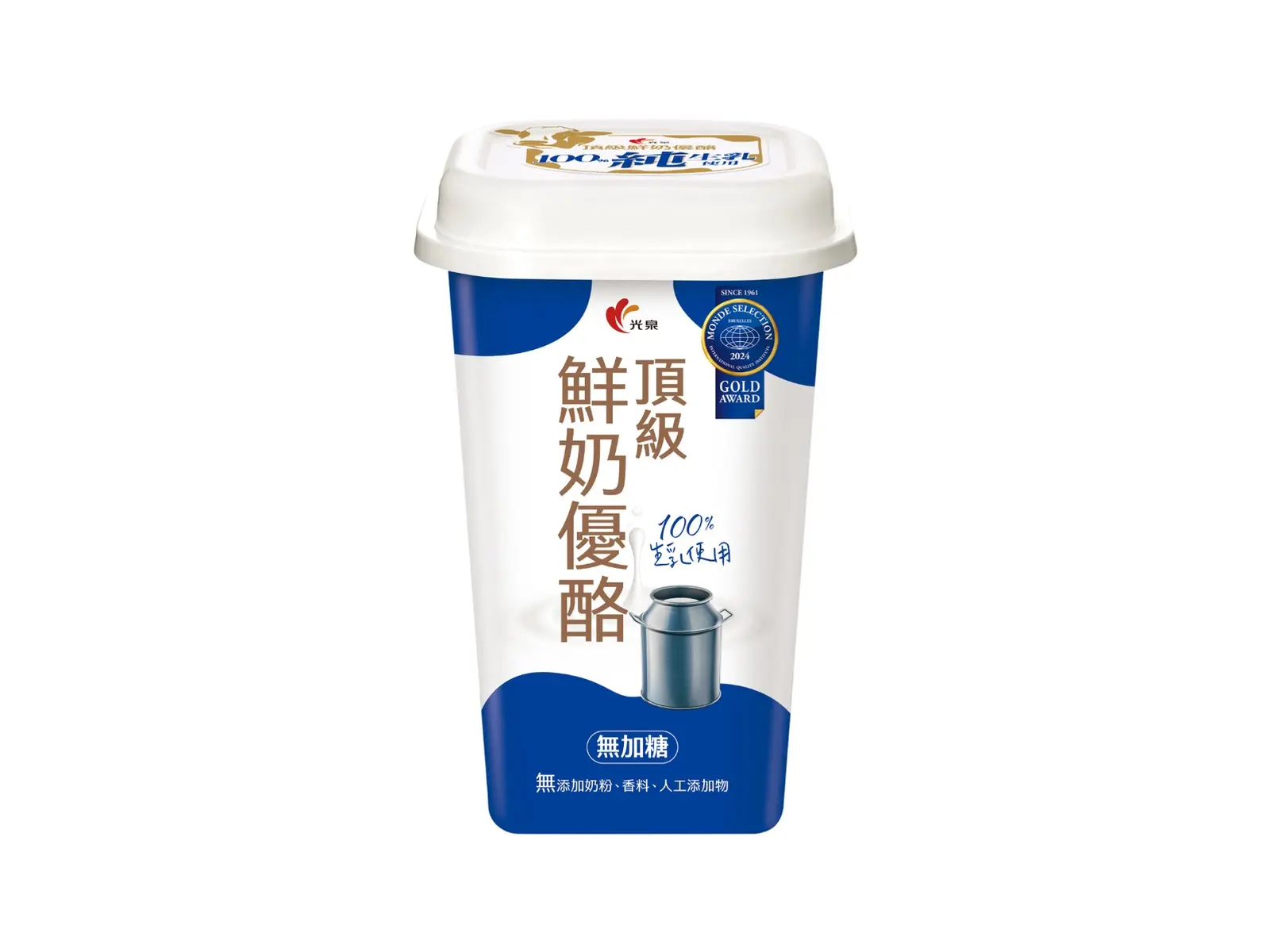
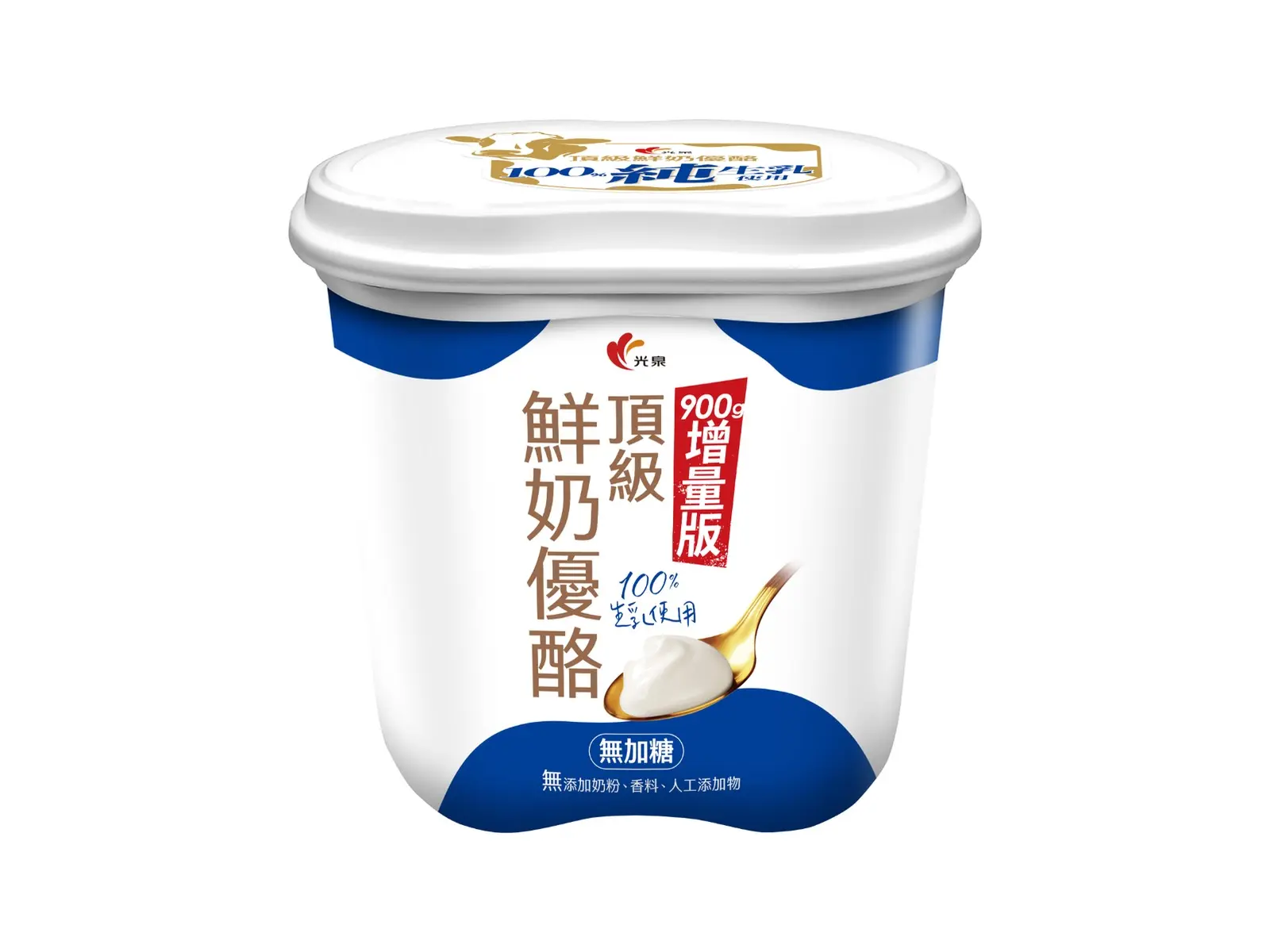
100% Milk Yogurt is made from milk sources under Kuang Chuan’s strict quality control, featuring 100% raw milk with no unnecessary additives and simple ingredients. It selects high-quality European strains, including:A-strain: Lactobacillus acidophilusB-strain: Bifidobacterium lactisS-strain: Streptococcus thermophilusL-strain: Lactobacillus delbrueckii subsp. lactis and Lactobacillus delbrueckii subsp. bulgaricusAmong these, the A and B strains are intestinal probiotics that maintain balanced gut flora and support digestive tract health. The S and L strains serve as the primary fermentation cultures, which directly influence the product's flavor, aroma, viscosity, and rich texture during the fermentation process.Therefore, controlling each temperature point throughout the manufacturing process is the key technology and core control point for ensuring consistent product quality. This includes:Controlling the cooling temperature after pasteurization.Regulating the temperature rise prior to product filling.Ensuring even heat distribution and temperature stability within the fermentation room.Utilizing mesh shelving post-filling to enhance heat penetration.By doing so, the temperature variance of each batch after filling is controlled to under 1°C, allowing for a rapid temperature rise that enables the core temperature to quickly reach the required fermentation level.Finally, a cold storage facility spanning hundreds of pings is used for rapid cooling. This ensures that after passing quality inspection, the product does not continue to ferment due to a slow cooling process, which would otherwise alter its acidity and bacterial composition. Delivered through a well-managed cold supply chain, we guarantee that consumers receive a premium fermented product of optimal flavor quality, safety, and stability that helps maintain digestive tract functions.
Our manufacturing plant complies with the Taiwan Quality Food (TQF) certification regulations, ISO 22000, HACCP, and FSSC 22000, and has obtained certifications for the Food Safety and Hygiene Management System (including Good Hygiene Practices (GHP) and the Food Safety Control System).
100% fresh milk, active probiotics (A strain: Lactobacillus acidophilus, B strain: Bifidobacterium lactis, S strain: Streptococcus thermophilus, L strain: Lactobacillus delbrueckii subsp. lactis, Lactobacillus delbrueckii subsp. bulgaricus).
Contains over 100 million CFU/mL of active lactic acid bacteria
Kuang Chuan Co., Ltd
Raw Materials
Establish a comprehensive supplier management plan and strictly enforce the supplier evaluation system.
The supplier evaluation covers quality, production environment, and food safety and hygiene, supported by an assessment plan and execution records.
Internal raw material specification sheets are formulated, defining sources (supplier, country of origin), ingredients, testing items, and standard specifications.
Production
In-process and finished product testing for pH and acidity.
Finished product testing for flavor and microbiological parameters, including mold/yeast, Enterobacteriaceae, and lactic acid bacteria.
Complies with safety standards for lactic acid bacteria, Enterobacteriaceae, Salmonella, Listeria monocytogenes, Staphylococcal enterotoxins, and heavy metals.
Kuang Chuan is certified under ISO 22000 and implements comprehensive risk control measures in accordance with the following ISO management procedures:
Raw Material Stage:
Raw milk inspection sampling and evaluation standards
Raw and packaging material inspection sampling and evaluation standards
Production Stage:
Semi-finished product inspection sampling and evaluation standards
Finished product inspection sampling and evaluation standards
Production management procedures
Finished product packaging specifications
Equipment maintenance procedures
Inspection, measurement, and testing equipment management procedures
Finished Product Stage:
Quality abnormality corrective action procedures
Non-conforming product control procedures
Auditing:
All procedures are audited in accordance with the “Internal Audit Management Procedures” and “Hygiene Management Procedures.”