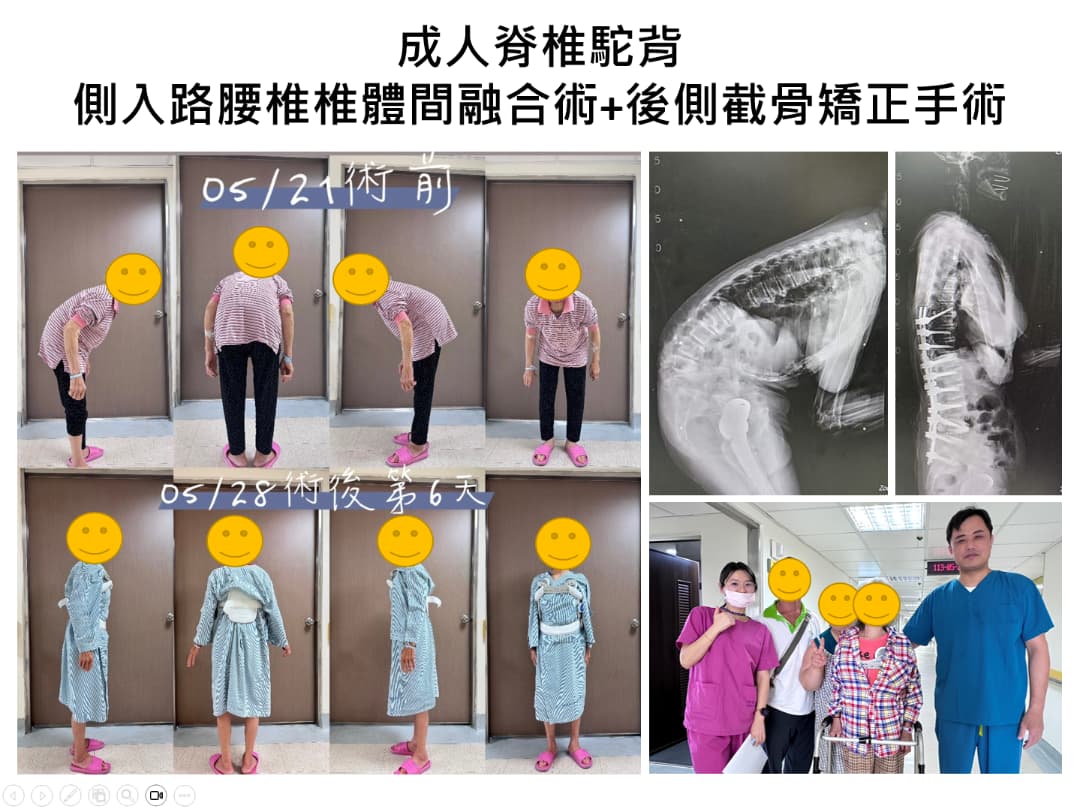
Severe spinal deformity correction (large-angle scoliosis)
Kyphotic deformity correction (coronal and/or sagittal imbalance)
Degenerative scoliosis in elderly patients (≥ 60 years)
Revision spine surgery (e.g., implant loosening, infection, postoperative deformity)
Minimally invasive anterior approach correction (OLIF / ALIF)
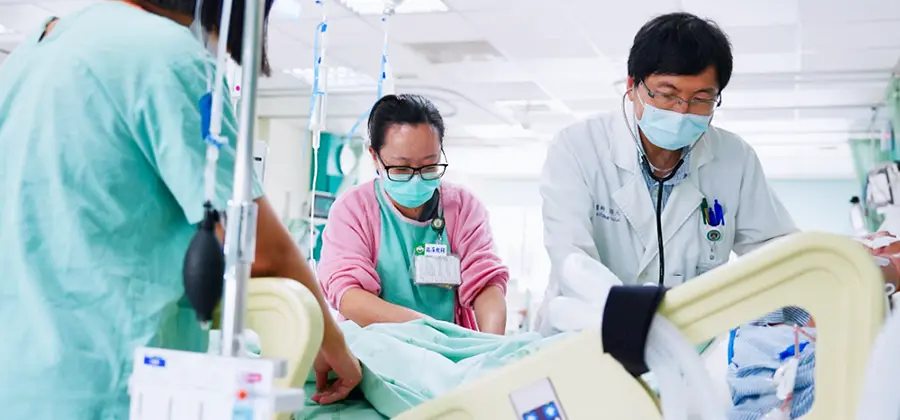
Our team established a patient-centered, integrated care model for patients undergoing complex spinal deformity correction surgery in rural and medically underserved regions. The model integrates comprehensive preoperative optimization, multidisciplinary co-management, and structured case management, thereby mitigating barriers associated with geographic distance, limited healthcare resources, and unfamiliar care settings. This approach enables patients to receive high-complexity surgical care within a familiar environment, promoting treatment adherence and perioperative stability. The care model incorporates a dual spine surgeon co-surgery strategy in conjunction with fully electrified pedicle screw instrumentation, significantly enhancing surgical accuracy and procedural safety. Through standardized care pathways and procedural refinement, the program facilitates accelerated postoperative recovery, consistent clinical outcomes, and reduced patient-level burden. Collectively, this integrated approach improves healthcare accessibility and overall quality of care for patients requiring advanced spinal surgery in rural settings.
Implementation of a dual spine surgeon model, with task-sharing for complex spinal segments, combined with electrically assisted pedicle screw insertion and preoperative imaging–based surgical planning, to enhance surgical accuracy and operative efficiency.
Integration of multimodal analgesia, pulmonary protective strategies, and precision-based hemodynamic and blood management, aimed at improving intraoperative safety and postoperative recovery.
Strengthening horizontal communication and interdisciplinary consensus, with the establishment of standardized operating procedures to ensure consistency across care teams.
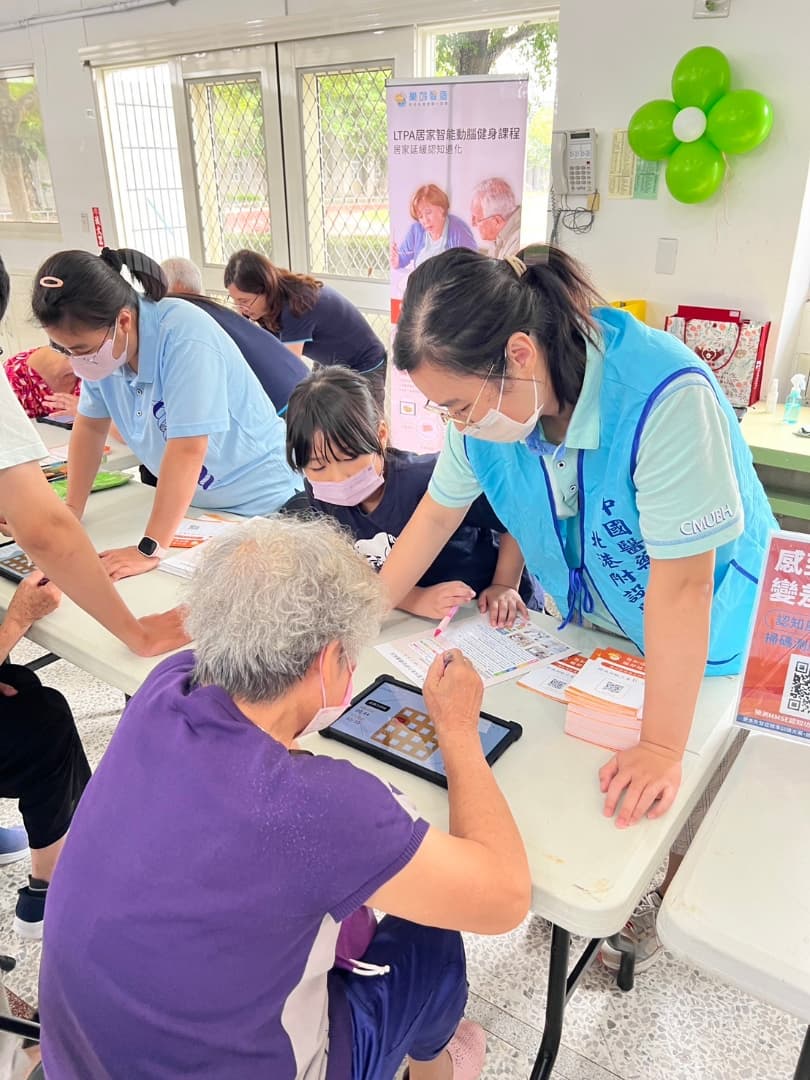
Utilization of structured case management to integrate comprehensive assessment, shared decision-making (SDM), bone health optimization (BHO), and cross-departmental collaboration, ensuring continuity of care throughout the perioperative course.
From January 2023 to June 2025, a total of 129 patients received the team’s key clinical interventions.
Between 2023 and June 2025, the following outcomes were observed:
Length of hospital stay: 11.3 days for reconstructive deformity correction, 11.2 days for revision surgery, and 4.9 days for minimally invasive structural reconstruction.
Intraoperative blood loss: 318 mL for reconstructive deformity correction, 417 mL for revision surgery, and 212 mL for minimally invasive structural reconstruction.
Oswestry Disability Index (ODI): the mean preoperative score was 52.8, which decreased to 18.5 at one year postoperatively, indicating significant improvement in functional status and pain.
Between 2023 and June 2025, the following outcomes were observed:
The incidence of intraoperative pressure injuries was 0.7% (one case in January 2023), with no further events following the implementation of corrective measures.
The overall postoperative complication rate was 3.8%, showing a progressive decline over time.
The rate of unplanned intensive care unit (ICU) admission was 1.5%, which decreased to 0% in 2024 and remained at 0% thereafter.
No emergency department visits within 3 days postoperatively and no mortality within 48 hours were observed.
No cases of acute deterioration related to postoperative complications were identified during the study period.
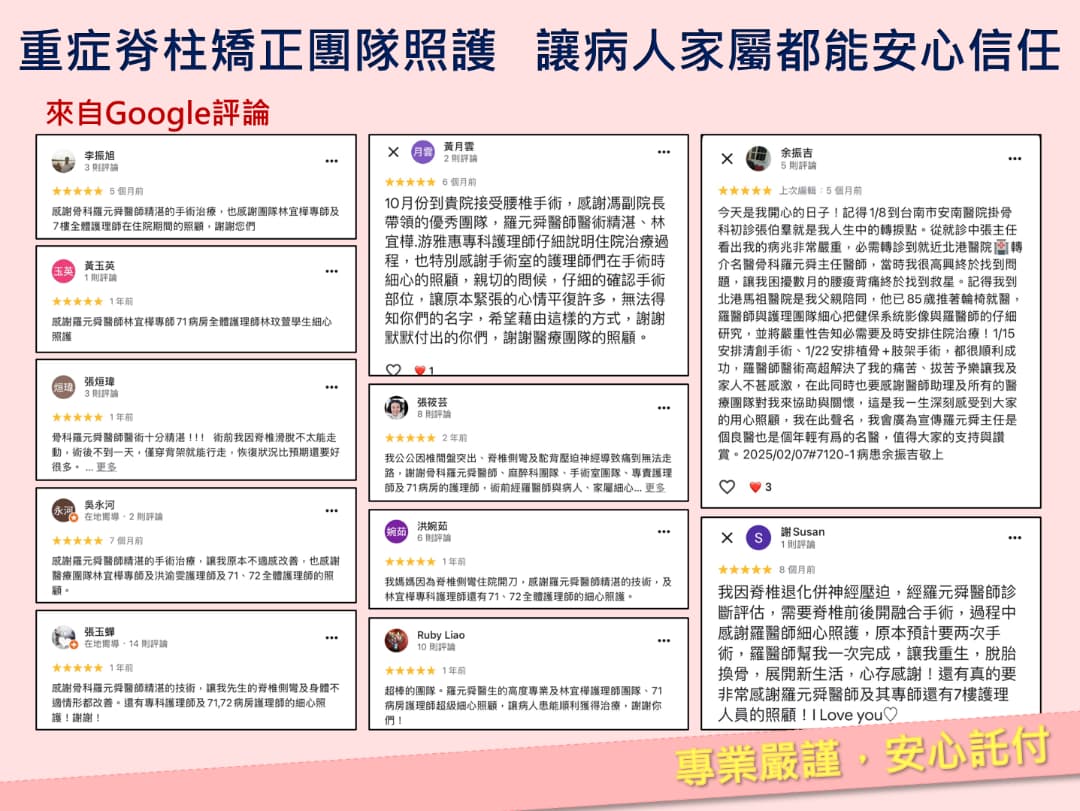
A satisfaction survey conducted at the first outpatient follow-up visit after discharge showed that over 90% of respondents provided positive evaluations.
Feedback from patients and their family members predominantly expressed affirmation and appreciation.
Yuan-Sun Lo has been a member of the Scoliosis Research Society since 2021.
Yuan-Sun Lo was selected as the 2025 Visiting Scholar to Korea by the Korean Society of Spine Surgery.
In recent years, he has published 11 articles in SCI-indexed journals, serving as the corresponding author or one of the first three authors in all publications.
Building on mature surgical techniques and well-established communication workflows, the team delivers high-quality clinical outcomes without reliance on high-cost self-paid technologies or consumables, thereby effectively reducing patients’ out-of-pocket expenses and financial burden.
The mean length of hospital stay was 6.6 days (11.3 days for reconstructive deformity correction, 11.2 days for revision surgery, and 4.9 days for minimally invasive structural reconstruction), which is shorter than lengths of stay reported in the international literature.
The postoperative complication rate was 3.8%, which is lower than rates of hematoma, neurological injury, and infection reported in international studies.