The Department of Medical Imaging integrates holistic care, human factors, and Lean thinking to provide friendly services, improve safety, reduce errors, enhance image quality, and increase efficiency
Siaogang Hospital is located near the airport, port and industrial area. In terms of medical development, we aim to be the “Health Guardian of the Environmental and Occupational Community”; our department is equipped with medical center-grade equipment and facilities to provide multi-dimensional imaging services for the entire hospital. In order to realize “whole-person care”, we pursue the provision of a “safe environment for examination” and the maintenance of “excellent image quality”.
Therefore, adhering to the concept of “Friendly Medical Imaging Service”, we take “people” as the starting point and carry out an all-round, comprehensive, innovative planning with human factors considerations and pragmatic thinking, and design a number of service-friendly measures for various ethnic groups to provide a safe examination environment, and at the same time, minimize human errors, improve image quality, and enhance the efficiency of our colleagues.
The Department of Imaging Medicine is the most centripetal team, with thoughtful design, careful service, heartfelt quality, and reassuring environment, we hope to bring patients the “five hearts” feeling, and create a win-win situation for patients, colleagues, and the hospital.
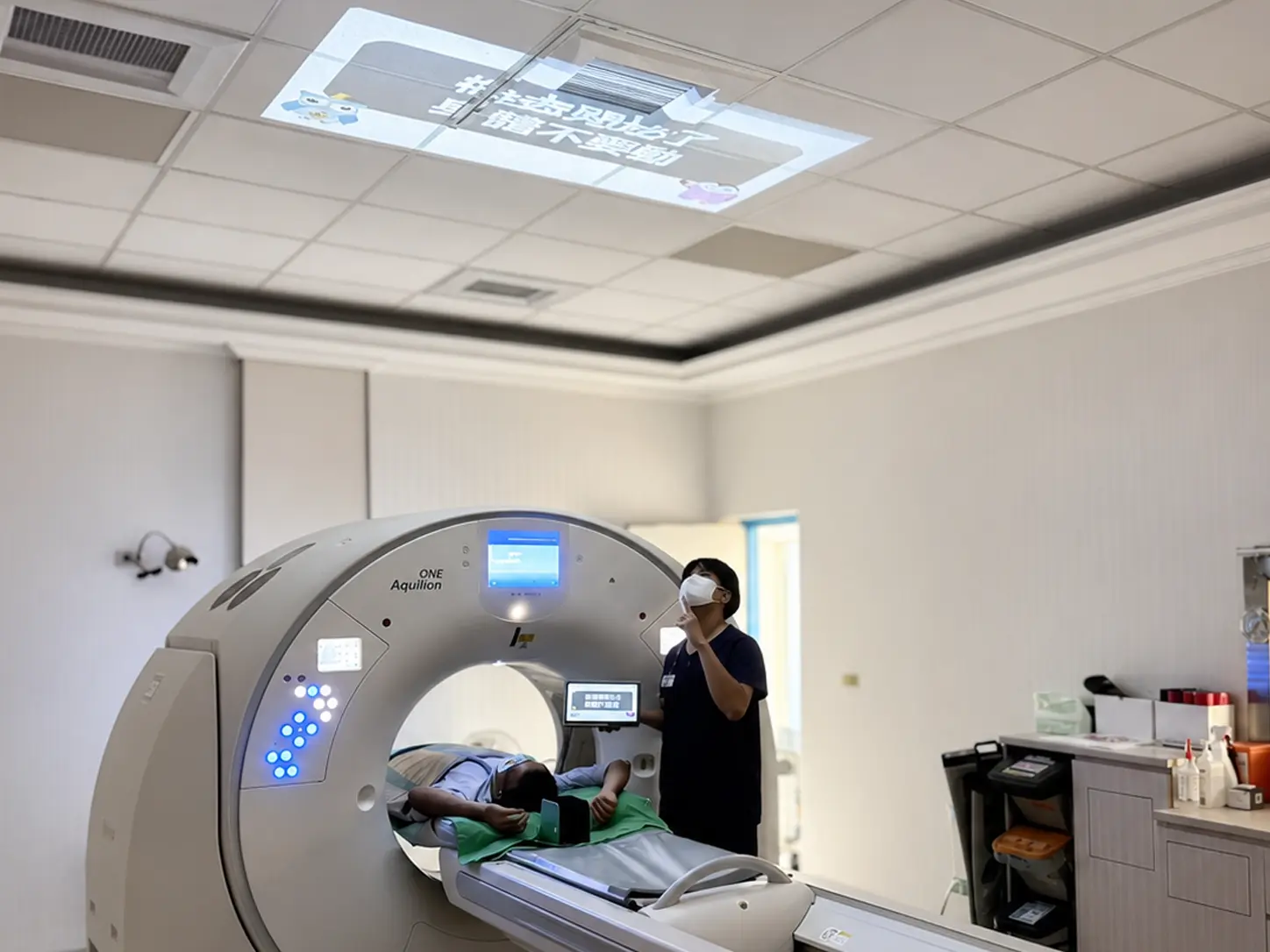
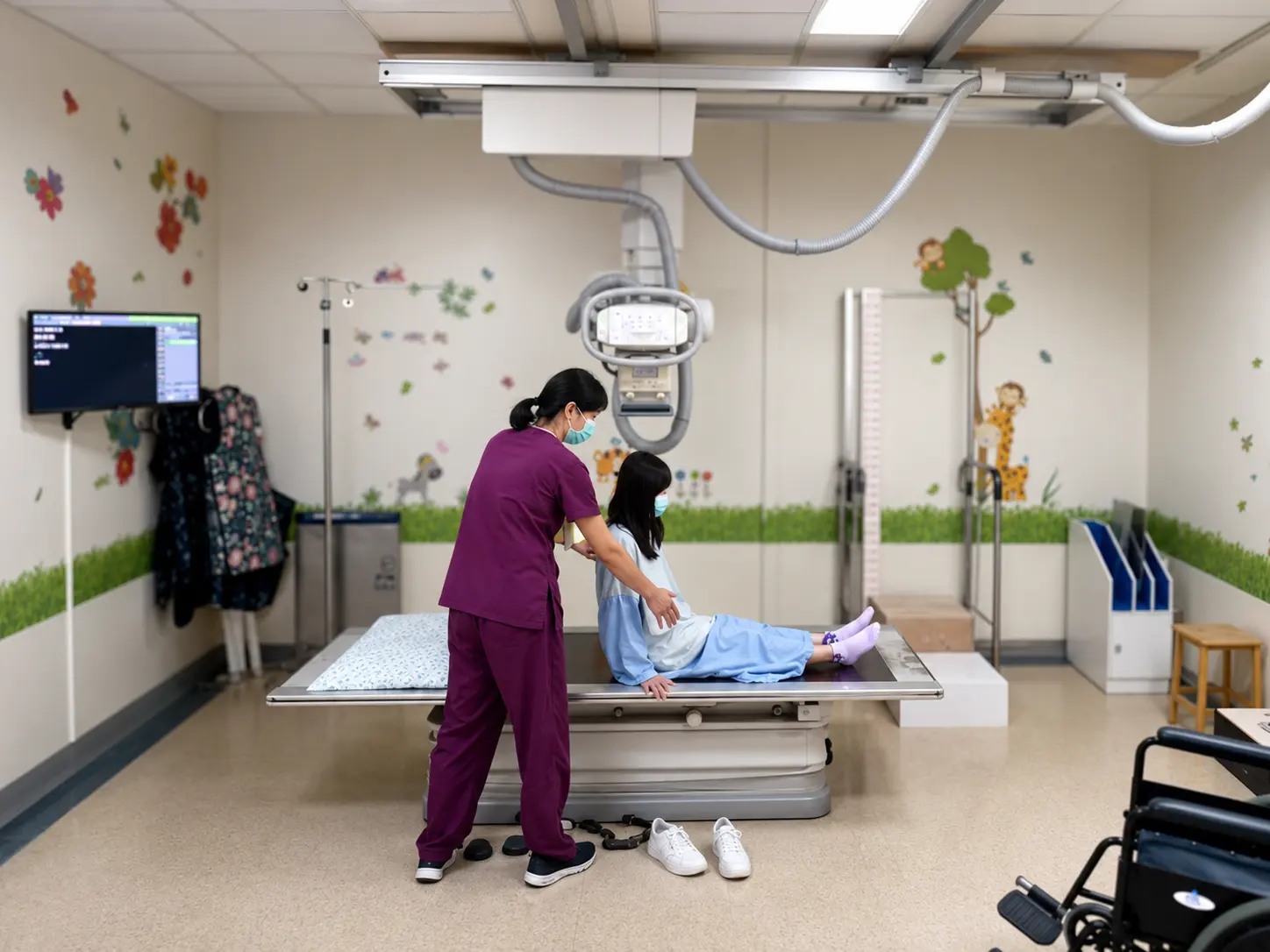
This project promotes patient-friendly medical imaging services through four dimensions: patients, staff, environment, and community. Patient-centered initiatives were developed for older adults, children, women, individuals with disabilities, and new immigrants. Measures included priority examination services, child-friendly environments, privacy-enhanced examination gowns, sign-language and multilingual educational resources, communication support tools, volunteer accompaniment, and priority scheduling to improve accessibility, safety, and patient experience. For staff, health promotion and occupational safety were enhanced through massage equipment, energy stations, ergonomic education, and the “I'M SAFE” self-assessment program to support physical and mental well-being. Environmental improvements included visual management, communication and education systems, dual-monitor workstations, Time-Out protocols, TRM-based teamwork mechanisms, human-factor design, and Lean management strategies to improve efficiency and reduce errors. Community outreach activities included breast cancer screening, senior health examinations, mobile chest radiography, and low-dose chest CT screening programs, extending friendly healthcare services into the community and improving healthcare accessibility and quality.
Example of the capacity of various imaging test services based on the average data in 2023:
Routine photography (including emergency, bedside, health check, community X-ray): 16,364 per /month.
Computerized tomography: 1,623 visits/month.
Magnetic resonance imaging: 289 visits/month
Mammography: 461 visits/month.
Angiography: 106 visits/month.
Fluoroscopic photography: 27 visits/month.
Bone Densitometry: 73 visits/month
“Electric Light Friendly” - Overall relighting rate for conventional photographic inspection: about 3.3%
“Friendly Waiting Time” - Waiting time for patients during peak hours for routine photography examination: about 6.32 minutes
“Friendly and safe”-Number of incidents of subcutaneous hematoma after removal of indwelling needle: <1 case/year
“Friendly reminder” - The number of abnormal events related to CT patient identification: 0 cases maintained.
“Friendly Management” - Sanitary Material Inventory Time: 6.5 hours/month.
Monthly: routine photography adverse image analysis and review of X-ray image re-illumination rate
Monthly: X-ray imaging secondary quality control abnormality analysis to maintain radiologist imaging quality control consistency.
Monthly: Analyze coronary computed tomography (CT) image data to refine the radiologist's clinical skills.
Quarterly: Regularly conduct on-site simulation drills on topics such as fire safety, patient safety, and inspection procedures to reduce the incidence of abnormal events in patient safety.
Monthly: Section meeting to review and advocate for patient safety incidents.
The team leader will conduct daily work audits from time to time and announce the results immediately to effectively remind colleagues.
Outpatient Satisfaction Following the implementation of various patient-friendly initiatives, a satisfaction survey was conducted among patients undergoing general radiography examinations, which represent the highest examination volume in our department. The overall satisfaction score increased to 97.34 points. In addition, no medical disputes related to routine radiographic examinations were reported during the past year. These outcomes enhanced both the department’s and the hospital’s reputation while fostering a more harmonious patient-provider relationship.
Referring Physicians’ Satisfaction An internal customer satisfaction survey was conducted to evaluate communication, collaboration, and the quality of patient-friendly services provided by the Department of Medical Imaging. Satisfaction scores from physicians in other departments have shown a steady increase, reaching 91.35 points.
Radiologic Technologists’ Satisfaction An internal “Patient-Friendly Service Self-Assessment” was conducted among radiologic technologists. The average score across all indicators was 96.4 points, with professional self-identification reaching 97 points and overall patient care competency reaching 94.9 points. These results indicate a high level of staff recognition and support for the patient-friendly service initiatives.
Winner of “Best Article” in the “Excellence in Articles in Healthcare Quality Journals Award” competition,2023.
Reducing Re-examination Rates of Routine Photographic Examinations in Imaging Medicine” published in Journal of Healthcare Quality,2023.
Publication of “Using QC to enhance the learning motivation of medical radiology internship students” in Journal of Healthcare Quality,2023.
The efficacy of alternative lateral carpal radiography was published in the Chinese Journal of Radiologic Technology in 2023.
Won the Silver Tower Award in the Self-Improvement Category of the Self-Improvement Group of the 2022 Taiwan Continuous Improvement Award.
In 2022, the first “Women's Exclusive Examination Gown” was introduced in China, which was well received by patients and their families, and the experience was shared with peers.
2021 Participated in the Joint Commission of Taiwan-National Healthcare Quality Award (NHQA) and received a Gold Award in the Theme Category, Theme Improvement - Elite Group.
In 2021, participated in the Quality Improvement Achievement Competition of the Taiwan Healthcare Quality Association and won the Bronze Award in the preliminary category.
Evaluation of Self-made Multi-Angle Cartridge Placement Aids for zygomatic arch radiography published in Chinese Journal of Radiologic Technology in 2021.
Guided by the principle of “People-Centered Care, Service from the Heart,” we implemented comprehensive patient-friendly initiatives addressing the needs of older adults, children, women, disadvantaged populations, and new immigrants. By integrating human factors considerations into staff care and extending friendly practices to the healthcare environment and community, we created a safer workplace for healthcare professionals and a more comfortable, reassuring, and patient-centered healthcare experience for all patients.