Stroke patients
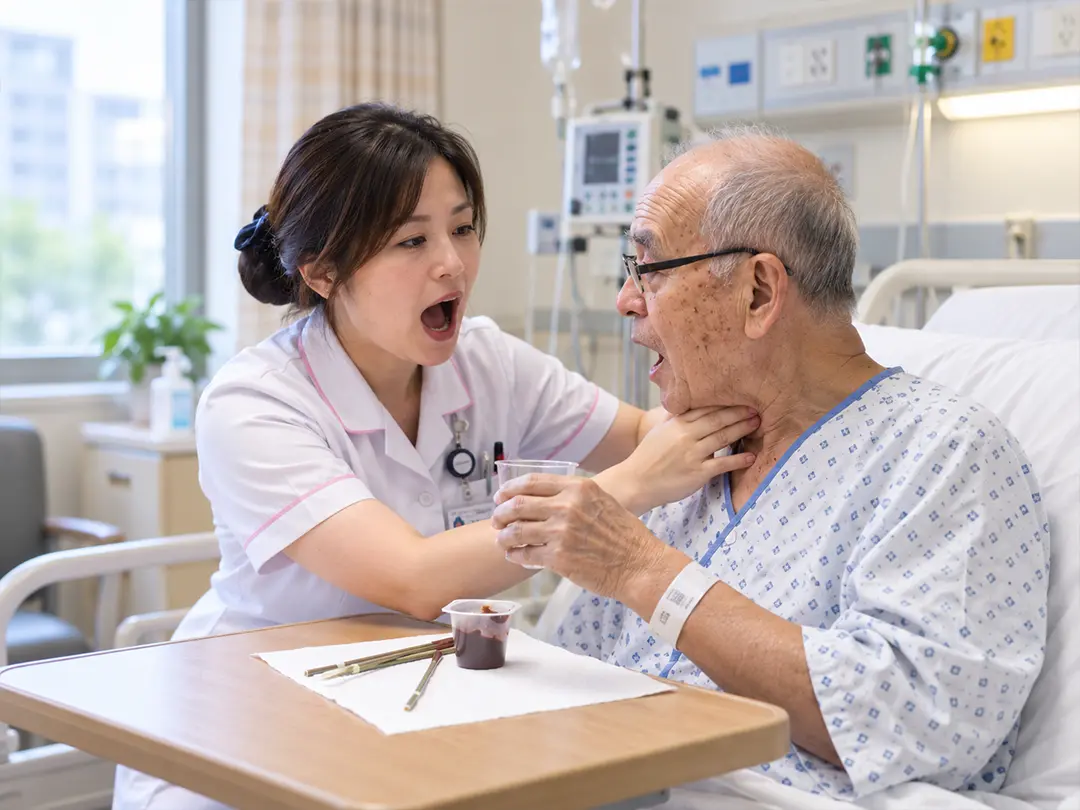
The Taipei Neuroscience Center was established in 2018. Nurses play a pivotal role in the care of stroke patients, achieving outstanding results—particularly through an empathy-driven approach—in the areas of swallowing rehabilitation and the removal of medical tubes.
hree-stage swallowing function screening
Fast-track swallowing fluoroscopy
Swallowing exercises
Speech-language pathology consultation (Rehabilitation Department)
Dietary diary/communication log
Meal preparation guidance for family members
Daily nursing assessment
Optimized protocol for nasogastric tube removal training
Swallowing fluoroscopy
Tracheostomy weaning training
Vital capacity test
ENT consultation
Sputum assessment
Bedside nursing monitoring and care
Comprehensive airway assessment
Oxygenation assessment
Respiratory therapist consultation / Abdominal muscle rehabilitation training
Urodynamic study
Bladder scan
Bladder training
Voiding diary
Foley catheter care bundle
Optimized protocol for urinary catheter removal training
Urinary catheterization service volume: 496 (2021), 490 (2022), 636 (2023), 580 (Jan–Sep 2024)
Stroke patients with nasogastric tubes: 207 (2021), 208 (2022), 219 (Jan–Mar 2024)
Patients with tracheostomy tubes removed: 1 (2021), 3 (2022), 4 (Jan–Sep 2024)
Average duration of nasogastric tube placement: Removed after an average of 15 days at this hospital
Urinary catheter removal rate: 66.93% (2021), 80.17% (2022), 86.61% (2023), 83.77% (Jan–Sep 2024)
Tracheostomy tube removal rate: 100% (2022), 75% (2023), 100% (Jan–Sep 2024)
Recovery rate (mRS ≤ 3 at discharge and 3 months post-discharge) increased from 30% to 50% between 2019 and 2023
Urinary catheter removal rate for stroke patients at our hospital: 86.33%
Average urinary tract infection rate: 1.03%
Duration of catheterization: 5.6 days
Satisfaction with new nurse training: 90.20% (2022), 92.47% (2023), 96.20% (Jan–Sep 2024)
Average ward service satisfaction: 97.90% (1st half of 2022), 95.63% (2nd half of 2022), 96.30% (1st half of 2023), 96.50% (2nd half of 2023), 97.43% (1st half of 2024); overall average: 96.76%
This study has been published in international literature.
There is currently no domestic literature on tracheostomy weaning; therefore, no comparative data are available.
Promote Post-Acute Care (PAC) programs and establish a stroke care network.
Reduce the burden on the healthcare system, families, and social care providers.
Prevent recurrent strokes in stroke patients.
Conduct interdisciplinary case discussions for patients with tracheostomy tubes to collaboratively formulate rehabilitation plans and goals for decannulation.