patients with ischemic stroke
Our hospital provides comprehensive, multidisciplinary care for patients with ischemic stroke, spanning from the acute phase to social reintegration. During the critical and emergency stage, nursing staff capitalize on the golden therapeutic window by collaborating with the emergency department and fire services to activate a pre-hospital notification system, thereby establishing a “green channel” to stabilize life. During the intensive care unit phase, care focuses on “life stabilization and skin care,” with proactive prevention of pressure injuries and close monitoring of vital signs. In the subacute respiratory care unit, the goal is to “strengthen muscle power.” Ventilator weaning is guided by established protocols and integrated with rehabilitation programs to mitigate limb dysfunction. During the neurology and rehabilitation ward phase, the emphasis shifts to “safe eating and confident mobility.” Swallowing assessments, speech therapy, and safe diet management are implemented, alongside muscle strength and gait evaluations, while patients and families are encouraged to participate in shared decision-making.
The nursing team delivers diversified health education, utilizing information systems and multilingual resources to enhance care literacy. In addition, post-acute care programs and discharge planning services are actively promoted to ensure seamless transitions to home and community care, ultimately achieving the goal of comprehensive and continuous support.
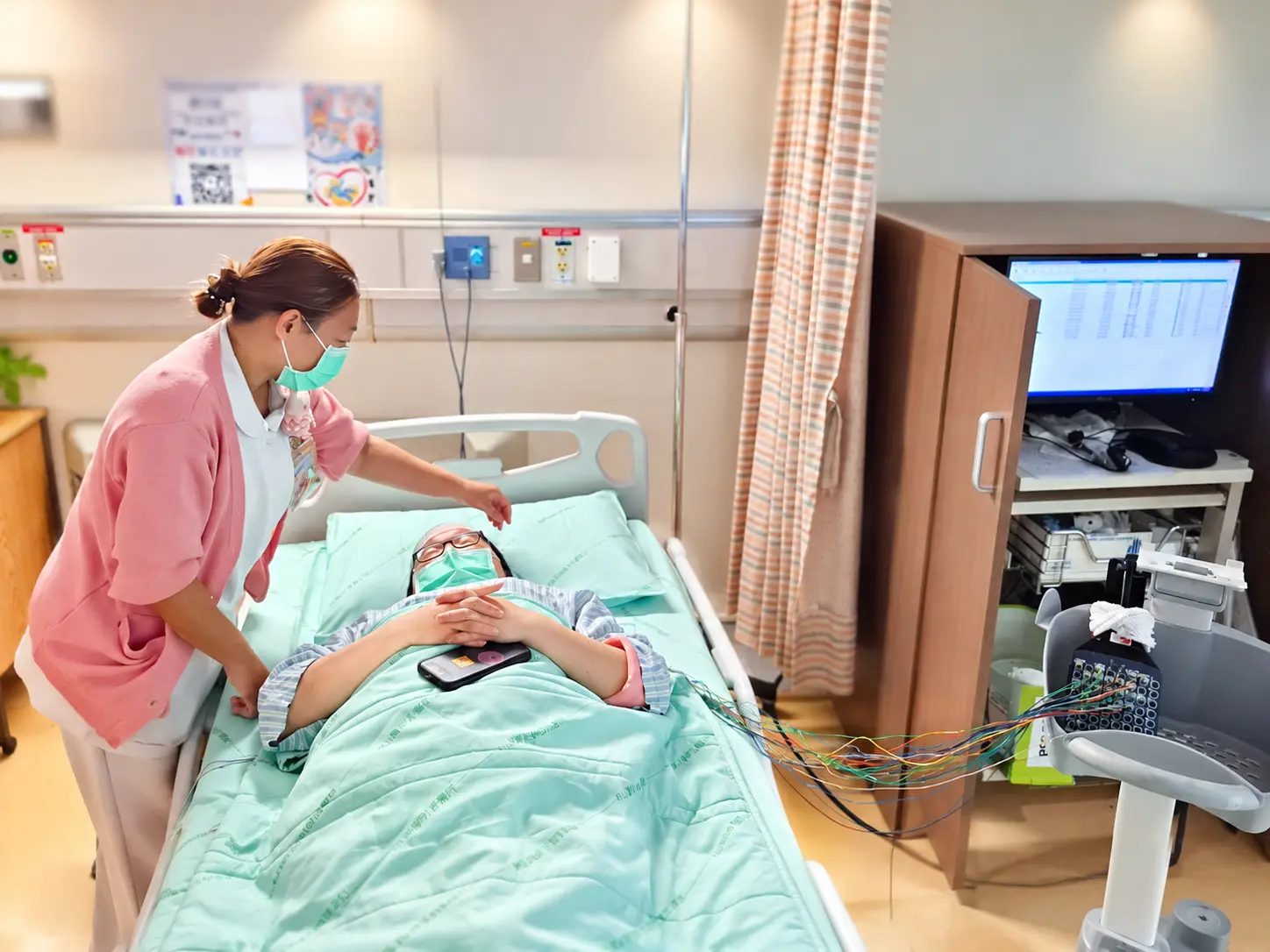
Specialized Capacity and Quality: The only dedicated EEG monitoring ward in central Taiwan, providing EEG with video monitoring; stroke critical care quality surpasses TCPI peers.
Innovative Smart Care: Established Taiwan’s first intelligent nursing assistance platform, “Xiao Nan A-Chang,” supporting six languages with over 3,000 educational materials, and obtained an invention patent (Patent No. 884563).
Academic and International Engagement: Published 16 stroke-related journal articles (including SCI) and conference papers in the past three years, demonstrating international research standards.
A total of 265 patients with infarct-type stroke were served.
Discharge preparation services were provided to219 patients.
The ventilator weaning success rate of the critical care team is 75%, which is better than its peers.
The fall incidence rate in the rehabilitation ward was 0.06%.To enhance patient safety, a bed-exit alert system was introduced, and comprehensive fall prevention measures continue to be reinforced.
The unplanned readmission rate for discharged patients has reached 0% for three consecutive years.
The success rate of ventilator weaning for stroke patients reaches over 75%.
The three-stage swallowing function screening and auditing in the neurology ward achieves 100%.
The success rate of swallowing training in the rehabilitation ward is 5.65% in 2022, and is projected to reach 15.46% by 2025, showing a gradual increase year by year.
The overall satisfaction rate of stroke patients during hospitalization reached 93.9%.
Discharge preparation services integrated with Long-Term Care 2.0 achieved a patient satisfaction rate of 97.5%.
No data available
Improve the effectiveness of clinical care for stroke patients.
Enhance the success rate of swallowing training for stroke patients.
Provide comprehensive and high-quality discharge preparation services for stroke patients.