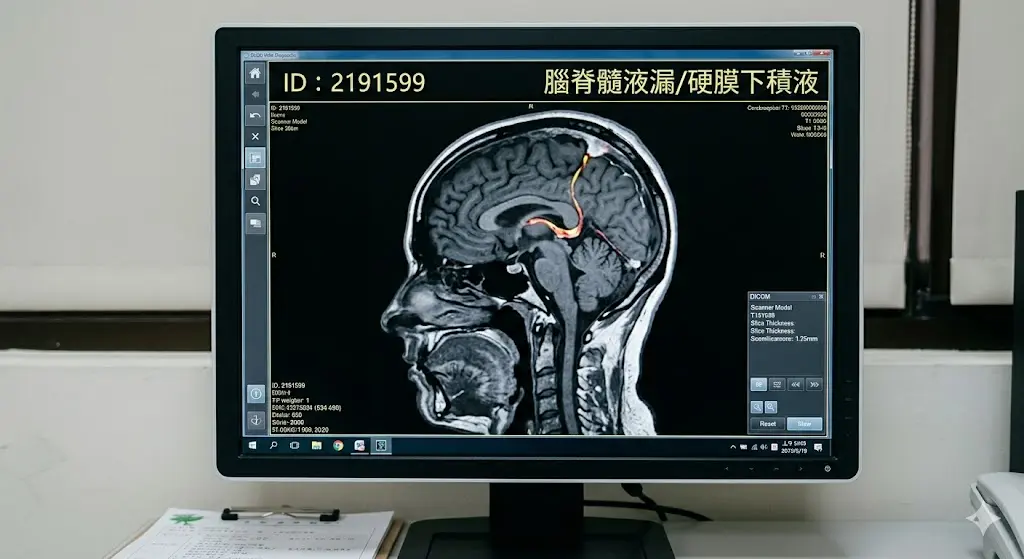
Tri-Service General Hospital uses AI-read ECGs to flag patients at high risk of death and alerts their physicians by text; a randomised trial of 15,965 patients showed overall mortality risk falling 17%.
A 70-year-old woman with diabetes, coronary artery disease and long-term dialysis was admitted through the emergency department after a week of gastrointestinal bleeding. On her second day in hospital she developed chest pain suggesting an acute myocardial infarction; the pain improved the following day with medication. In the early hours of day four, however, she suffered an arrhythmia and died despite resuscitation.
Symptoms can improve while the underlying, lethal risk remains. The case reflects a recurring difficulty in clinical care: how do you identify the patients who need closer monitoring and intervention before they deteriorate?
Lin Chin-sheng, Deputy Superintendent of Tri-Service General Hospital and Director of the Center for Digital Medicine and a cross-disciplinary team built the AI ECG Guardian for exactly this need. The system reads risk signals in the ECG, identifies patients at high risk of death, and notifies the attending physician by text message so that further assessment and treatment can be considered. The team then ran a randomised controlled trial to track how care, and mortality, changed after those alerts.
Once a physician orders an ECG for an emergency or inpatient case, the trace is uploaded and an AI model estimates mortality risk. When the result crosses the high-risk threshold, the system sends a text message prompting the physician to monitor the patient closely, with a link to the ECG and the AI prediction report. The AI report is also integrated into the hospital information system so physicians can consult it during care.
From the ECG itself through model analysis to the alert and the report, the pathway connects directly to the treating physician. Once the message arrives, the physician decides what to do next based on the patient's symptoms, test results and overall condition.
The responses the team set out include intensive monitoring, cardiac investigations, and treatment for whatever those investigations find. All of it serves as input to the physician's judgement; no high-risk patient is required to undergo the same tests or receive the same drugs.
To see how care changed after an alert, the study tracked intensive care admission, echocardiography, use of the antiarrhythmic Amiodarone, and tests such as heart failure markers and ionised calcium.
Among high-risk patients, 16.9% of the AI alert group were admitted to intensive care within three days, against 12.5% under usual care; echocardiography within seven days ran at 44.6% versus 34.9%.
These figures show how clinical behaviour differed after an alert. What each individual test or medication contributed to survival cannot be read directly from the differences.
The study, published in Nature Medicine in 2024, analysed 15,965 patients with 90-day all-cause mortality as the primary endpoint. Mortality was 3.6% in the AI alert group and 4.3% under usual care; the hazard ratio was 0.83, with a 95% confidence interval of 0.70 to 0.99 - a 17% reduction in mortality risk.
The benefit was concentrated in the patients the AI flagged as high risk: an all-cause mortality hazard ratio of 0.69, a 31% reduction. For low-risk patients the hazard ratio was 0.97, with no clear difference.
Nature Medicine - pre-specified subgroup analysis
Cardiac mortality in the high-risk group was 0.2% with the intervention against 2.4% under usual care. Together with the differences in intensive care and cardiac work-up, this points to a clinical benefit from the alerts, though the exact mechanism remains to be established.
The team has folded routine monitoring of model performance into ongoing management and is pursuing validation across hospitals. From flagging risk to delivering the alert to the physician's assessment and response, the pathway still has to prove itself in different patient populations and care settings.