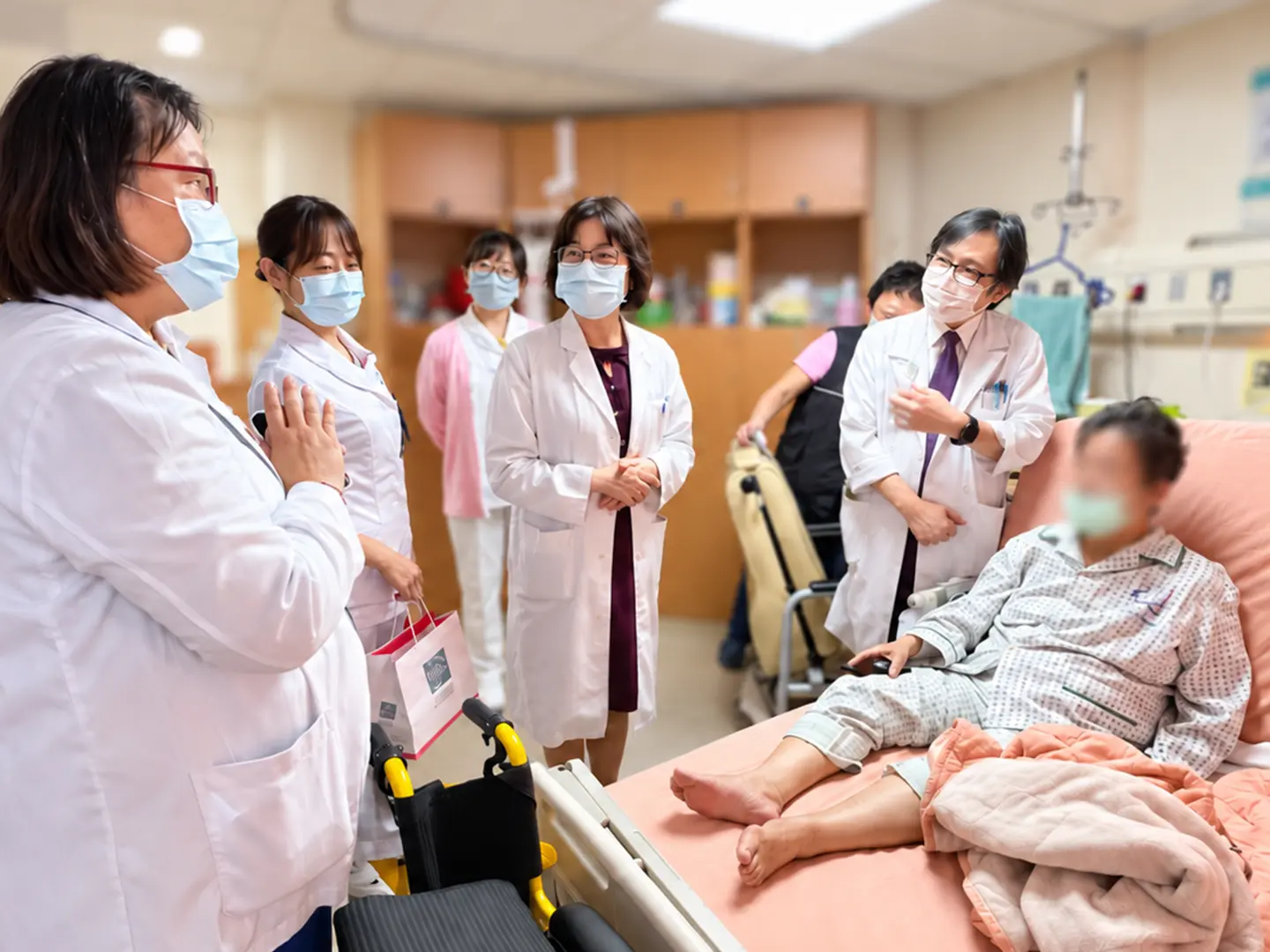
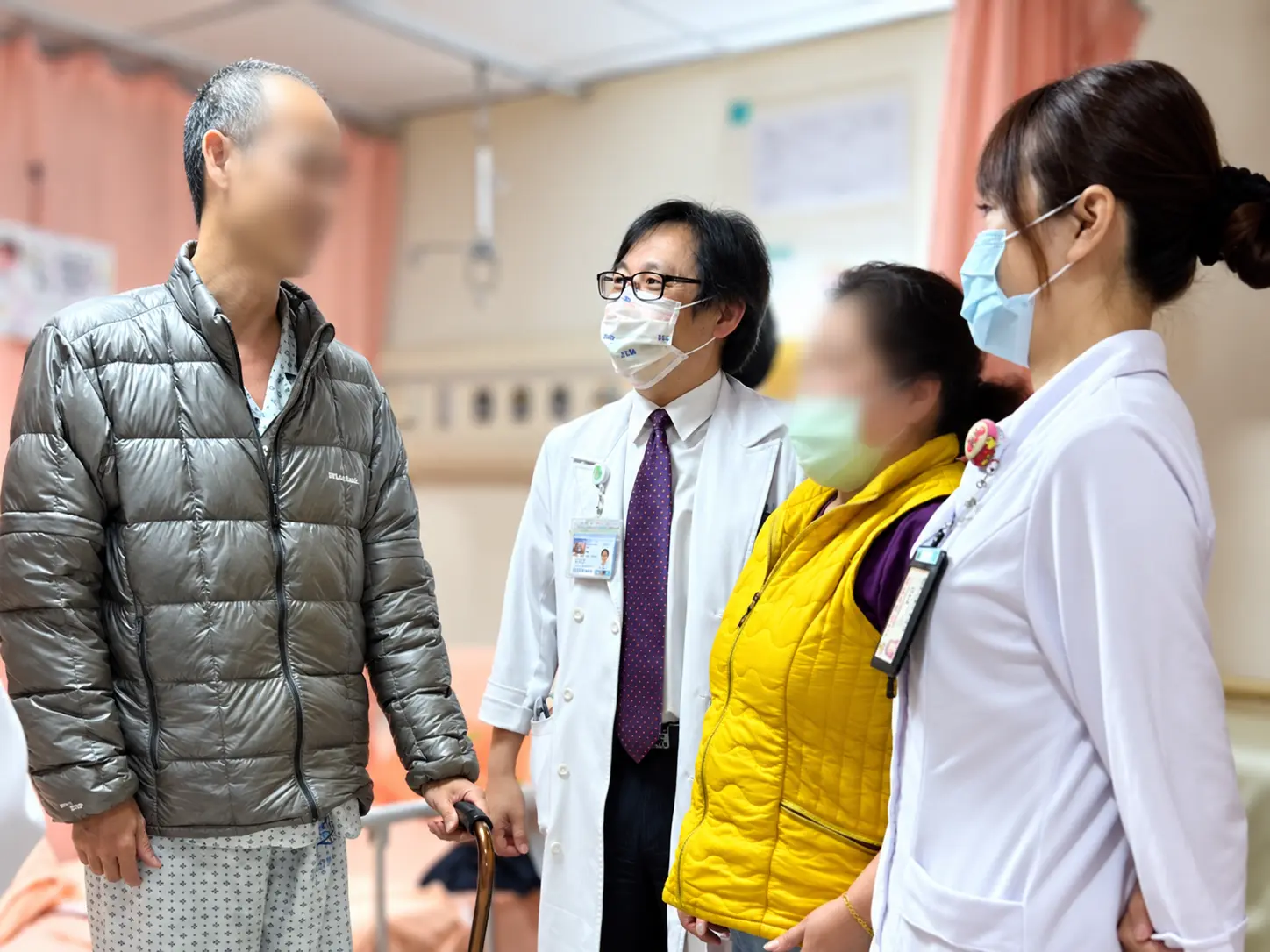
Patients with the following conditions, including stroke, traumatic neurological injury, fragility fractures, and frail older adults.
This project, themed “Rebuild and Restart”, addresses gaps in continuity of care for patients discharged from Post-Acute Care (PAC). While PAC supports inpatient functional recovery, many patients experience functional decline after discharge due to fragmented community services, leading to increased readmission rates and caregiver burden.
To bridge this gap, we propose an integrated Post–Post-Acute Care (PPAC) model that delivers a seamless Hospital–Home–Workplace care continuum. Through a multidisciplinary team—including physicians, nurses, rehabilitation therapists, dietitians, social workers, and case managers- the model links discharge planning with community-based long-term care resources.
Key services include functional follow-up, continuation of rehabilitation, nutritional management, and psychosocial support. Standardized care transitions, effective information exchange, and health literacy–based caregiver training further enhance care coordination and patient empowerment.
Ultimately, the PPAC model aims to reduce readmissions, improve care quality, lower healthcare costs, and promote healthy aging in place, reflecting the principles of equity, accessibility, and holistic, person-centered care.
Building on the Post-Acute Care (PAC) program, this model bridges hospitals, patients, families, and communities. Through a discharge planning and care transition team, patients are connected to community resources, allowing them to receive holistic medical care and support from the community resource system. This achieves seamless linkage between community services and healthcare teams, forming a one-stop care service model, namely Post–Post-Acute Care (PPAC).
Under this model, patients are able to return home safely and even resume work, thereby reducing the caregiving burden on families and society.
Since the expansion of PAC services in 2017, a total of 1,279 cases have been enrolled
A total of 440 cases were enrolled during 2022–2024
During this period of time, the rehabilitation robot was used 773 times, while the simulation lab was used 1,208 times
143 PAC patients had nasogastric (NG) tubes placed, and 26 patients successfully had the NG tube removed before discharge.
FHIR-based EMR exchange platform has served 37 patients
Post-discharge follow-up: 79 (2022), 112 (2023), and 93 (2024) cases
Return-to-work cases: 2 (2022), 3 (2023), 0 (2024)
Nine community sessions served 219 participants
Overall satisfaction with medical and community transition services exceeded 90%
A total of 1,279 cases have been enrolled in PAC since 2017
440 cases were enrolled during 2022–2024
1,208 inpatient PAC cases
71 home-based PAC cases
NG tube removal rate: approximately 20% (26/143)
Robot-assisted rehabilitation: used 773 times
Simulation lab: used 1,208 times
FHIR-based EMR exchange platform has served 37 patients
Nearly 30 community lectures have been held since 2017
Over 100 letters of appreciation have been received
Eleven PAC-related journal articles have been published.
Reduced hospital readmission rates
Improved Barthel Index scores and quality of life
Discharge planning initiated within 72 hours
Regular multidisciplinary meetings
Quality Assurance (QA) meetings and continuing professional education to enhance safety awareness.
FHIR platform reduces transition-related risks
Dedicated PAC wards with centralized management
Swallowing team enhances NG tube removal rate
Improved overall satisfaction among patients and families
Positive evaluations of service quality
Increased willingness for PAC care transition
Greater confidence in returning home and greater acceptance of reintegration into the community
Published PAC-related journal articles
Developed care pathways that can serve as international references
Implemented FHIR to to facilitate cross-system interoperability
Aligned with trends in geriatric and post-acute care
Outcomes can serve as benchmarks for international comparison
Established a PAC-to-PPAC integrated care model
Enhanced inter-hospital care transitions
Improved patient functional outcomes and quality of life
Reduced readmission rates and clinical risks
Promoted sustainable development of community care and healthcare services