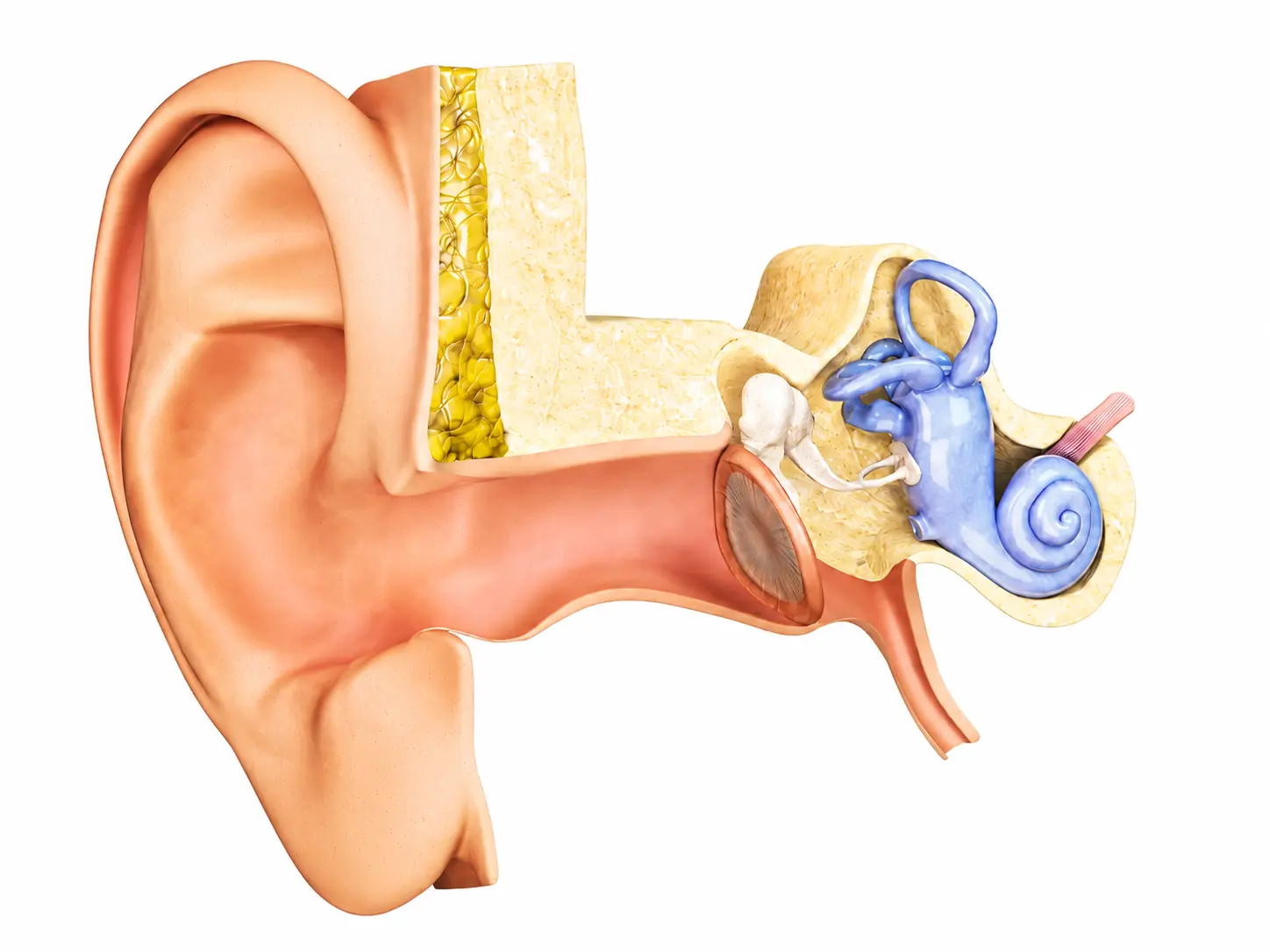
Patients with symptoms of Eustachian tube dysfunction, such as aural fullness, hearing loss, or autophony.
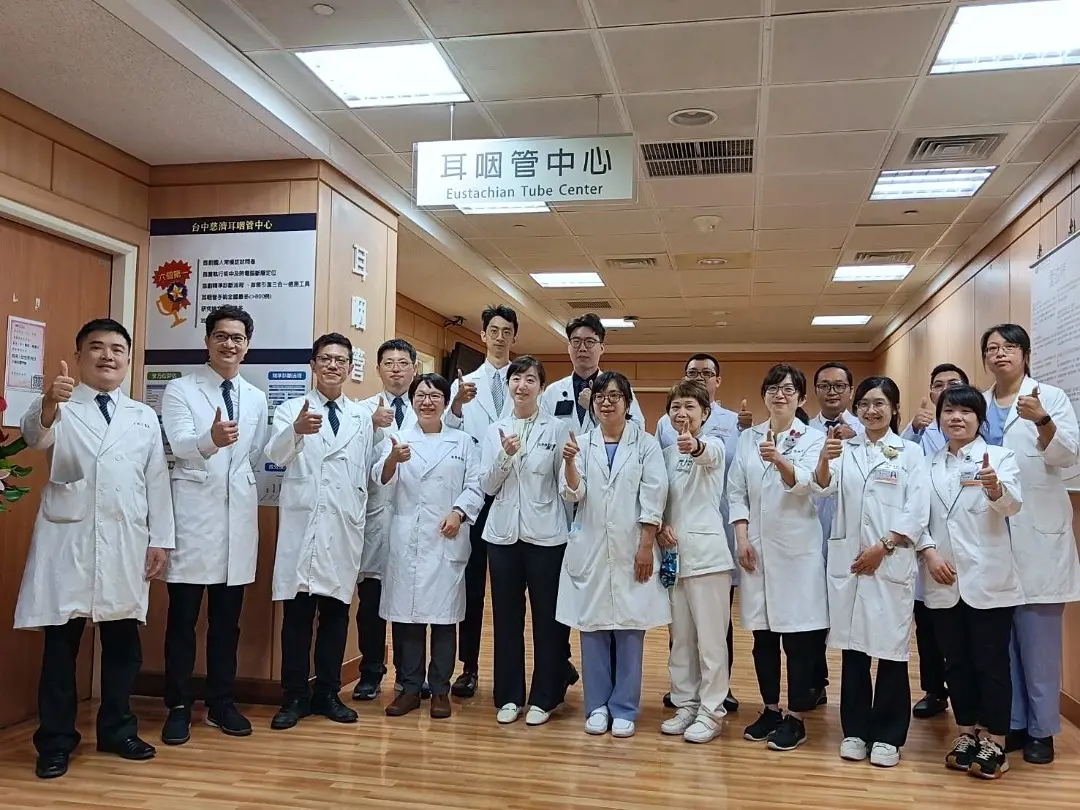
The Eustachian tube center at Taichung Tzu Chi Hospital is the first professional center in Taiwan dedicated to the diagnosis and treatment of Eustachian tube dysfunction. The center offers personalized medical services, integrating advanced diagnostic technologies with customized surgical treatment processes to improve patients' quality of life and clinical outcomes.
Comprehensive Evaluation: Development of standardized subjective and objective assessment tools (Taiwanese norms).
New diagnostic pathway: precise differentiation of dysfunction types.
Tailored treatment: addressing comorbid conditions.
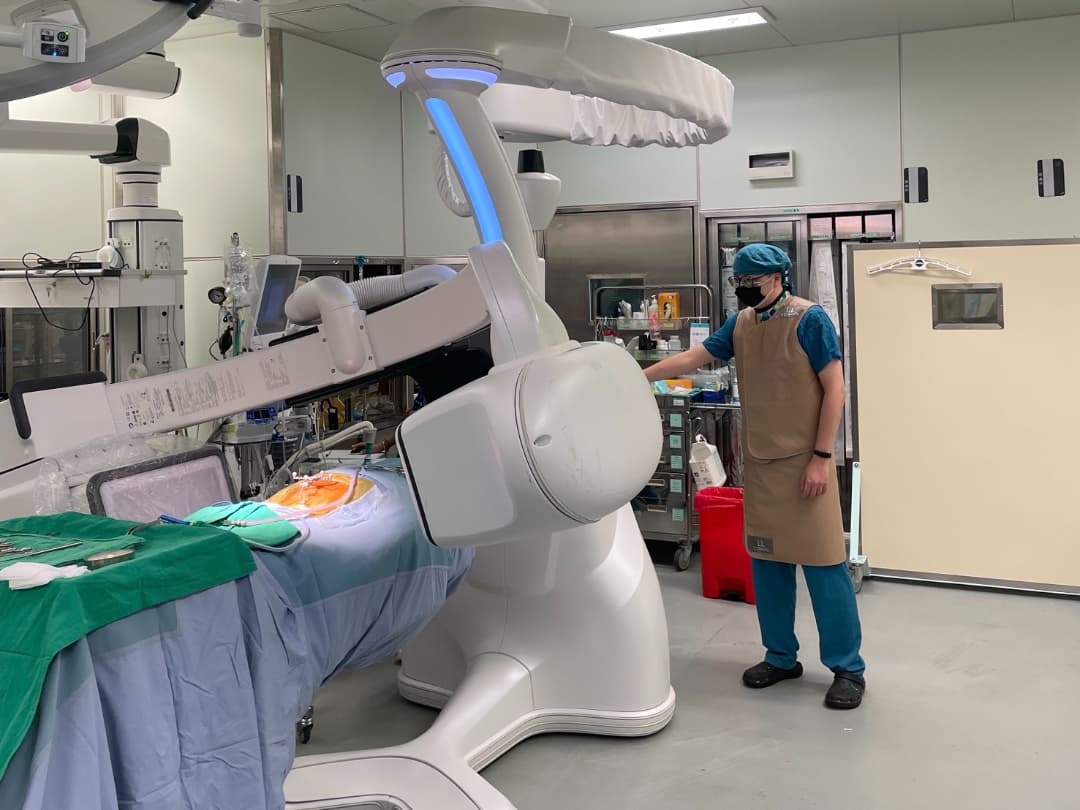
Balloon Eustachian tuboplasty
Advanced Treatments for patulous Eustachian tube dysfunction (Fat injection and tragal cartilage implantation).
Data from the past five years
Precise diagnoses: 5571cases.
Balloon Eustachian tuboplasty: 1053cases.
Postoperative follow-up: 554 cases.
Long-term effectiveness:83%.
Long-term postoperative Eustachian tube function improvement rate: 95%.
Surgical complication rate: <1%.
Improvement in subjective and objective symptoms:92%.
Surgical complication rate:<1%.
Infection rate:0.2%.
Ear drum perforation rate:0.2%.
Satisfaction with preoperative explanation process:94%.
Satisfaction with hospitalization process:96%.
Satisfaction with postoperative follow-up:93%.
Established the foundation for both subjective and objective diagnosis of Eustachian tube dysfunction in Taiwan by validating the Traditional Chinese version of the ETDQ-7. This provides a quantitative and follow-up tool for Chinese-speaking patients, with excellent validity and reliability.
Published multiple Eustachian tube studies in international journals, covering BET combined with tympanoplasty, BET combined with endoscopic sinus surgery, BET with or without myringotomy, management of nasal obstruction-related comorbidities, and office-based local anesthesia BET. These works have increased Taiwan’s international visibility in precision Eustachian tube medicine.
Developed and published comorbidity-oriented treatment models, including BET combined with tympanoplasty and endoscopic sinus surgery. This approach expands Eustachian tube care from single-disease treatment to integrated management of symptoms, function, comorbidities, and surgical strategy.
Provided evidence for more precise surgical decision-making. For example, our study showed that adding myringotomy to BET did not provide additional benefit over BET alone and may increase the risk of persistent tympanic membrane perforation.
Developed an office-based BET protocol without sedation or nerve block, demonstrating safety, tolerability, and clinical effectiveness. This provides a low-burden and scalable treatment model for international reference.
Taichung Tzu Chi Eustachian Tube Center is Taiwan’s first dedicated center for Eustachian tube dysfunction, integrating ETDQ-7, PHI-10, tympanometry, function tests, endoscopy, and imaging into a standardized precision-care pathway.
Over the past five years, the center has provided precision diagnosis for 5,571 patients, performed 1,053 BET procedures, and completed follow-up care for 554 patients, building one of Taiwan’s largest Eustachian tube clinical databases.
Clinical outcomes remain strong, with an 83% long-term effectiveness rate, 95% long-term functional improvement, and 92% subjective/objective symptom improvement. The overall complication rate was below 1%.
By integrating care for chronic otitis media, chronic rhinosinusitis, nasal obstruction, and ETD, the center improves hearing, ear fullness, autophony, and quality of life while reducing repeated visits and unnecessary procedures.
The office-based local anesthesia BET model reduces the need for general anesthesia, lowers healthcare costs, improves access, and supports sustainable, high-efficiency care.