Micronbrane Medical aims to eliminate barriers in microbial genomics, advancing precision medicine. It resolves critical clinical dilemmas: blood culture delays and the 80% failure rate in identifying pathogens.
By overcoming traditional mNGS drawbacks (human host DNA interference, background contamination, complex workflows, high costs, and difficult bioinformatics), this assay enables practical clinical mNGS adoption. Utilizing unbiased, high-throughput metagenomic NGS, the assay analyzes all DNA within a sample to profile the entire microbial community (bacteria, viruses, fungi, parasites) without pre-defined targets, achieving precise species-level identification superior to 16S rRNA.
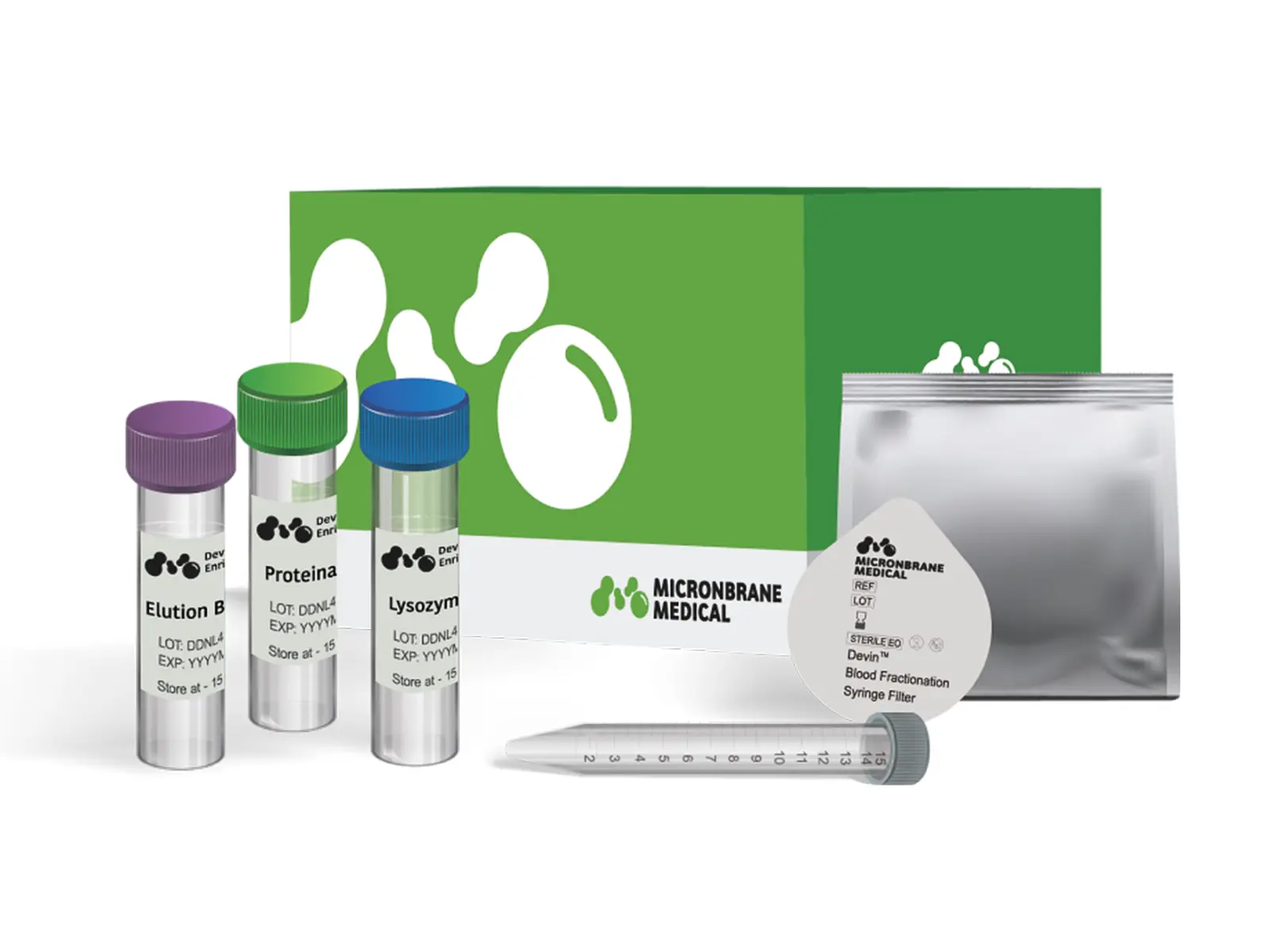
Cell Depletion (Devin™ Filter): Uses ZISC Technology to capture human nucleated cells. It depletes >99% of human host cells from a 10 mL sample within 5 minutes, retaining >90% of pathogens.
Library Prep (Unison Kit): Optimized for ultra-low input samples down to 10 pg, solving the challenge of post-depletion DNA concentrations falling below standard limits (<0.1 ng/μL).
Bioinformatics (PaRTI-Seq Software): Bypasses time-consuming contig assembly by providing gene coverage data for direct species-level alignment and classification.
Identifies >1,500 common hospital pathogens with high throughput and automation. Tailored for ICU critical care, it delivers rapid pathogen reports within the golden window for nosocomial or spontaneous infections, enabling precise antimicrobial therapy.
Micronbrane Medical Company Limited
The V&V plans for development and mass production were executed under the company’s QMS and ISO 13485:2016. The PaRTI-Seq® System and its sub-products comply with the following:
Microbial DNA Extraction Reagents Items: Extraction efficiency, fragment size distribution/integrity, background levels, species identification. Scope: Linearity, repeatability, and stability testing.
Microbial DNA Library Prep Reagents Items: prep efficiency, product fragment distribution/integrity, background levels, species ID, sequencing platform compatibility. Scope: Linearity, repeatability, and stability testing.
Automated Extraction & Library Prep Instruments SGS certified for electrical safety, EU WEEE 3R, and RoHS: EN IEC 61326-1:2021 / EN IEC 61326-2-6:2021 EN IEC 61000-3-2:2019 / EN 61000-3-3:2013+A1:2019 Cat 2 under Annex III & IV of Directive 2012/19/EU WEEE IEC 62321-2 / IEC 62321-3-1 / IEC 62321-8
Sequencing Data Analysis Instruments Computerized systems classified via GAMP 5 risk assessment: IQ / OQ: Parameters, software functions, data I/O, challenge testing. PQ: Normal setup simulation with 3 consecutive stable production batches. DQ (Proprietary Software): Requirements/design specs, white/black-box testing, test reports. 5. PaRTI-Seq® Full System Validated correct pathogens across 40 liquid specimen cases (CSF, synovial, vitreous, peritoneal fluids, brain abscesses) in a clinical blinded study.
Incoming Quality Control. Upon arrival, raw materials are inspected by QC personnel per the Incoming Inspection SOP in accordance with the Purchasing Item Inspection and Test Control Procedure. Materials are accepted into storage only after being judged as qualified.
In-Process Quality Control (IPQC) Initial production begins based on the Manufacturing Notice. Personnel conduct a First Article Inspection (FAI) and complete the FAI Record. During mass production, operators perform in-process inspections and log data into the Manufacturing Record. Concurrently, QC conducts routing inspections. If anomalies occur, the line is stopped immediately, and products are classified as non-conforming per the Non-Conforming Product Control Procedure.
Final/Outgoing Quality Control (FQC/OQC)Finished goods are transferred to the . QC inspects them per the Inspection SOP, logs data into the Inspection Record, and submits it to the QA Manager for disposition. Upon approval, a Certificate of Analysis (COA) is issued, allowing release into the.
Data-Driven Supplier. Evaluation Suppliers are classified by material criticality (direct/indirect impact) and registered as Approved Vendors after passing QMS and R&D validation.
Annual evaluations are conducted using Quality (60%), Delivery (20%), and Service (20%) as inputs, scored per the Annual Supplier Evaluation Form (MB-QF-504).
Product R&D Risk Assessment. At the early R&D stage, a cross-functional or independent expert "Risk Management Team" must be established to execute operations per ISO 14971:2019 Risk Management Procedures. To ensure objective and effective management, the team collaborates by departmental responsibility to generate the initial Risk Management Plan and Risk Management Report. Anticipated risks are mitigated to acceptable levels through product or process design and integrated into Design Inputs. The Risk Management Report must be re-evaluated and updated during design verification and design change stages. Incoming & Supplier Tiered. Control Suppliers are classified into 4 tiers based on the risk level of material impact on product safety and performance: Tier 1 Critical vendors. Must hold ISO 9001, ISO 13485:2016, or QMS certification, sign purchasing/quality agreements, and undergo annual on-site audits. Tier 4 (General Office Supplies): Exempt from evaluation. Process Inspection & Non-Conforming Product Control QC performs routing inspections during production. If anomalies are detected, the Control of Non-Conforming Products Procedure is triggered. Defective items are transferred into the via the ERP system as defective inventory with clear defect reasons documented. This is executed jointly by Production and Warehouse personnel to strictly control non-conforming product flow, preventing mix-ups with compliant products and safeguarding outgoing quality.
Monitoring & Feedback. Feedback is collected via Customer Satisfaction Surveys. QA validates and classifies complaints into: product performance, safety, appearance, general complaints, or reportable events. Crisis Management & Advisory Notices. If a complaint involves serious injury or death (e.g., MDR events, serious adverse events), crisis management is triggered. Notifications are sent to customers and competent authorities per the Product Notification and Recall Procedure. Field Safety Notices (FSNs) are issued as needed. CAPA Validated complaints trigger a CAPA Form assigned to the responsible unit. For outsourced issues, contractors must provide root cause analysis and corrective actions. Results require QA Manager review and Management Representative approval before customer reply and Management Review submission. Historical Case A box dampened and labeled peeled due to a logistics vehicle leak. The company replaced the item, issued an improvement report, and updated logistics specs (prohibiting corner placement) to mitigate recurrence. Risk Management Framework These workflows are monitoring activities under ISO 14971:2019, managed by Sales and QA, and documented in the annual Risk Management Report.
Optimization of Metagenomic Next‑Generation Sequencing Workflow with a Novel Host Depletion Method for Enhanced Pathogen Detection
(Molecular Diagnosis & Therapy
https://doi.org/10.1007/s40291-025-00797-3)
Deciphering the impact of contaminating microbiota in DNA extraction reagents on metagenomic next-generation sequencing workflows (10.1128/spectrum.03119-24)
TW110109205A ; EP21275028.5A ; JP2022558095A ; AU2021240657A ;
CN202110327249.3A ; KR1020227035799A
A method and device for enriching and detecting microorganisms in a biological sample Abstract Disclosed are a method and system for enriching and detecting microorganisms in a biological sample. The method allows the biological sample to be filtered through a polymer-modified substrate. The polymer-modified substrate is highly specific in capturing or separating human-derived nucleated cells, and allows the microorganisms to penetrate through it. During the process, a high level of microorganisms (bacteria, mycoplasmas, fungi, viruses, spores etc.) can be enriched in the sample and thus the interference caused by nucleated cells such as leukocytes can be reduced.