Individuals who spend prolonged periods using digital devices
Older adults and postmenopausal women
Long-term contact lens wearers
Individuals with autoimmune diseases, such as Sjögren’s syndrome,RA,SLE
The Dry Eye Center of Far Eastern Memorial Hospital is dedicated to the accurate diagnosis and safe, effective treatment of dry eye disease. The center developed a non-contact infrared thermography device for dry eye assessment, pioneered the adoption of lipid layer analysis technology, established standardized diagnostic and treatment protocols, and actively participates in domestic and international academic research and collaboration.
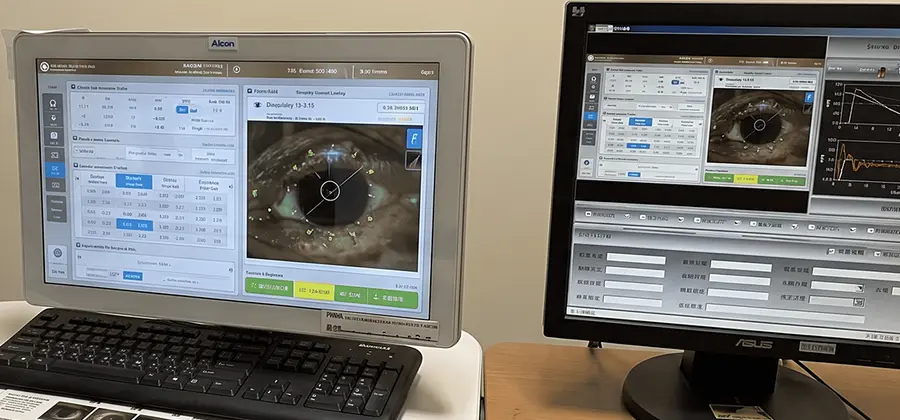
In 2014, we introduced the nation's first LipiView II Ocular Surface Interferometer for dry eye evaluation. Combined with eyelid hygiene, warm compress therapy, blink training, and pharmacological treatment, it achieved favorable clinical outcomes.
Since 2017, we have operated the first LipiFlow Thermal Pulsation System in a Taiwanese medical center. This innovative technology provides safe and comfortable treatment for meibomian gland dysfunction by effectively clearing meibomian gland obstructions.
Our team has been invited to present and share clinical experience at major national and international conferences, including the Asia-Pacific Academy of Ophthalmology. In addition, five of our research studies have been published in high-impact SCI journals and ophthalmology-related textbooks.
From August 2015 to June 2016, a total of 775 patients with dry eye disease underwent evaluation and treatment.
By June 2016, 775 patients had received advanced diagnostic examinations, of whom 83.1% were found to have lipid layer deficiency.
More than 200 new dry eye patients sought care at our center each month.
The center managed over 900 patient visits per month.
100% of patients demonstrate an understanding of the relationship between meibomian gland obstruction, meibomian gland dysfunction (MGD), and dry eye disease.
100% of patients adhere to prescribed topical ophthalmic medications.
80% of patients adhere to recommended warm compress therapy and blinking exercises.
60% of patients perform warm compress therapy with the appropriate duration and technique.
Examinations are conducted in accordance with the standardized assessment protocol and LV examination checklist for both initial and follow-up visits of patients with dry eye disease, ensuring completion of all required examinations.
Hand hygiene guidelines are strictly followed before and after patient contact to prevent cross-contamination and healthcare-associated infections.
Follow-up appointments are proactively scheduled, and patients’ adherence to prescribed home care instructions is monitored. Treatment outcomes are regularly evaluated, and individualized treatment plans are adjusted as clinically indicated.
Intraocular pressure (IOP) is routinely monitored throughout treatment. Approximately 9% of patients receiving corticosteroid therapy may develop elevated IOP. Upon detection of steroid-induced IOP elevation, treatment with Fluorometholone is promptly discontinued and appropriate management is initiated.
High patient satisfaction with clinical examinations and patient education services.
Approximately 20% of treatment dissatisfaction is attributable to inadequate adherence to recommended warm compress therapy.
Vice Superintendent Dr. Shu-Wen Chang has also been actively involved in the development of domestic and international guidelines for the diagnosis and treatment of dry eye disease:
May 5, 2025 – Recipient of the Asia Dry Eye Society Travel Grant, South Korea.
Since 2025 – Member of the International Working MGD Steering Committee, contributing to the planning of the 2027 MGD Workshop. Dr. Chang serves on the Pathophysiology Subcommittee.
April 4–5, 2026 – Participated in the Kick-Off Meeting in Tokyo, Japan.
June 18–19, 2026 – Invited by the Korean Dry Eye Society as an Invited Lecturer.
December 2025 – Leading Editor of the Dry Eye Special Issue of the Taiwan Journal of Ophthalmology (TJO).
National Health Insurance Administration (NHIA), Taiwan – Serves as a Key Opinion Leader (KOL), providing expert recommendations on reimbursement policies and coverage criteria for cyclosporine, artificial tears, and punctal plugs.
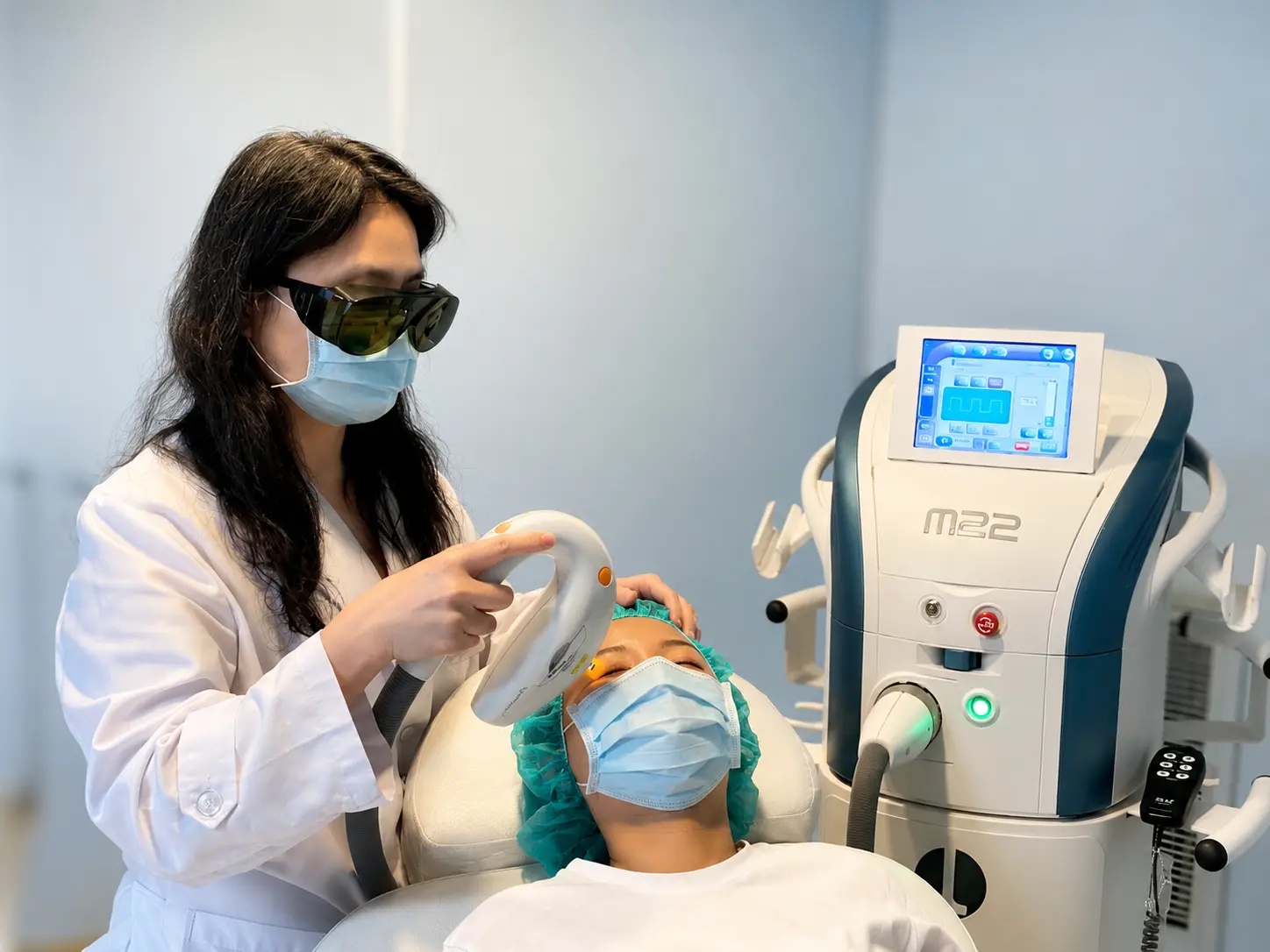
Clinical Outcomes of Intense Pulsed Light (IPL) Therapy – Demonstrated efficacy comparable to that reported in the international literature.
AI-Based Demodex Detection Technology – The first of its kind developed in Taiwan, with outstanding performance.
Association Between Eyelid Laxity and Dry Eye Disease – The largest study of its kind in Taiwan, yielding significant findings.
Dry Eye Disease and High-Frequency Eye Drop Use – The first and largest study in Taiwan investigating this association.
Dry Eye Disease and Tear Composition – Introduced a novel concept and was the first study of its kind internationally.
Tear Lipid Layer Characteristics in Young Patients with Dry Eye Disease – Generated pioneering findings and was the first study of its kind in Taiwan.