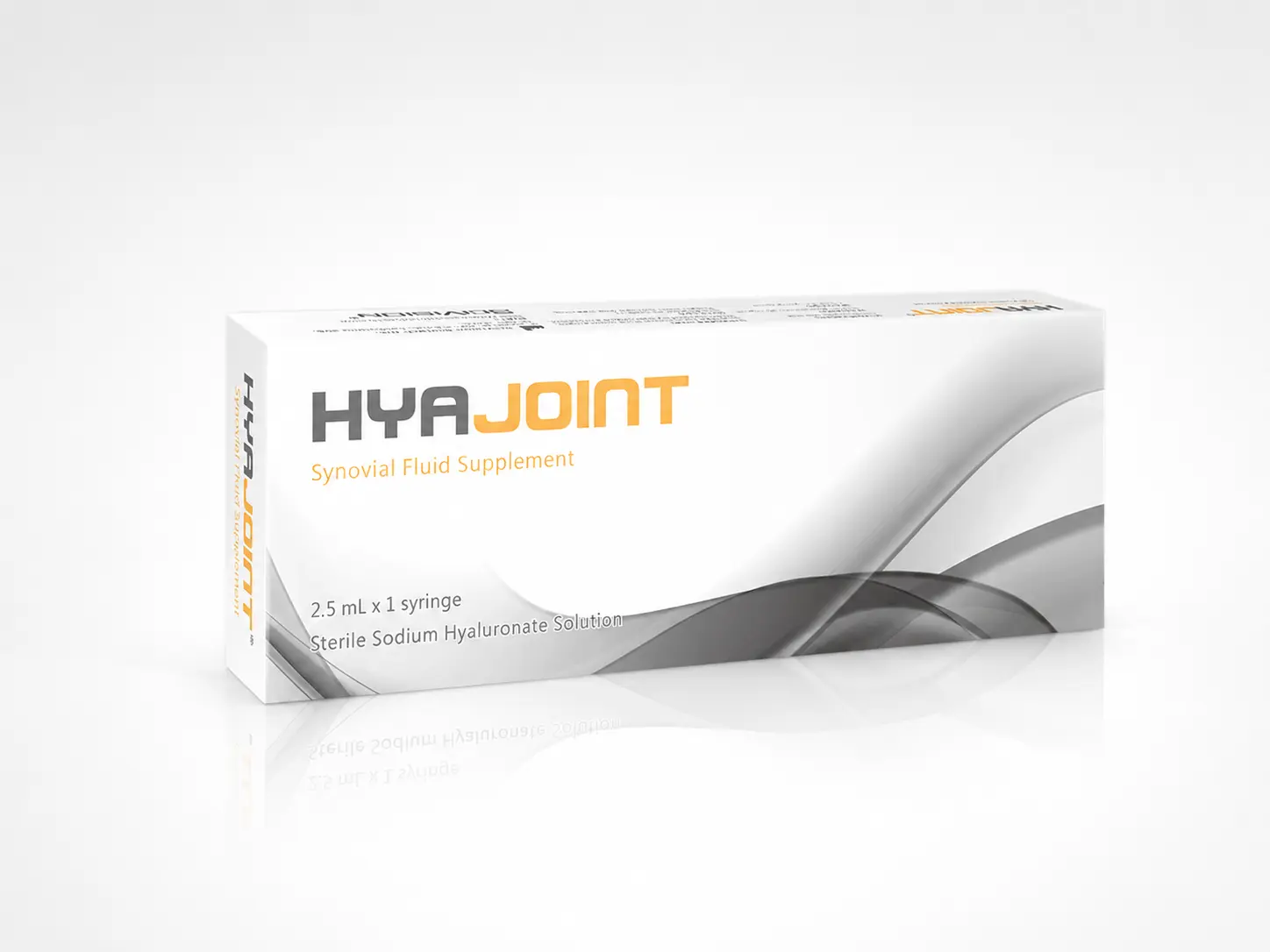
DESCRIPTION:
HYAJOINT Synovial Fluid Supplement is a product in which hyaluronic acid is filled into a glass syringe. The product is a clear, viscous, sterile, and nonpyrogenic hydrogel. The hyaluronic acid (molecular weight: 0.65–1.2 million Daltons) is derived from microbial fermentation. This product is intended for single-use. Hyaluronic acid is a naturally occurring polysaccharide and an important component of the skin, subcutaneous tissue, connective tissue, and synovial fluid. Hyaluronic acid is non-species specific and exhibits high biocompatibility. INDICATIONS:
During both development and mass production stages, a comprehensive product verification and validation (V&V) plan has been established to ensure compliance with design inputs, regulatory requirements, and clinical safety expectations. In the development phase, design control activities include design output verification and validation, covering formulation stability evaluation, raw material characterization, physicochemical testing, and simulated use testing to confirm intended performance. In the production phase, process validation is continuously implemented, including process validation, sterilization validation, filling and packaging process qualification, cleaning validation, and equipment qualification to ensure product consistency and reproducibility.
In addition, the product is tested by accredited third-party laboratories for biocompatibility and safety, including cytotoxicity, sensitization, irritation, and systemic toxicity, in accordance with ISO 10993 standards. All verification and validation results are reviewed within the quality management system and maintained under document control, serving as the basis for product release and continued manufacturing.
pH value
Osmolality
Endotoxin
Sterility test
Hyaluronic acid content
Volume
Molecular weight
Extrusion force
Package Appearance Inspection
SciVision Biotech Inc. has established a comprehensive risk management system in accordance with medical device quality management and risk management procedures, covering incoming inspection, manufacturing, finished product release, and post-market surveillance. During incoming material control, key materials such as glass syringes, raw materials, and packaging components are subject to supplier qualification, incoming inspection, and in-house testing to ensure compliance with specifications. During manufacturing, cleanroom monitoring, process parameter control, equipment calibration, and QA inspections are implemented, supported by personnel training and deviation reporting to maintain process stability and reduce risks. For finished products, appearance, physicochemical properties, sterility, and packaging integrity are tested prior to quality release. In the post-market stage, complaint handling, adverse event monitoring, trend analysis, and periodic risk evaluation are conducted, with corrective and preventive actions initiated when necessary to ensure product safety, effectiveness, and regulatory compliance.
After medical products are released, relevant post-market information on product use is collected through appropriate methods such as handling customer complaints, post-market safety surveillance and reporting, returns, and product recalls. This information is then fed back into the product design and manufacturing processes to ensure product safety and performance.